Great American Rail-Trail In Montana
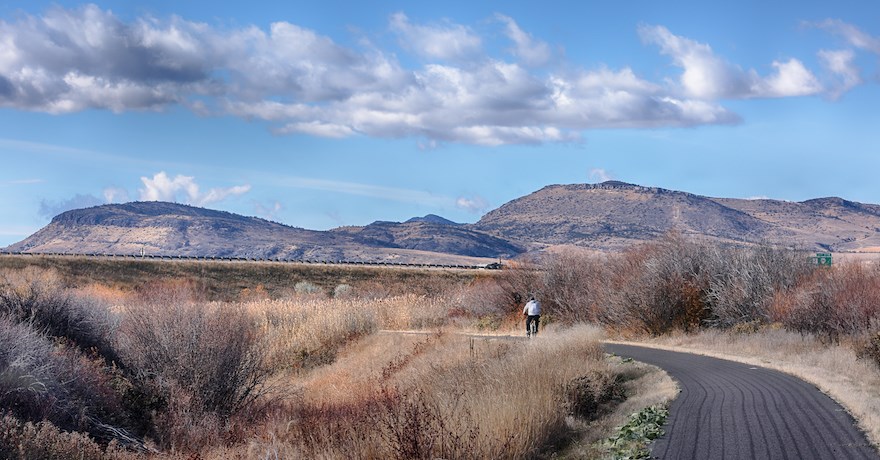
Montana’s Headwaters Trail System | Photo by Scott Stark
The preferred route of the Great American Rail-Trail through Montana will connect communities already well-known for their outdoor recreation assets—including Livingston, Bozeman, Three Forks, Butte and Missoula. History abounds along the route as well: The area around the state’s Great American gateway trail—the developing Headwaters Trails System in Three Forks—has a history stretching to Sacajawea and the 1804–1806 Lewis and Clark Corps of Discovery expedition; and in Livingston, the Highway 89 South Pedestrian Trail travels through the original gateway town for the country’s first national park: Yellowstone.
Close collaboration with trail managers and public officials in Montana will help facilitate the creation of the 319 miles needed to complete the Great American route over the next several decades.
Montana stories along the Great American Rail-Trail

The “Great American” Route Through Montana
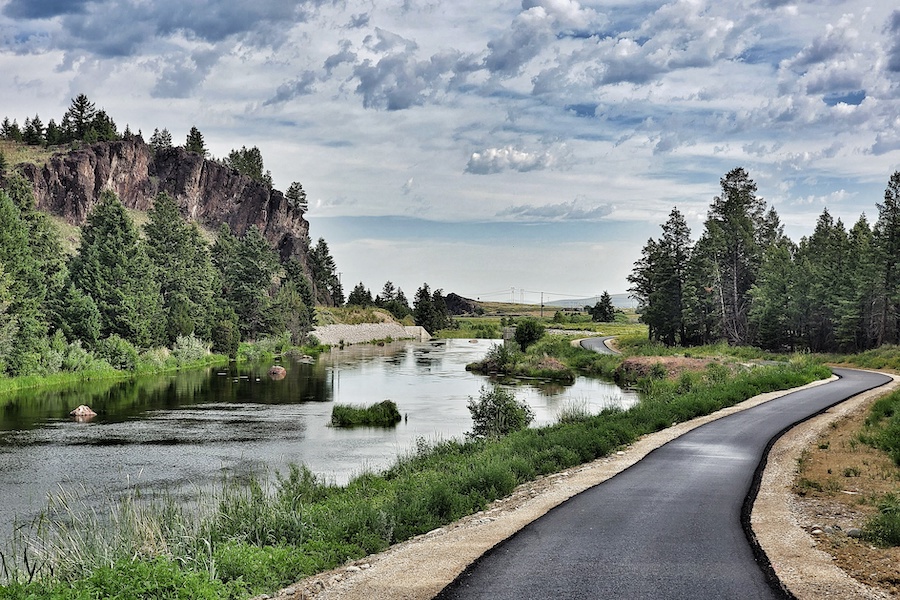
The Great American Rail-Trail route through Montana will connect many of the state’s communities known for outdoor recreation assets—including Livingston, Bozeman, Three Forks, Butte and Missoula—which are all along the preferred Great American route. There are currently 323 miles of trail gaps to be developed in Montana, including an off-road 50-miles-plus multiuse trail option connecting Gardiner to Livingston in Park County. Montana received a significant grant in 2025 that will help escalate momentum for planning over 140 miles of trails along the Great American in the western part of the state.
436.1
Total Miles113
Existing Miles323.1
Gap Miles25.9%
Complete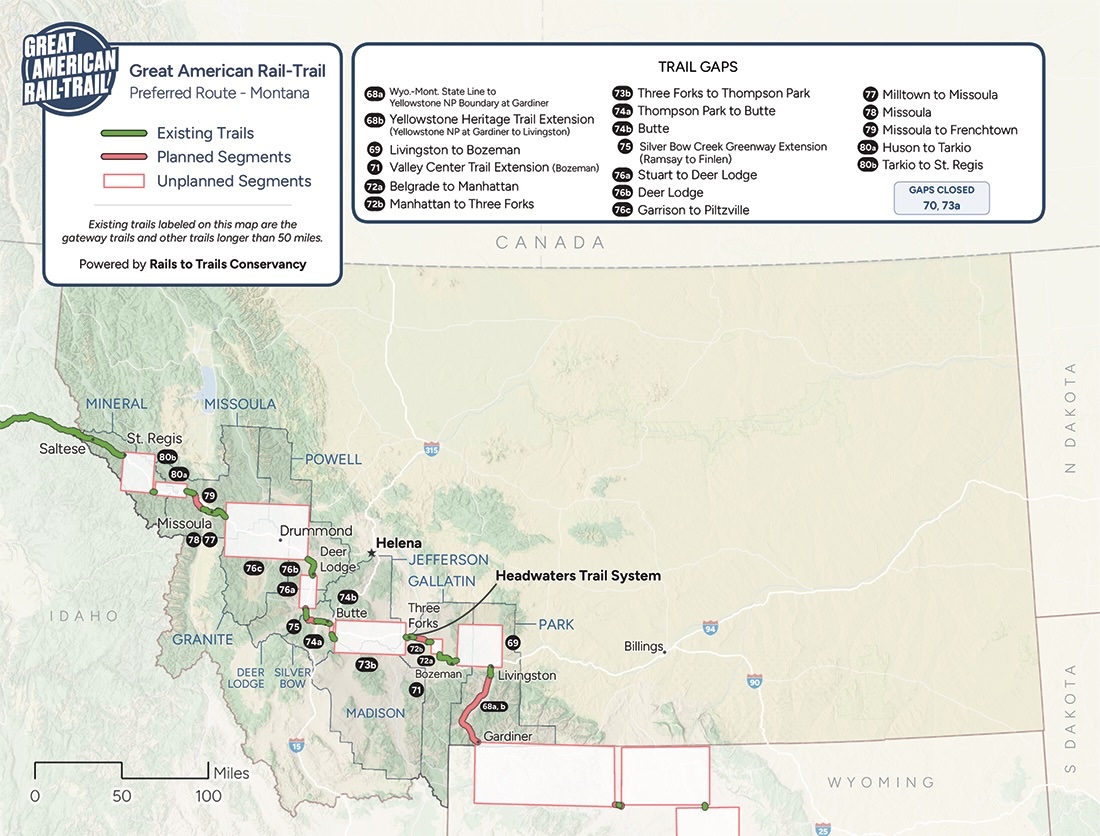
Great American Rail-Trail Route Assessment (2026)
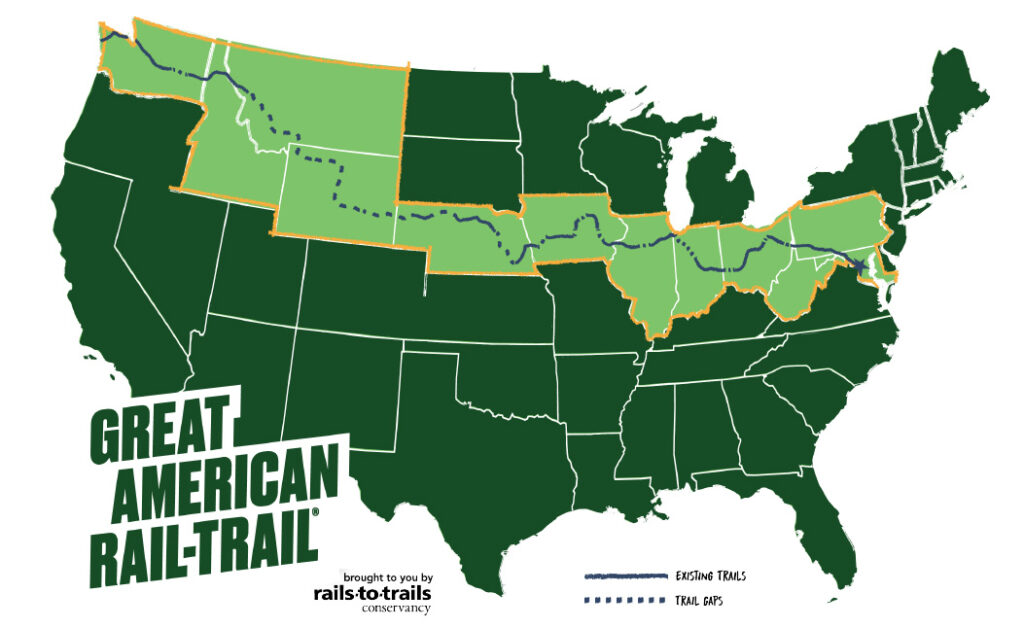
The Great American Rail-Trail Route Assessment 2026 defined the preferred route of the Great American Rail- Trail as more than 3,700 miles—with 2,086 miles of existing trails and 1,674 miles of trail gaps.
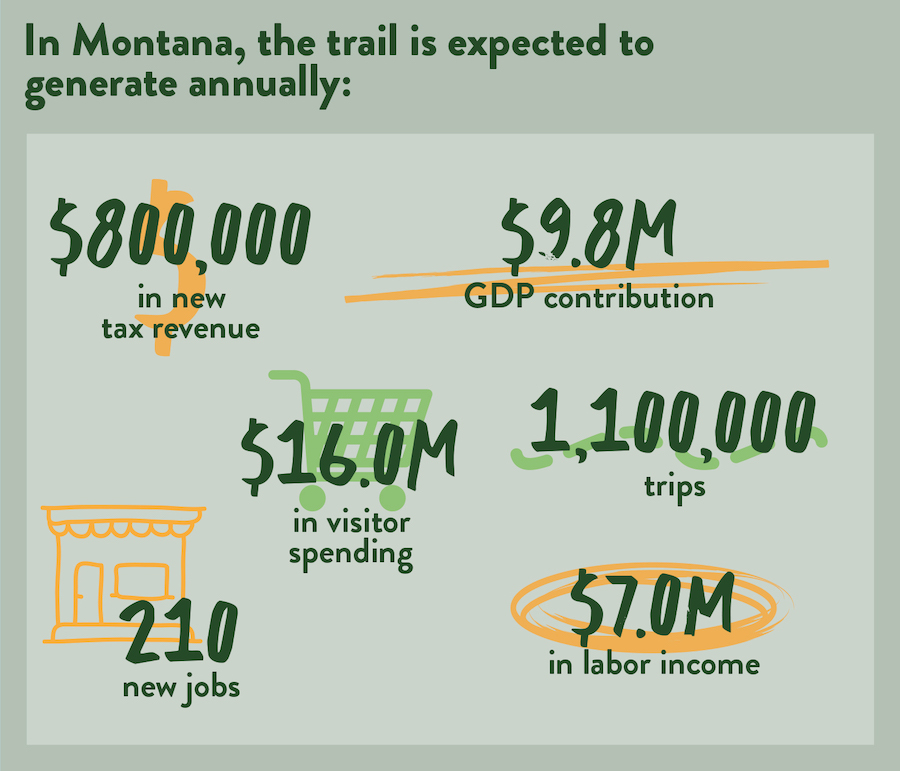
Economic Potential of the Great American Rail-Trail Report (2022)
Investments could generate more than $229.4 million in visitor spending, $104 million in labor income, and $22.8 million in new tax revenue.
Trails Along the Route
Gateway Trail: Headwaters Trail System
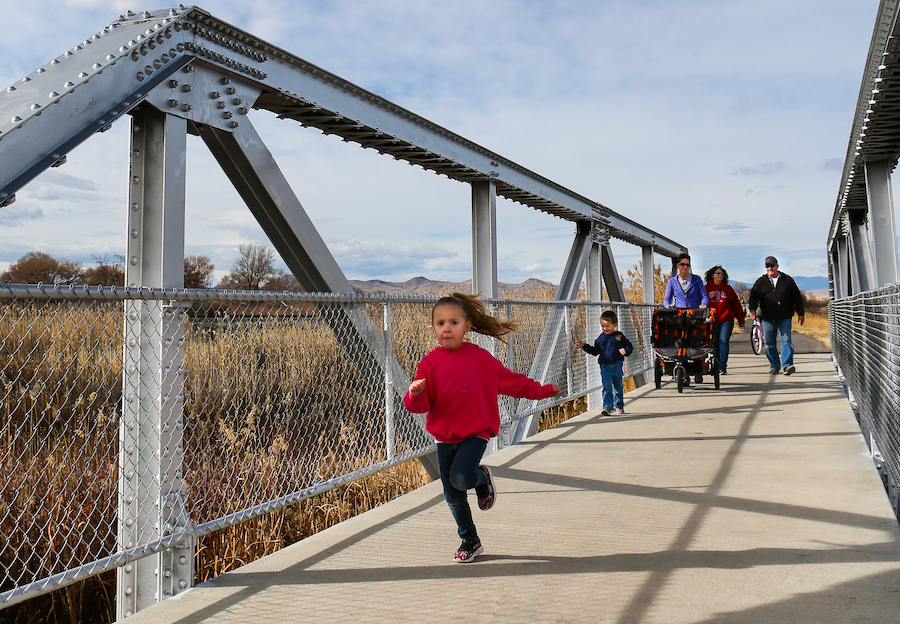
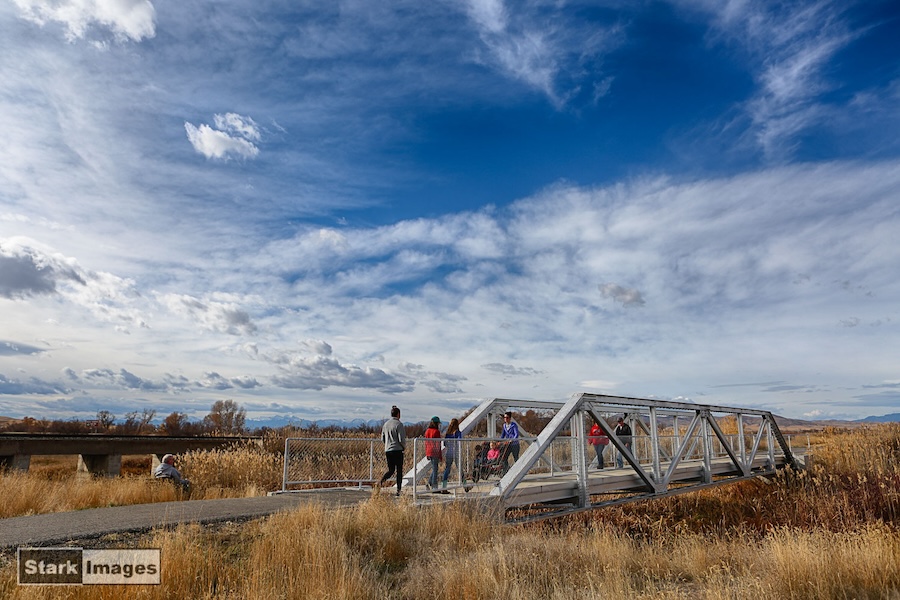
The trail connects to Missouri Headwaters State Park, where three rivers meet to form the Missouri River: the Jefferson, Madison and Gallatin. This is Big Sky country, a place where the pioneering expedition of Lewis and Clark trekked during their journey across the country. Offering nearly 12 miles of trail in and adjacent to the City of Three Forks, the trail enables travelers to take in the scenery of open grasslands, distant mountains, marshlands and river valleys as they follow along portions of the old Milwaukee Road rail corridor.
The Headwaters Trail System is a paved network of trails, portions of which run along the former corridor of the Chicago, Milwaukee, St. Paul and Pacific Railroad (also known as the Milwaukee Road) and through the city of Three Forks to Missouri Headwaters State Park, where the Missouri River originates at the confluence of the Jefferson, Madison and Gallatin rivers.
The portion of the Headwaters Trail System that will host the Great American Rail-Trail runs between Madison Road and Drouillard Fishing Access on state Route 2 (which also serves as the westernmost endpoint of the nearly 12-mile Headwaters Trail System). View trail map on TrailLink.
Highway 89 South Pedestrian Trail
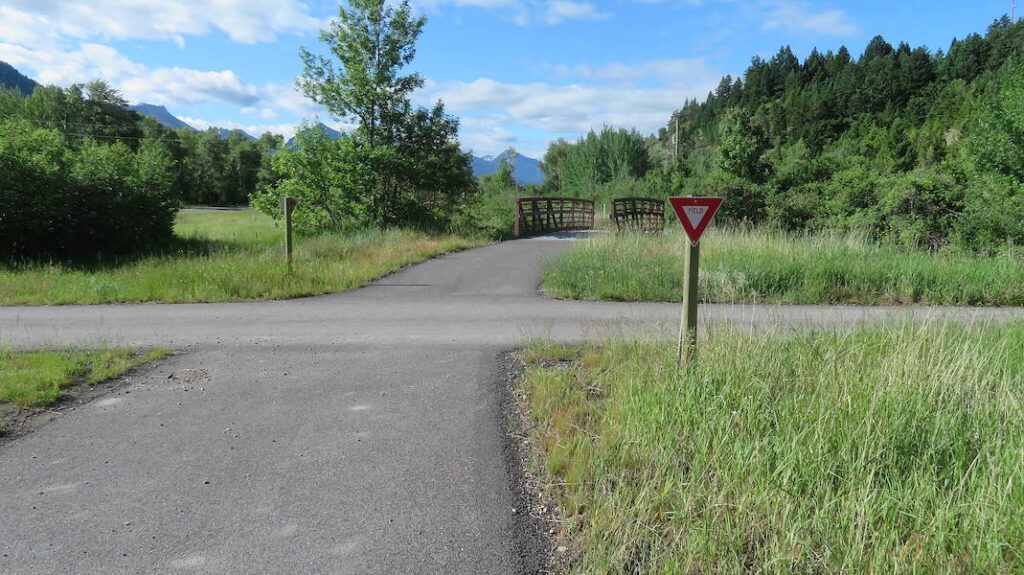
The Highway 89 South Pedestrian Trail begins at the northern terminus of Old Yellowstone Trail North Road and continues about 4 miles into Livingston to connect to the Livingston Depot Center Trail. The trail is a combination of rail-trail, rail-with-trail and trail built into the shoulder of
U.S. 89 where space is constrained. The trail follows the initial Northern Pacific Railway corridor between Gardiner and Livingston that served agricultural communities in Paradise Valley and brought tourists south into Yellowstone National Park. View trail map on TrailLink.
Livingston Depot Center Trail
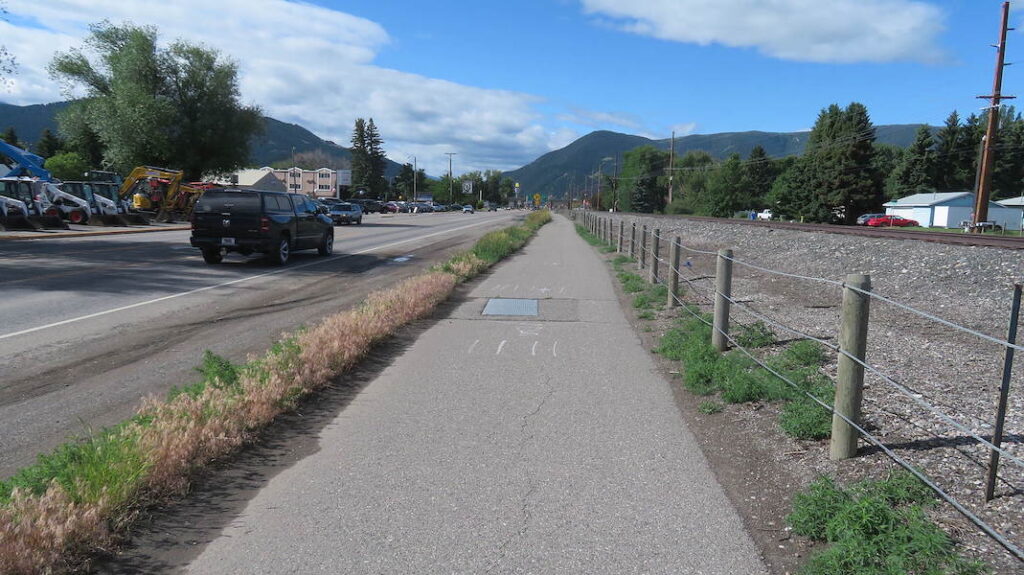
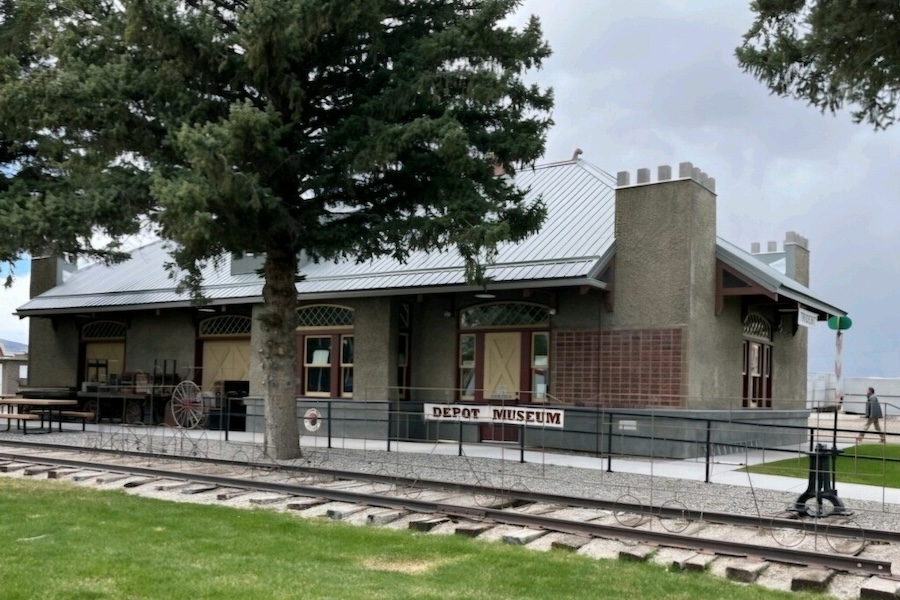
The Livingston Depot Center Trail will host a 0.8-mile section of the Great American Rail-Trail from the connection of the Highway 89 South Pedestrian Trail to Highway 10 West/I-90 in Livingston. The trail continues east toward Livingston Depot Center, a former train station that now houses a railroad museum open in the summer. View trail map on TrailLink.
Bozeman to Bridger Mountains Trail/Path to the “M” and Drinking Horse
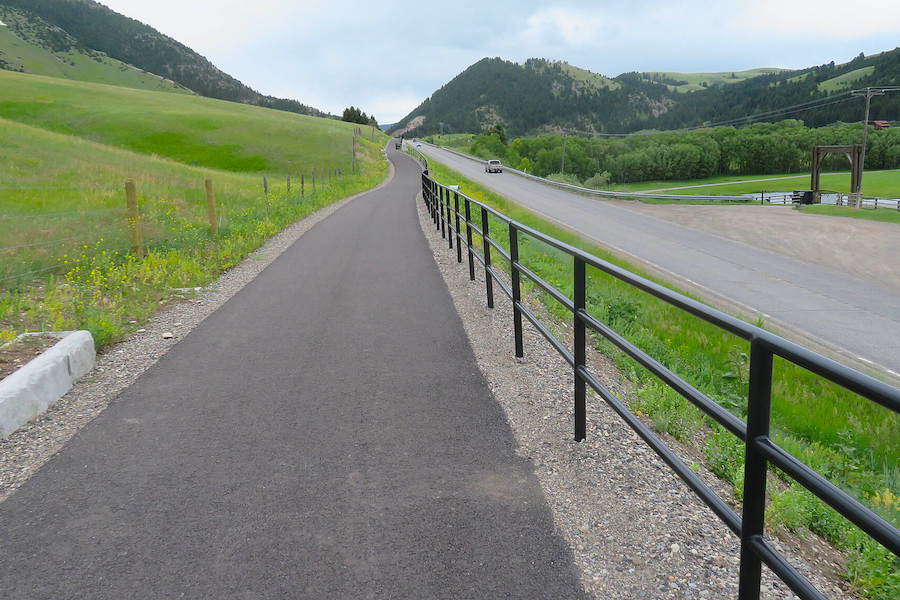
The Bozeman to Bridger Mountains Trail (also known as the Path to the “M” and Drinking Horse) was completed in the fall of 2019, making an important connection for pedestrians and cyclists between the city of Bozeman and the Bridger Mountains. In the east, the trail begins near the College M Trailhead and Picnic Area off of state Route 86/ Bridger Canyon Road. Just 0.3 mile southwest of the picnic area is the Drinking Horse Mountain Trailhead. The “M” Trail and Drinking Horse Mountain Trail are two of the easier and more popular out-and-back hiking trails in the Bridger Mountain foothills. View trail map on TrailLink.
Story Mill Spur
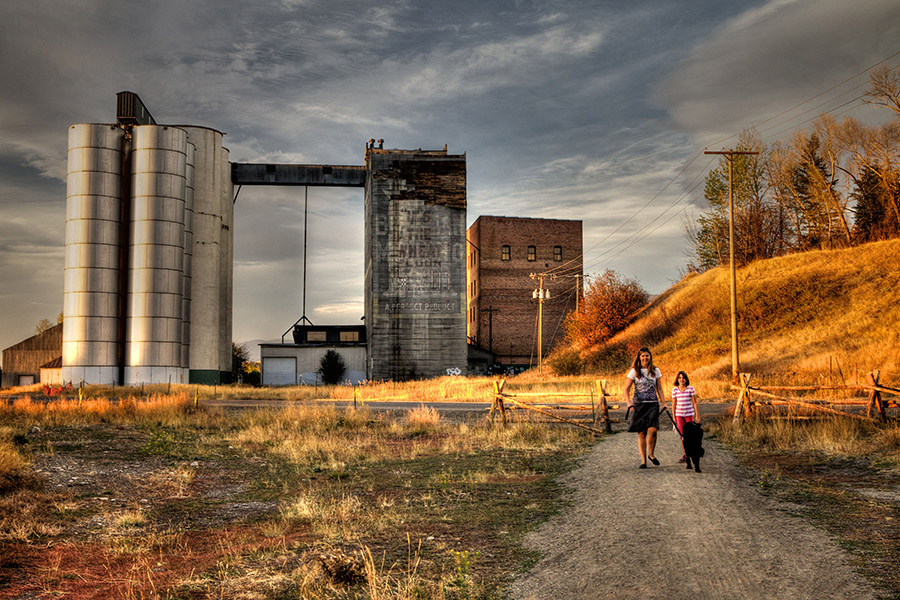
The preferred route of the Great American Rail-Trail enters Bozeman on state Route 86/Bridger Drive, which intersects the Story Mill Spur trail on Story Mill Road. The Story Mill Spur is named for Nelson Story, who, in the 1880s, built a flour mill near the East Gallatin River. As mayor of Bozeman, Story was instrumental in convincing the first railroad through Montana to route through Bozeman. The short rail line was the Gallatin Valley’s largest and most used industrial rail spur until the flour mill’s decline in the 1960s. The trail is 1.7 miles long and begins to the north at the decaying Story Mill flour mill. View trail map on TrailLink.
Front Street Connector
In late 2021, the Gallatin Valley Land Trust and the city of Bozeman completed a 0.3-mile connection along Front Street between L Street and state Route 86/North Rouse Avenue. The Front Street Connector briefly runs between an active railroad line and a lumber yard and forms an important connection between the Story Mill Spur and the Oak Street Pathway.
Oak Street Trail
In Bozeman, the Oak Street Pathway follows Oak Street 1.5 miles west from state Route 86/North Rouse Avenue to North 19th Avenue. The trail begins on the south side of Oak Street at state Route 86/North Rouse Avenue and crosses to the north side of the street at North 7th Avenue.
North 19th Avenue Trail
The North 19th Avenue Trail connects to the Oak Street Pathway at West Oak Street and continues north along North 19th Avenue for 1.3 miles. There is a small, 250-foot gap in the trail along North 19th Avenue between Baxter Lane and Rawhide Ridge Road. The trail switches from the east to the west side of North 19th Avenue at Cattail Street.
Valley Center Trail
The North 19th Avenue Trail ends at East Valley Center Road, where a trail begins about 500 feet to the northwest along the northeast side of the road. The Valley Center Trail is open in two segments that are separated by Trail Gap 71. There is a roughly 1.4-mile gap in the Valley Center Trail along East Valley Center Road in Bozeman between Catamount Street and East Valley Center Spur. The city of Bozeman is committed to completing this trail gap in pieces as the area continues to develop.
Jackrabbit Lane Shared-Use Path
There is a 5.7-mile-long section of trail along state Route 85/Jackrabbit Lane connecting Four Corners north to the area just south of Belgrade. The Jackrabbit Lane Shared-Use Path will host the Great American Rail-Trail for 2 miles, heading north onto state Route 85/Jackrabbit Lane from East Valley Center Road. The trail was completed from the community of Cowan north to Frank Road in the summer of 2018. A future extension could take the trail all the way into Belgrade.
Manhattan to the Gallatin River Trail
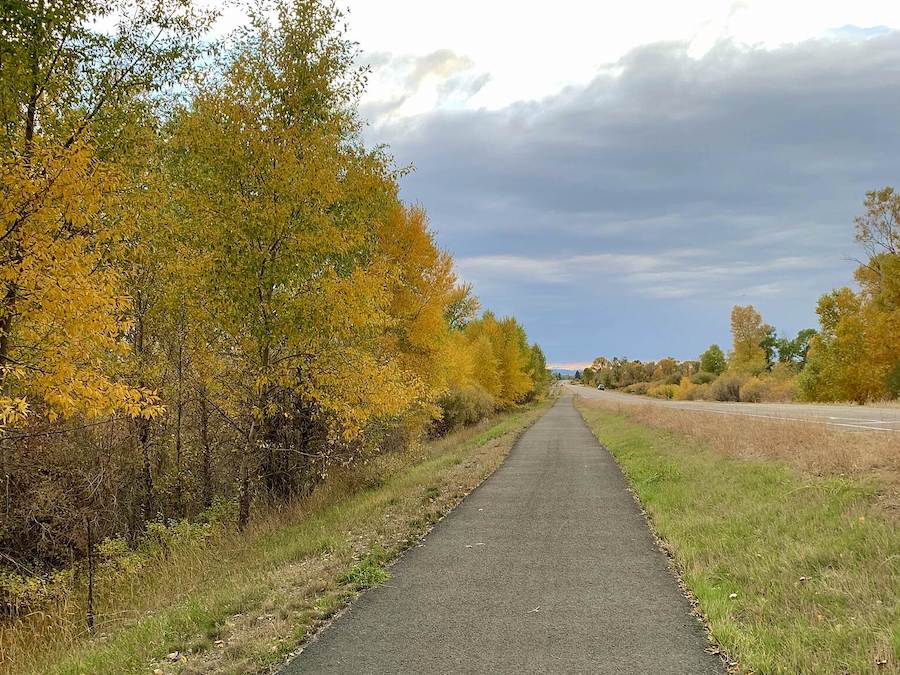
A straight shot along West Dry Creek Road, the Manhattan to the Gallatin River Trail provides separated access from the center of Manhattan east to the recreation opportunities along the Gallatin River. View trail map on TrailLink.
Milwaukee Road Rail-Trail (Thompson Park)
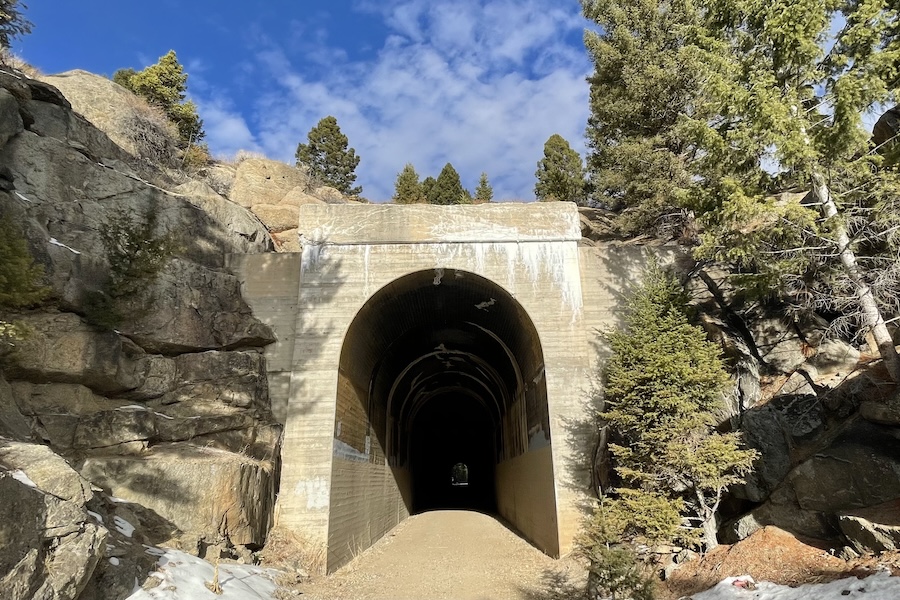
This section of railroad was one of the first in the country to be electrified—Thomas Edison even came out to Butte to ride the Milwaukee Road. The trail currently ends just 100 yards from the 2,300-foot-long Pipestone Pass tunnel. While the tunnel is closed to the public, trail users can walk up to its entrance. The trail runs through Thompson Park, a Congressionally Designated Area managed by the City and County of Butte-Silver Bow. In addition to enjoying the other trails that connect through Thompson Park, trail users can also connect to the Continental Divide National Scenic Trail, a rugged trail connecting Canada to Mexico along the Western Continental Divide. View trail map on TrailLink.
Silver Bow Creek Greenway
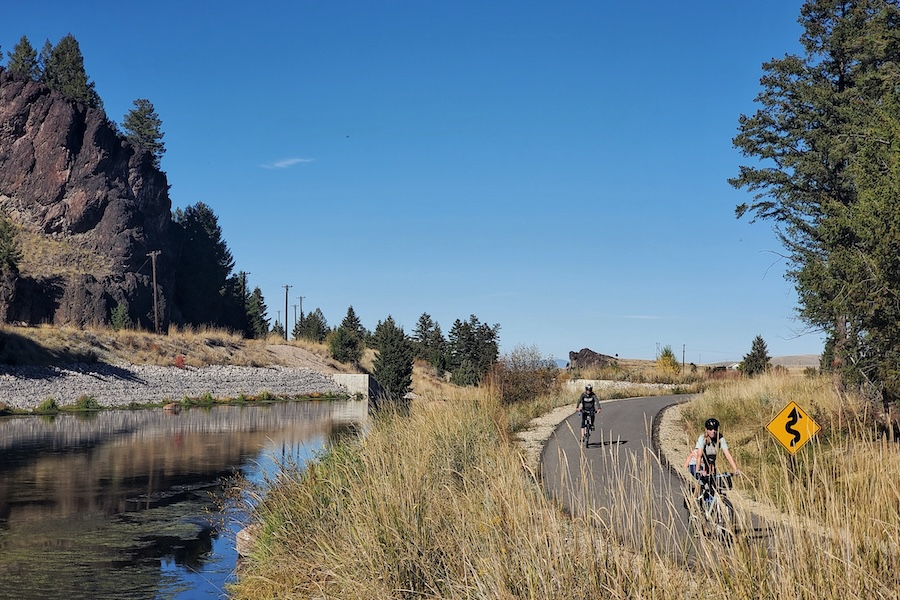
The Silver Bow Creek Greenway runs 10.2 miles through Silver Bow and Deer Lodge counties. It is currently built in two separate segments: 5.7 miles between Butte and Ramsay, a settlement west of Butte; and 4.5 miles from Durant Canyon Road near Finlen to the Highway 1 Rest Area in Stuart.
Silver Bow Creek was heavily contaminated after decades of mining and smelting in the area. The state settled with Atlantic Richfield Company for statewide Natural Resource Damage grant funds of $23 million, which have paid for restoration work along the creek as well as trail construction, access features and easements. Construction on the trail began in 2005 and continues today.
The Greenway Service District, which oversees the trail, is a multijurisdictional service district with representatives from both Silver Bow and Deer Lodge counties. In 2022, an additional mile of trail was added to the Silver Bow Creek Greenway between Fairmont Road and the community of Hackney, and in 2023, an additional 2 miles were added to connect to the Montana Highway 1/Pintler Veterans Memorial Scenic Highway rest area. View trail map on TrailLink.
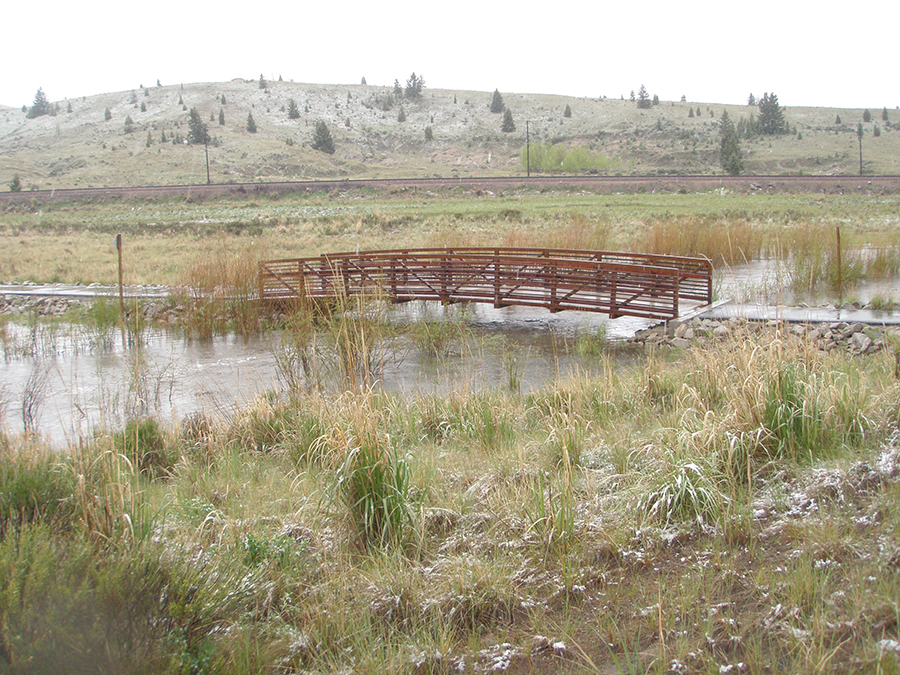
Arrow Stone Park Trail
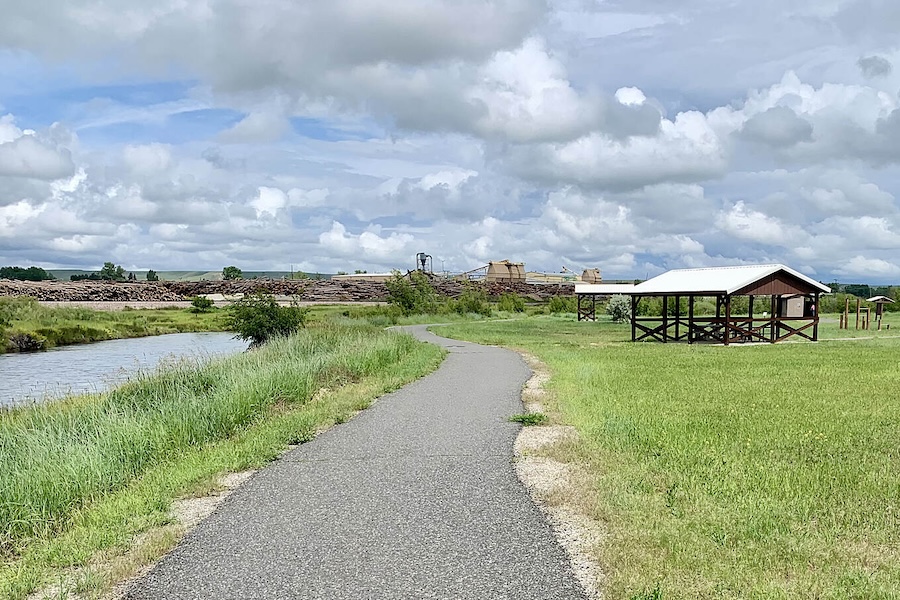
The Arrow Stone Park Trail travels north/south through Deer Lodge, following Cottonwood Creek and paralleling Main Street for about 1 mile. View trail map on TrailLink.
Old Yellowstone Trail
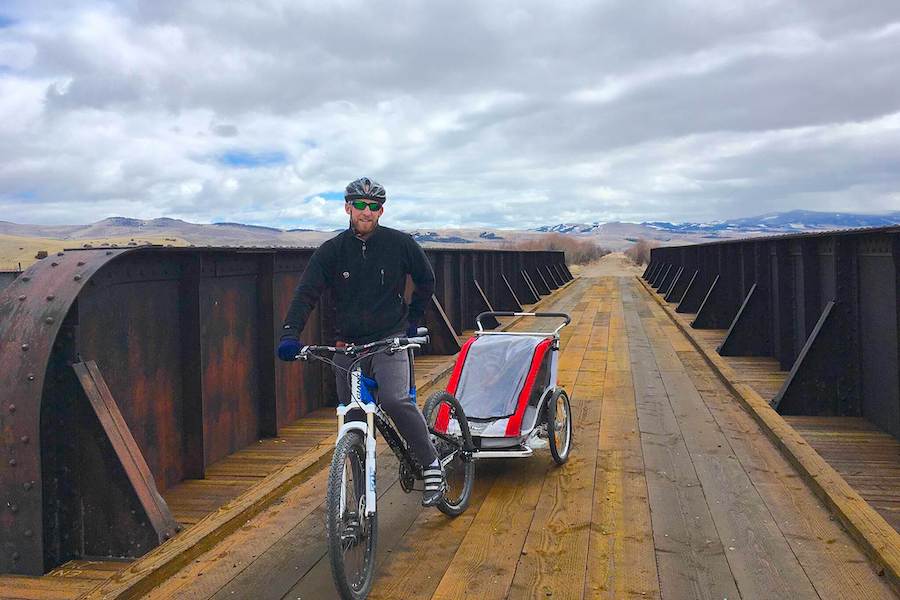
The Old Yellowstone Trail follows the right-of-way of the Milwaukee Road, traveling through two active cattle ranches. Powell County purchased this section of corridor in 2017 using funds from Montana’s Natural Resource Damage Program to build a trail from Deer Lodge north to Garrison. Washington Street provides parking access in Deer Lodge, and two additional parking lots with restrooms are available at the junction of Rock Creek Cattle Company and Garrison. Walk-through gates provide pedestrian and bicycle access to the trail and to state game lands for hunting. View trail map on TrailLink.
Piltzville Trail
The 3.3-mile Piltzville Trail connects Piltzville to Bonner-West Riverside at Milltown State Park. The trail parallels U.S. Highway 10 East and provides a separated trail connection for travel east of the city of Missoula.
Bonner Streetcar Trail
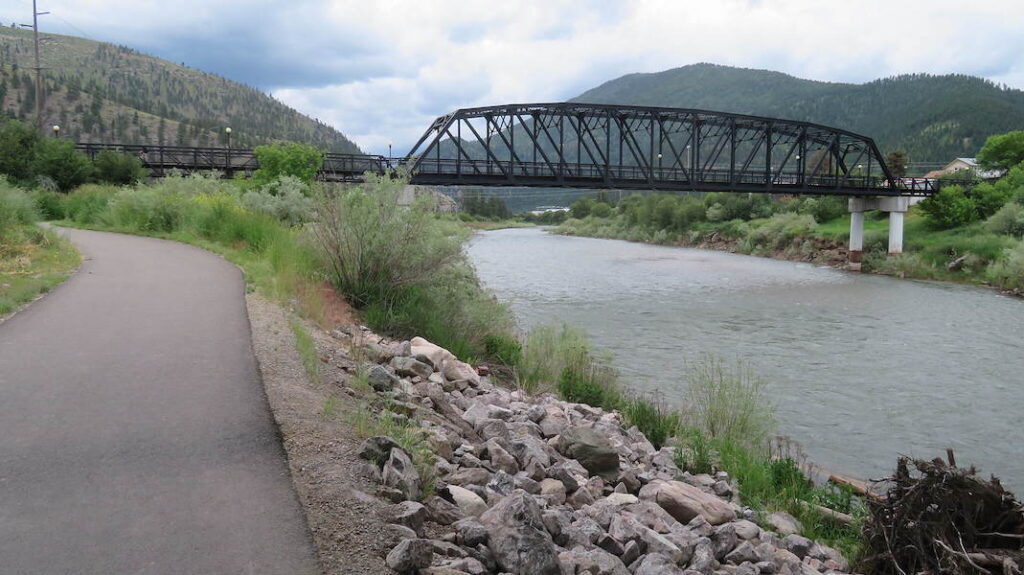
The Bonner Streetcar Trail follows a former electric streetcar line of the Missoula Street Railway Company, which ran between Milltown and Missoula from 1910 to 1932. The Bonner Streetcar Trail begins just south of the Blackfoot River, loosely paralleling state Route 200 from Laguna Street to Tamarack Road. View trail map on TrailLink.
Canyon River Trail
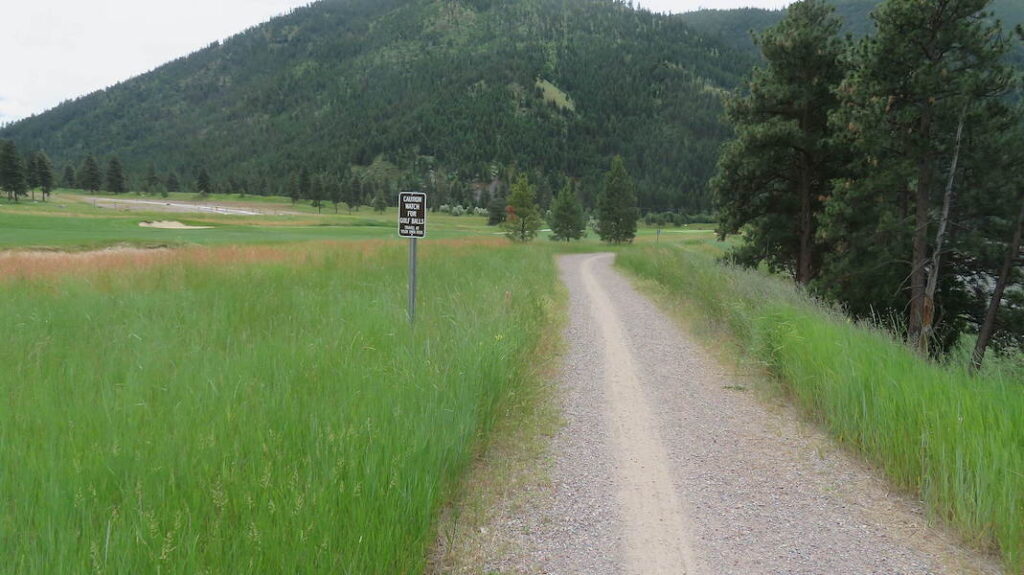
The Canyon River Trail travels roughly along the banks of the Clark Fork River through the Canyon River Golf Club. The trail is open to the public. There are safe crossings beneath I-90 on both ends and beneath an active Montana Rail Link line on the western end. Missoula spent $355,000 in 2016 to complete a 1,300-foot connection between the Canyon River Trail and the eastern terminus of the Milwaukee Trail (described below) beneath I-90. The project was completed in 2018 and provides a seamless transition between the two trails. View trail map on TrailLink.
Milwaukee Trail
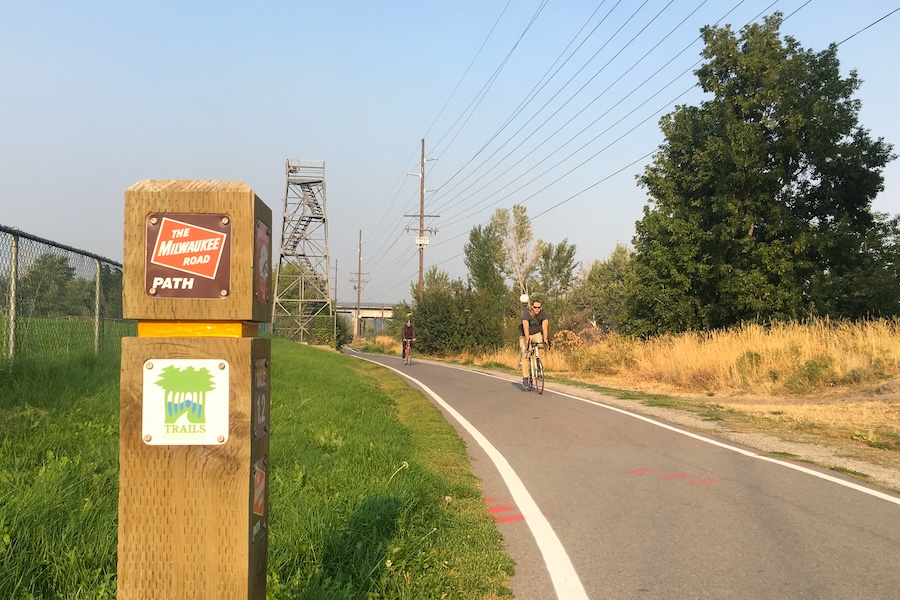
The Milwaukee Trail travels approximately 5.9 miles through Missoula along the former Milwaukee Road rail corridor.
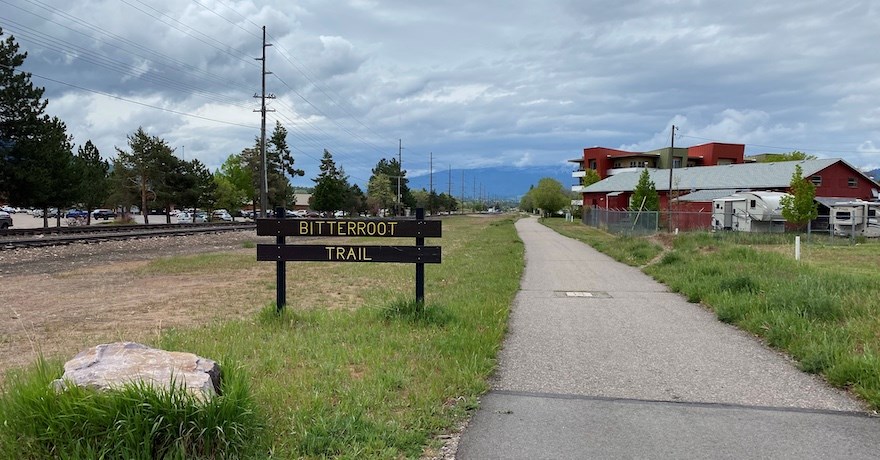
The Milwaukee Trail is the combined name of the Milwaukee Trail and the former Kim Williams Nature Trail. The trail travels from just south of the Canyon River Golf Club, following the banks of the Clark Fork River and passing the University of Montana campus, downtown Missoula and several public parks. Near downtown Missoula, the Milwaukee Trail intersects the Bitterroot Trail, which offers trail users an approximately 50-mile continuous paved path south through the Bitterroot Valley to the city of Hamilton. The Milwaukee Trail continues westward through Missoula, mostly along the historical Milwaukee Road route.
Missoula is currently constructing a separate grade crossing at a portion of North Russell Street. The reconstruction project will elevate North Russell Street and allow the trail to cross underneath, providing a safer, grade-separated crossing. View trail map on TrailLink.
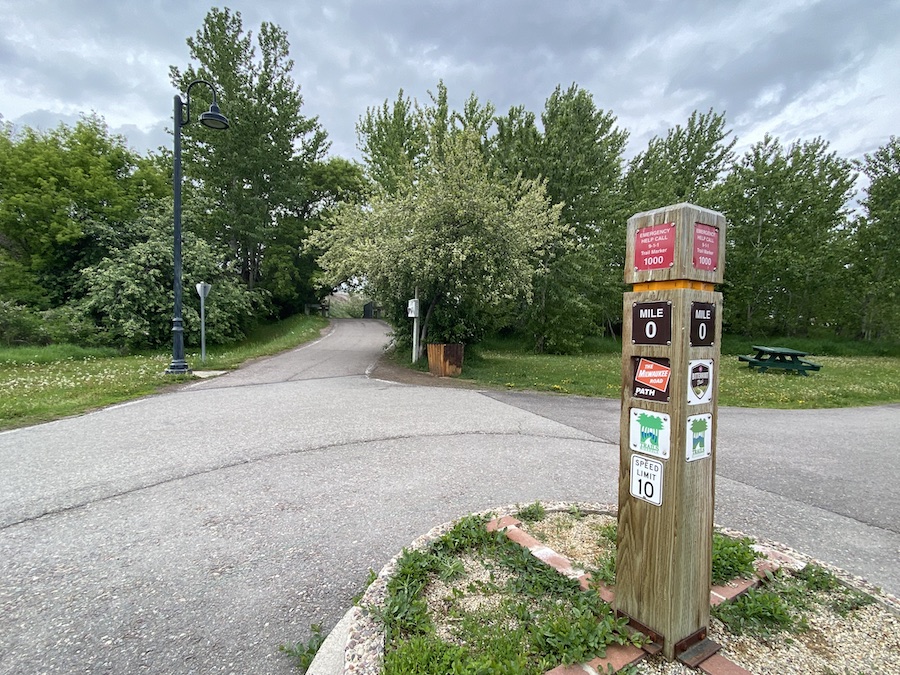
Mullan Road Trail
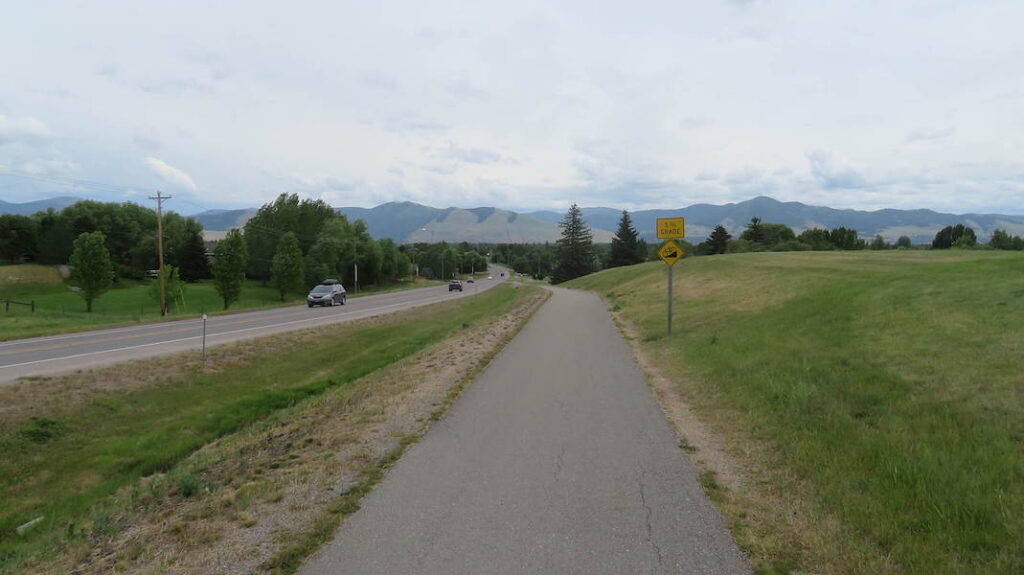
A trail was constructed on the north side of Mullan Road in 2010. The trail heads west from Flynn to Cote lanes and provides for safe, separated walking and biking along a busy two-lane county road. The Mullan Road Trail will host the Great American Rail-Trail for approximately 2.2 miles, traveling westward toward Frenchtown. View trail map on TrailLink.
A.J. Hoyt Memorial Trail
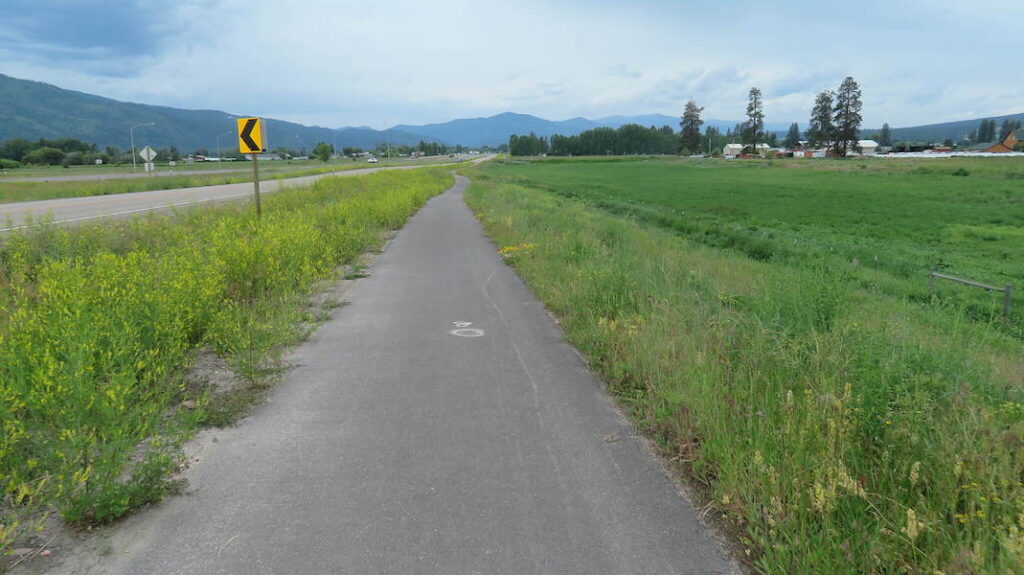
A side path runs along Frenchtown Frontage Road for about 5 miles: the A.J. Hoyt Memorial Trail. This trail provides a crucial trail connection outside of Missoula. Frenchtown Frontage Road parallels I-90, traveling around Frenchtown Pond State Park and ending in the community of Huson. View trail map on TrailLink.
Route of the Olympian
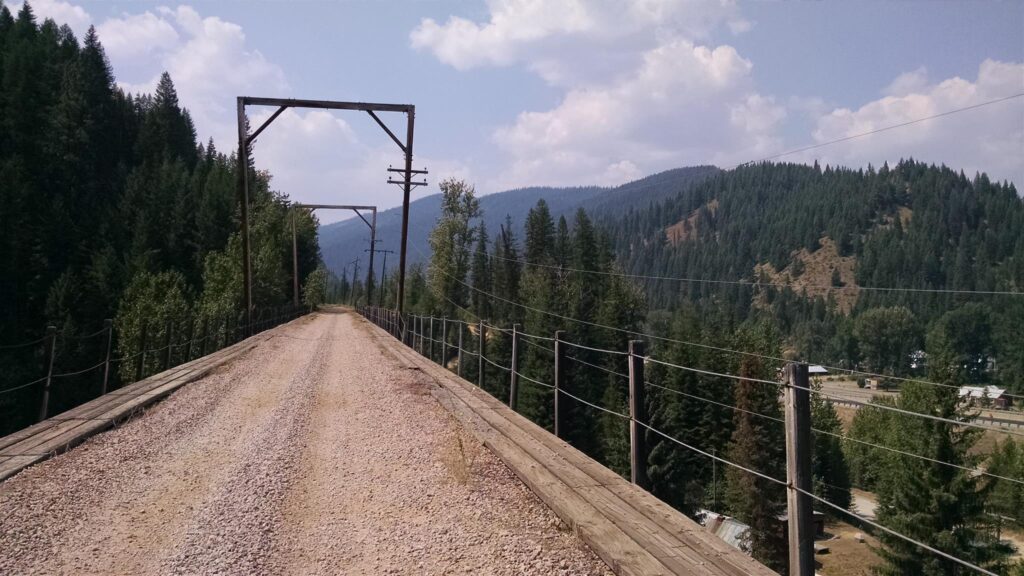
The 31-mile-long Route of the Olympian, heading west from St. Regis and following the St. Regis River for most of its length, was constructed on the former Milwaukee Road corridor through the Lolo National Forest. At its western terminus, the route directly connects to the Route of the Hiawatha to the south and the NorPac Trail to the north. View trail map on TrailLink.
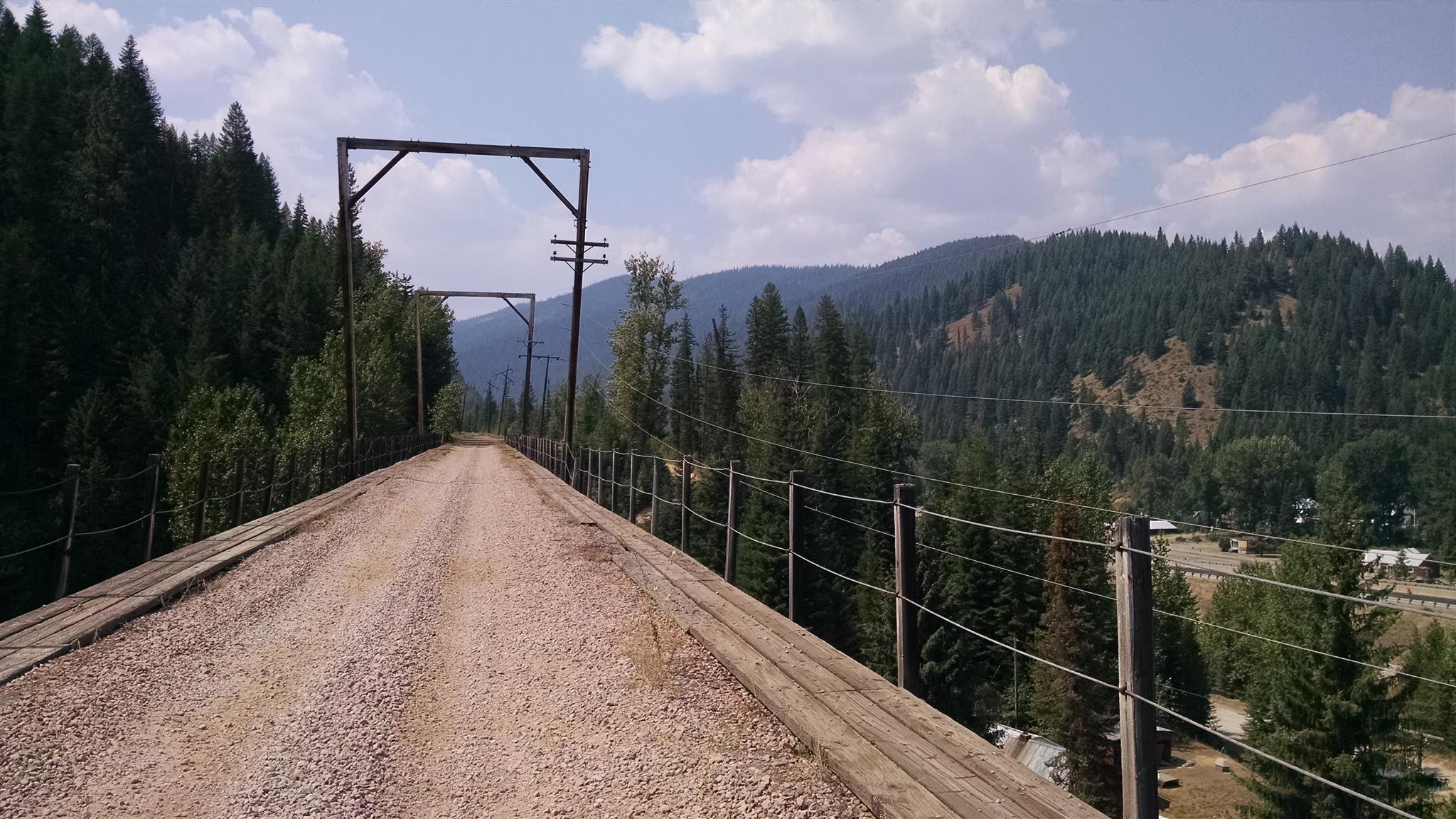
One of the first goals of Mineral County MT Rails to Trails is to rehabilitate the Saltese Trestle in the town of Saltese, Montana. In 2021, an anonymous donor gave $25,000 to support engineering work on rehabilitation of the trestle, which the group hopes to leverage into construction funding for bridge rehabilitation.
NorPac Trail
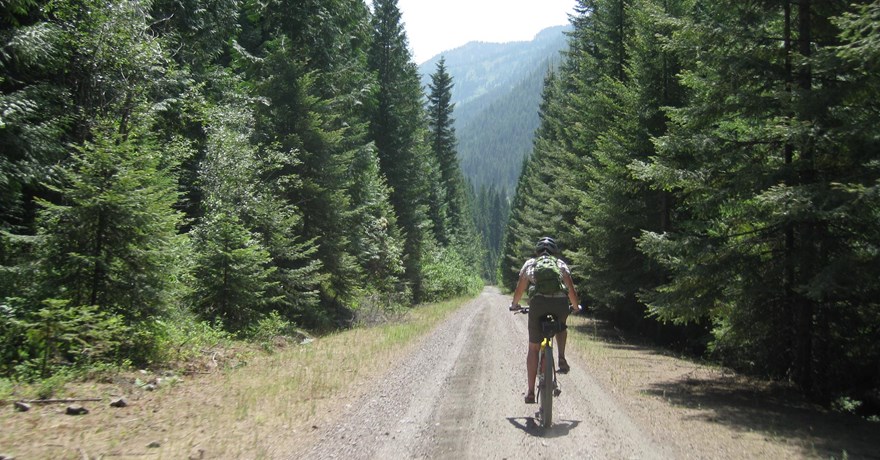
The 25-mile-long NorPac Trail follows the old right-of-way of the Northern Pacific Railway in western Montana and the Idaho Panhandle, crossing Lookout Pass. The trail runs from the town of Saltese past the East Portal of the Route of the Hiawatha (south of Taft), connecting to the Trail of the Coeur d’Alenes in the city of Mullan, Idaho. The U.S. Forest Service owns and maintains this trail. The NorPac Trail will host the Great American Rail-Trail for its entirety, including the 15.8 miles of the trail in Montana. The remaining 9.2 miles of the NorPac Trail are discussed in more detail on the Idaho page. View trail map on TrailLink.
Listen To Oral History:
Route Reveal Celebration
Completing the Great American Rail-Trail: Catalyst Initiatives in Montana
In every state along the preferred route of the Great American, needs for completing the trail vary. To spur trail completion, RTC has identified initial catalyst initiatives—projects or challenges that would most benefit from RTC’s national breadth of resources. (View the complete list of catalyst initiatives and criteria here.) Through these initiatives, RTC will support local and state partners, investing time, expertise and organizational resources in specific projects that are critical to the ultimate completion of the Great American Rail-Trail.
Great American Rail-Trail Gap #68: Highway 89 South Pedestrian Trail Extension
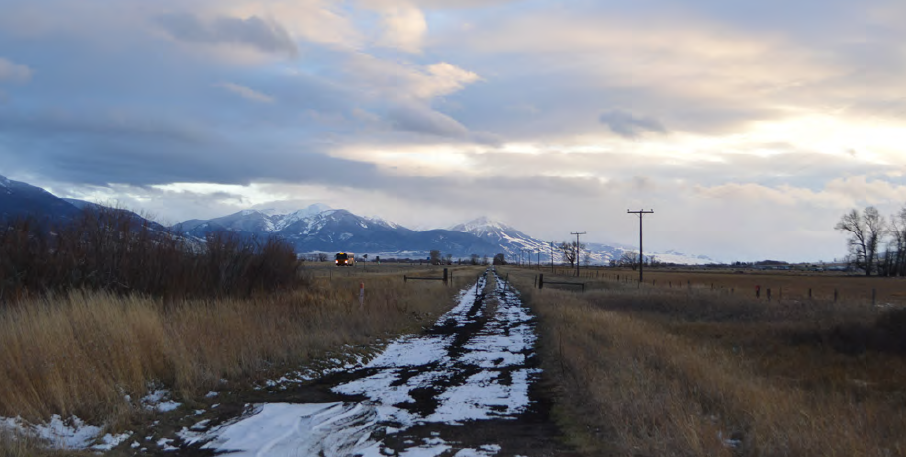
RTC is working with Park County, Trust for Public Lands, and the Park County Environmental Council to define and pursue alternative routes for completing the Yellowstone Heritage Trail Extension between Livingston and Gardiner, Montana. Assistance includes the completion of a feasibility study and concept plan for the trail segment between Emigrant and Livingston, as well as technical and fundraising assistance. The first 3-mile section through Emigrant is to be completed in 2027, with remaining segments to follow.
Great American Rail-Trail Preferred Route