Headwaters Trail System Honors Sacajawea’s Critical Navigation of the Lewis and Clark Expedition
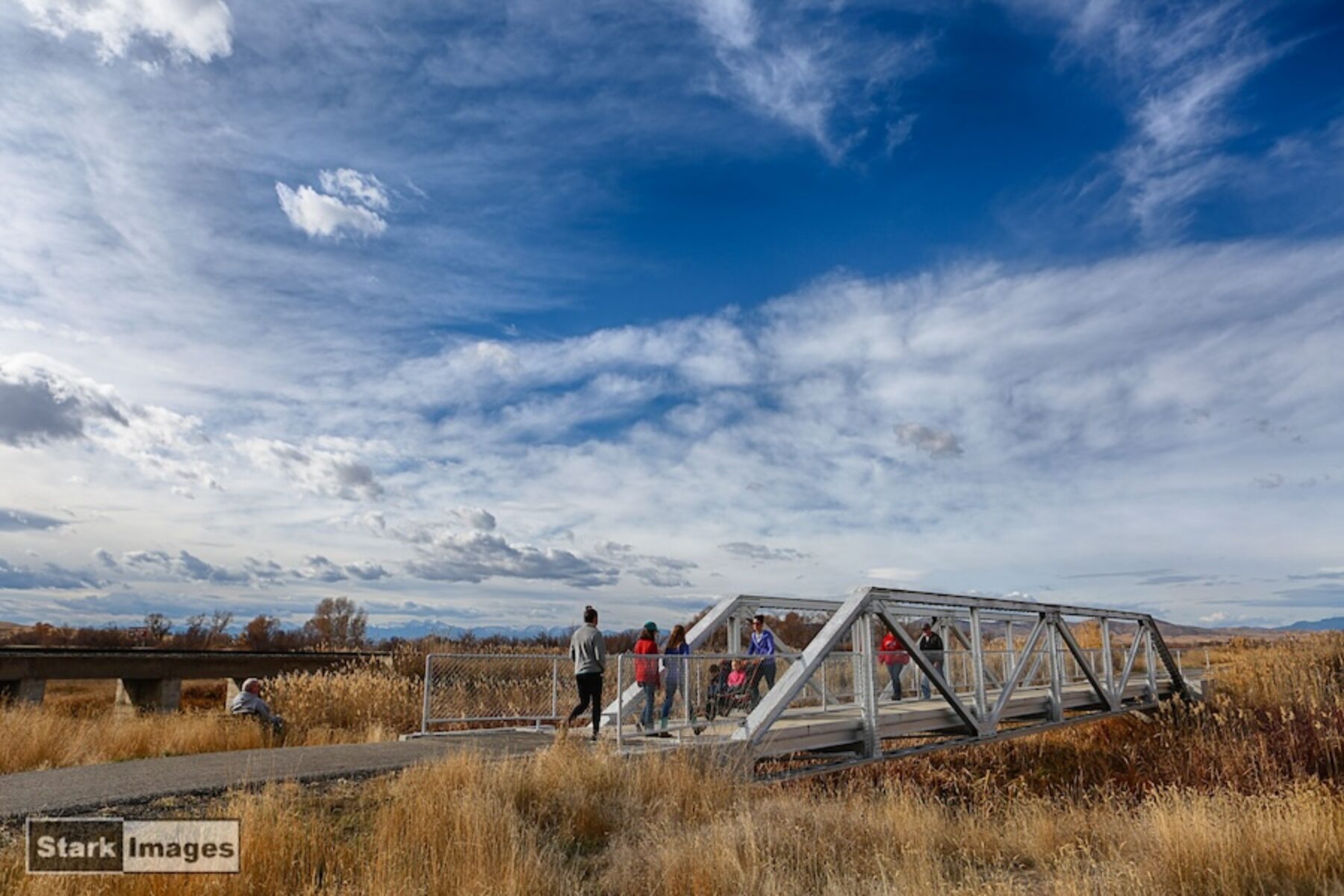
Setting aside the question of whether the land making up the Louisiana Purchase of 1803 was ever France’s to sell or the United States’ to buy—seeing as how it was already home to untold numbers of Native Americans—the acquisition nearly doubled the size of the nation. So it was no small feat to explore the vast territory that stretched from the then-Gulf of Mexico westward up through what is now Montana. The Corps of Discovery—as the Lewis and Clark Expedition was formally known—set out to do just that in May 1804.
Chief among their goals was to find a navigable waterway to the Pacific Ocean, since “in that day and age when there weren’t trains and cars, river travel was very important,” said Patrick Finnegan, an archivist with the Three Forks Area Historical Society. “They knew from earlier maps there was a place in the West where three rivers came together, so this was an early waypoint of the expedition. From those three forks, they asked, ‘Can we get to the Pacific coast?’”
The expedition had been following the course of the Missouri River upstream when they overwintered in 1804–1805 in what is today central North Dakota, still some 600 miles from the triple confluence of rivers. Understanding they would need an interpreter for the Native American tribes they would encounter heading farther west, they hired on a French-Canadian fur trapper named Toussaint Charbonneau, adding to a group that numbered some 40 men. What they wanted, Finnegan noted, was Charbonneau the interpreter; what they got was him and his young, pregnant wife, a member of the Lemhi Shoshone Tribe. “It was a package deal,” he said.
The plus-one was, of course, the famed Sacajawea.
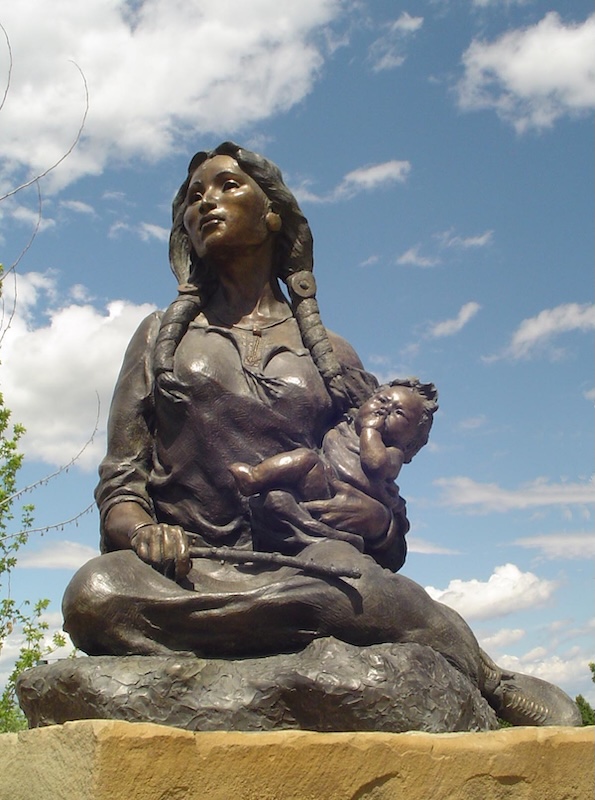
There are few women from this era who stand so tall in the popular imagination. Living in a time when women were regularly defined by the men they were married to—if they were noted at all—Sacajawea would go on to be one of the most remembered Corps of Discovery members, arguably second only to Meriwether Lewis and William Clark.
Sacajawea proved to be a capable translator and ambassador to the Native Americans they encountered, since the very presence of a young mother helped mitigate the impression of a war party. As William Clark wrote in his journal:
“The wife of [Charboneau] our interpetr we find reconsiles all the Indians, as to our friendly intentions[.] a woman with a party of men is a token of peace[.]”
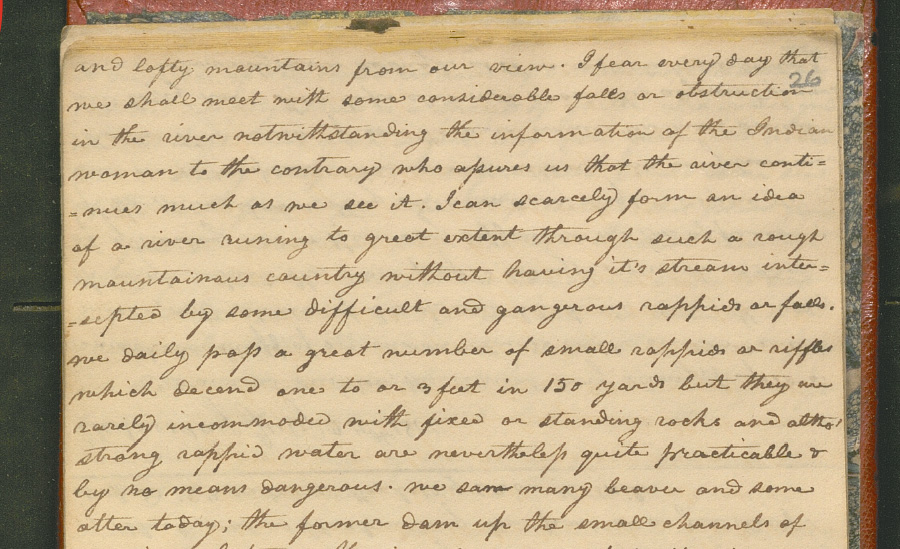
As the party neared the three forks region in the summer of 1805, she took on yet another role, recognizing the place whence she’d been captured as a 12-year-old girl by a warring tribe. Her familiarity with the area helped ease the group’s anxiety and guide them in choosing a favorable path westward. Lewis wrote about his own apprehension, as well as his trust in Sacajawea, in a July 24, 1805, journal entry, stating:
“I fear every day that we shall meet with some considerable falls or obstruction in the river notwithstanding the information of the Indian woman [Sacagawea] to the contrary who assures us that the river continues much as we see it.”
Today, the town of Three Forks, Montana, sits 3 miles from where the Jefferson, Madison and Gallatin rivers—named by the expedition for the country’s president, secretary of state and secretary of the treasury, respectively—join to form the Missouri. Sacajawea’s contributions are celebrated in the area, where the Sacajawea Hotel has carried her name since 1910 and a statue was erected in her honor in the town’s Sacajawea Park.
[In 2026], planned signage about Sacajawea’s contributions will be installed in 2026 along the 13-mile Headwaters Trail System, which goes through town and connects to Headwaters State Park; it’s a popular destination for fans of early Western history, where visitors can camp in the same spot as did Sacajawea and the rest of the famed expedition.
This article was developed as part of Rails to Trails Conservancy’s Trails Across America historical marker program—launched in partnership with the William G. Pomeroy Foundation to lift up unique places, people and history along greenways, canal towpaths and rail-trails—linking communities while honoring their pasts.
A trailside marker, created through a collaboration with the Headwaters Trail System, now commemorates Sacajawea’s contributions to the Corps of Discovery (1804–1806.
Marker Location: A marker will be installed in the near future at Talc Road (just south of US2) in Three Forks, Montana (45.898444, -111.534528) in the near future!
SACAJAWEA
SHE NAVIGATED THE LEWIS AND CLARK EXPEDITION ALONG THE MISSOURI RIVER, THROUGH NATIVE LAND, TO THE THREE FORKS AREA DURING THE SUMMER OF 1805.
HEADWATERS TRAIL SYSTEM
WILLIAM G. POMEROY FOUNDATION 2026
Acknowledgments:
Donate
Everyone deserves access to safe ways to walk, bike, and be active outdoors.
Related
View All
Illinois’ Bloomingdale Trail: October 2026 Trail of the Month
A Pathway to Wellness: Exploring Trails as Lifelines for Mental Health