Great American Rail-Trail In Washington, D.C.
Capital Crescent Trail | Photo by Hung Tran
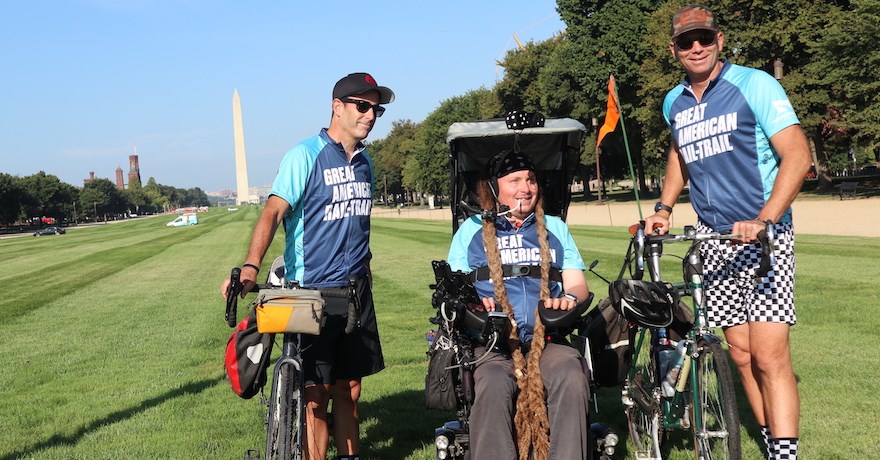
The easternmost endpoint for the Great American Rail-Trail begins in Washington, D.C., at the steps of the U.S. Capitol. Heading west through the National Mall, the route is hosted by trails featuring some of America’s most renowned landmarks and a portion of Rock Creek Park, the oldest urban park in the National Park Service. After traveling through historic Georgetown, the Great American Rail-Trail in Washington, D.C., ends near Fletcher’s Cove, a well-known fishing and outdoor recreation area of the Chesapeake & Ohio Canal National Historical Park.
DC stories along the Great American Rail-Trail

The “Great American” Route Through D.C.
The trail route through Washington, D.C., and Maryland is the only section of the Great American Rail-Trail that is currently 100% complete. The route begins at the steps of the U.S. Capitol and picks up at the Capital Crescent Trail in Georgetown, which flows into the towpath of the Chesapeake and Ohio (C&O) Canal National Historical Park. With the C&O stretching from Washington, D.C., to Cumberland, Maryland, the route then meets up with the Great Allegheny Passage (gaptrail.org).
7.5
Total Miles7.5
Existing Miles0
Gap Miles100%
Complete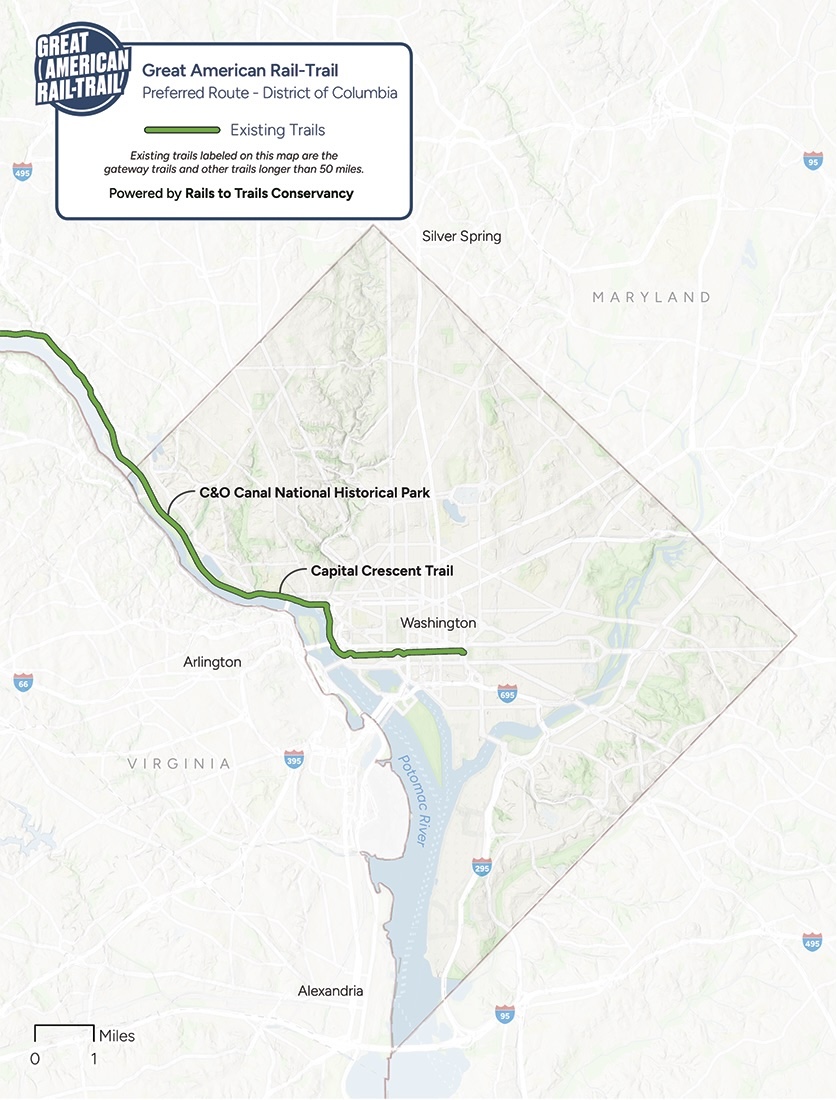
Great American Rail-Trail Route Assessment (2026)
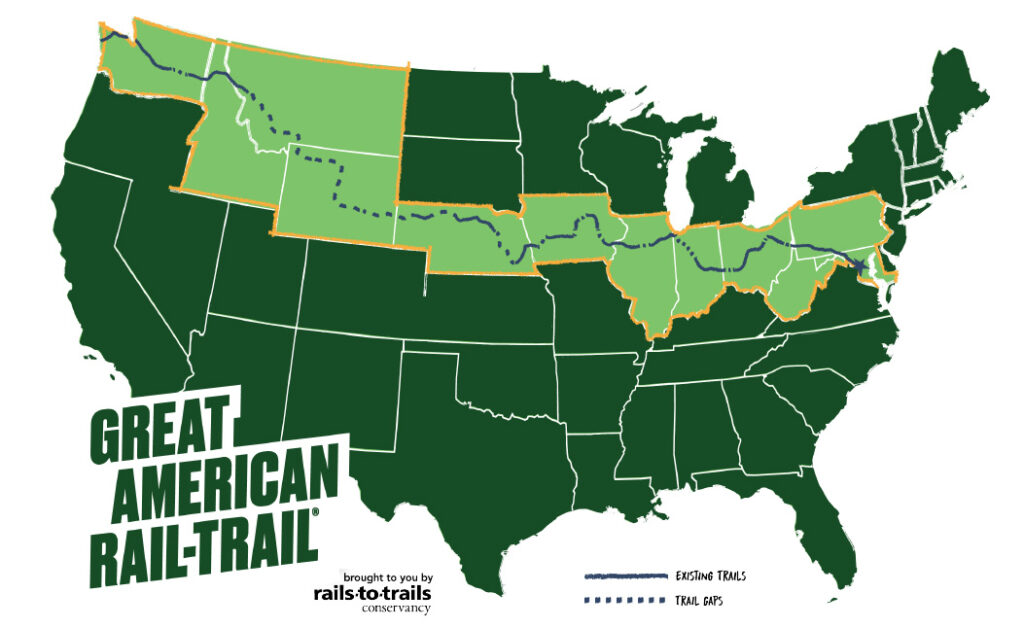
The Great American Rail-Trail Route Assessment 2026 defined the preferred route of the Great American Rail- Trail as more than 3,700 miles—with 2,086 miles of existing trails and 1,674 miles of trail gaps.
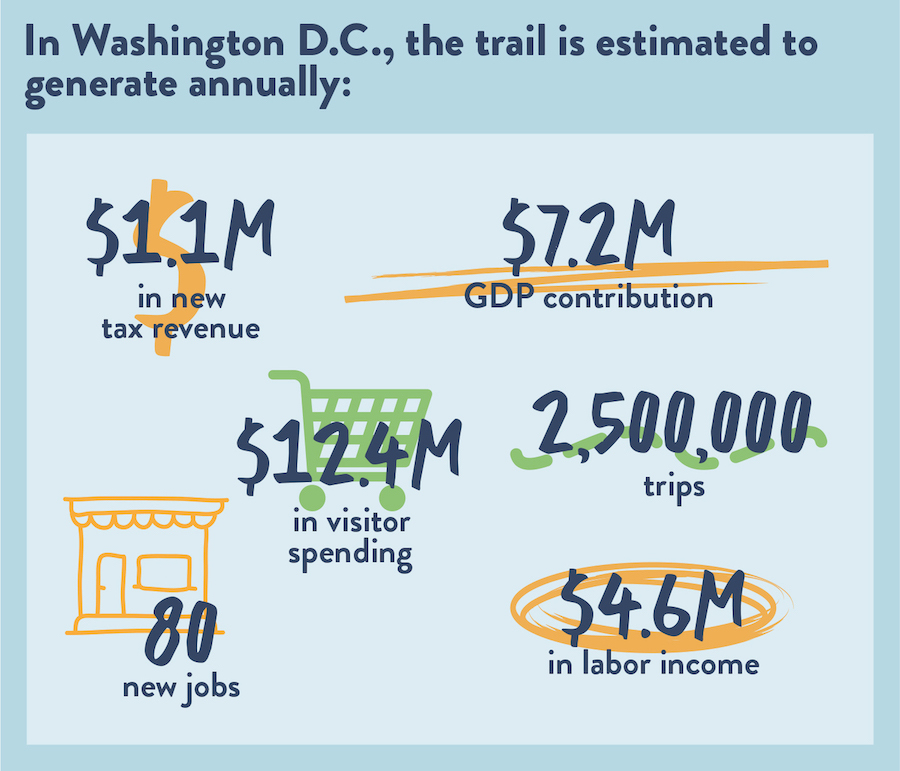
Economic Potential of the Great American Rail-Trail Report (2022)
Investments could generate more than $229.4 million in visitor spending, $104 million in labor income, and $22.8 million in new tax revenue.
Trails Along the Route
Gateway Trail: Capital Crescent Trail
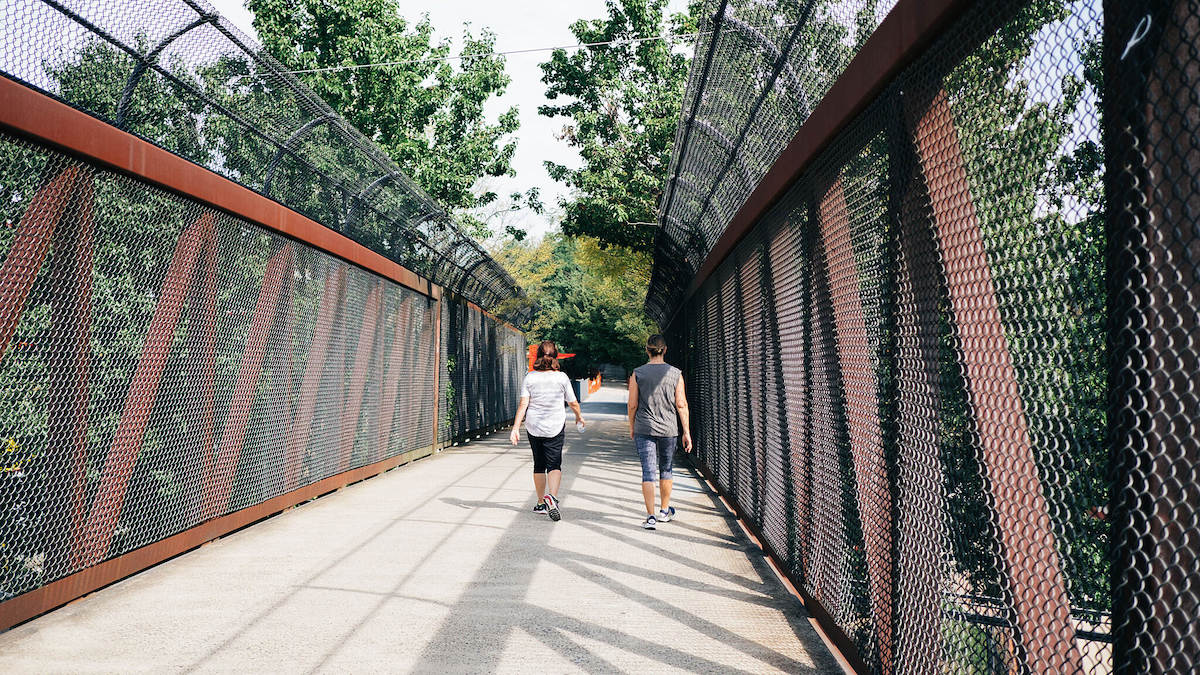
A start in the nation’s capital offers an exciting kickoff for such an epic and patriotic undertaking. The 11-mile Capital Crescent Trail begins in Georgetown, just a couple miles from the National Mall with such American treasures as the Lincoln Memorial and Washington Monument. Travelers roll out of the city and into Maryland largely under the cover of a pleasant tree canopy with beautiful glimpses of the Potomac River. View trail map on TrailLink.
National Mall Trails
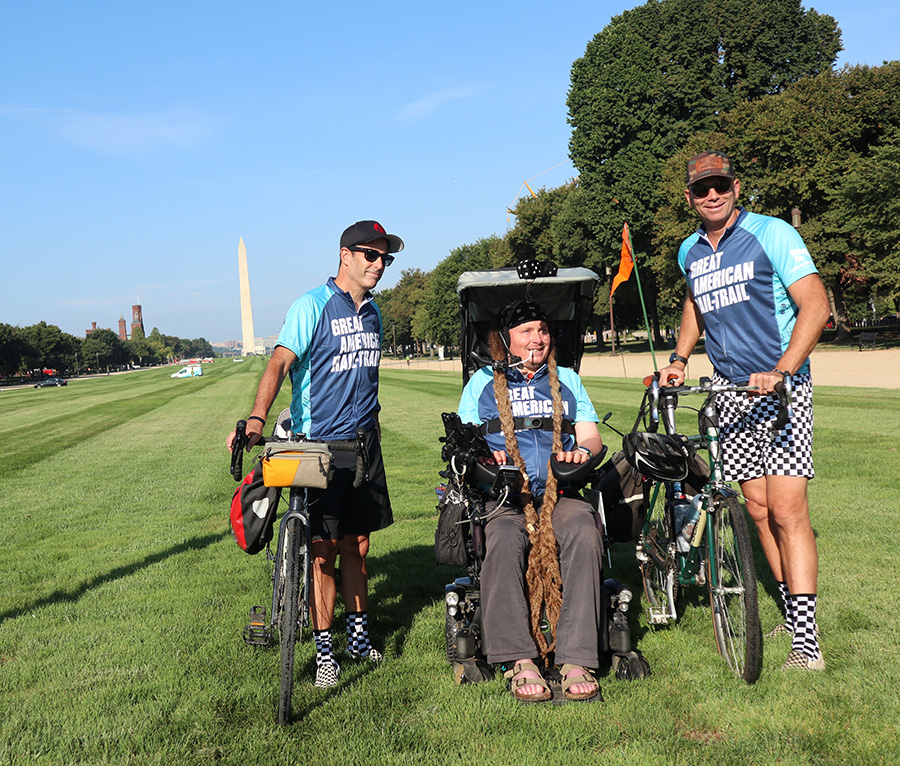
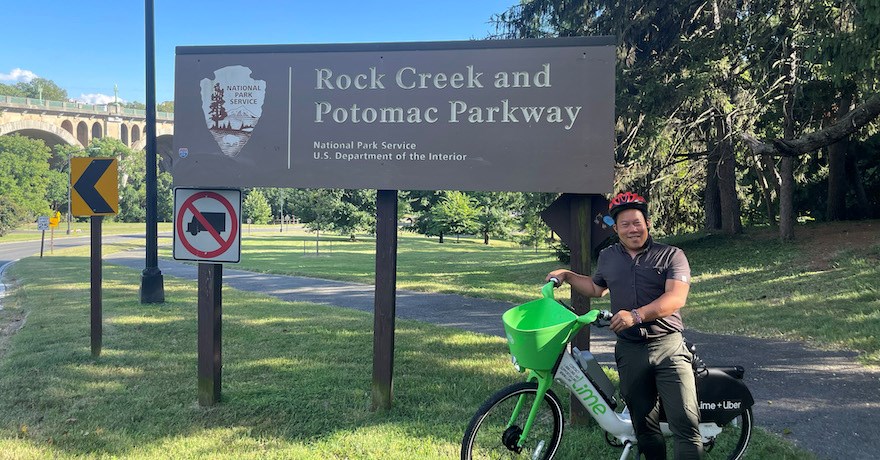
Beginning at the steps of the U.S. Capitol, the Great American Rail-Trail will travel west from this eastern extent along the National Mall. The National Mall has a series of trails owned and maintained by the National Park Service that are popular with tourists traveling around the monuments and museums. Bicycles are allowed on the trails, but because the trails are frequently crowded, cyclists should take caution and proceed through the National Mall Trails slowly. The trail crosses the Rock Creek and Potomac Parkway (also known as Rock Creek Parkway) before heading north along the Potomac River. The trail hugs the river, then merges with the Rock Creek Park Trails.
Rock Creek Park Trails

Rock Creek Park is the oldest and largest urban park in the national park system. The portion of the Rock Creek Park Trails system through Rock Creek Park in Washington, D.C., is owned and maintained by the National Park Service. The Rock Creek Park Trails connect to the National Mall Trails along the banks of the Potomac River near the Theodore Roosevelt Bridge. The Rock Creek Park Trails travel 8.5 miles in total in Washington, D.C. The Great American Rail-Trail utilizes the southernmost portion of these trails.

K Street/Water Street Cycle Track
The Rock Creek Park Trails create a connection to a protected bike lane, or cycle track, along K Street/Water Street in the Georgetown neighborhood of Washington, D.C. (accessible via a ramp from K Street Northwest to Rock Creek Parkway). The two-way protected bike lane travels the length of K Street/Water Street, underneath the elevated Whitehurst Freeway, to the entrance of the Capital Crescent Trail.
Chesapeake & Ohio Canal National Historical Park
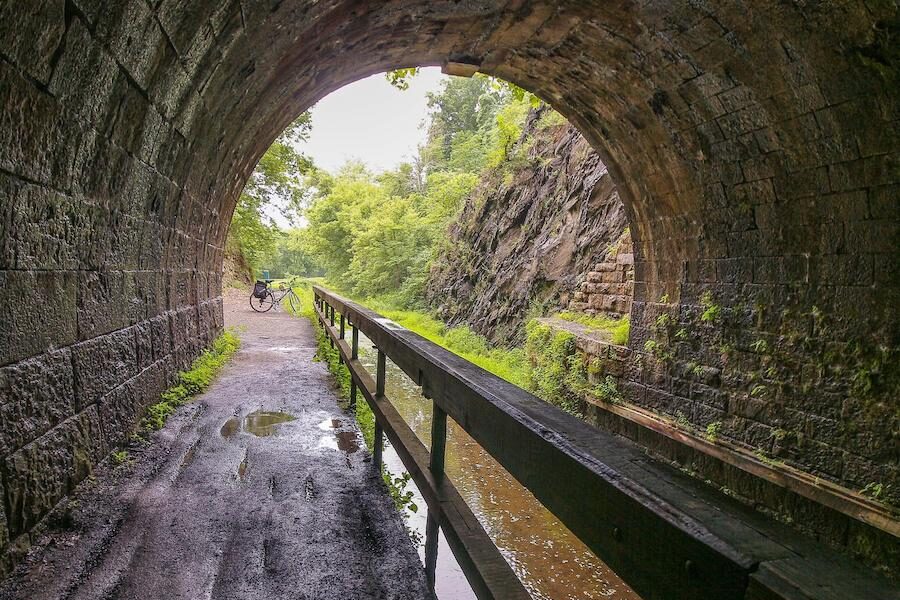
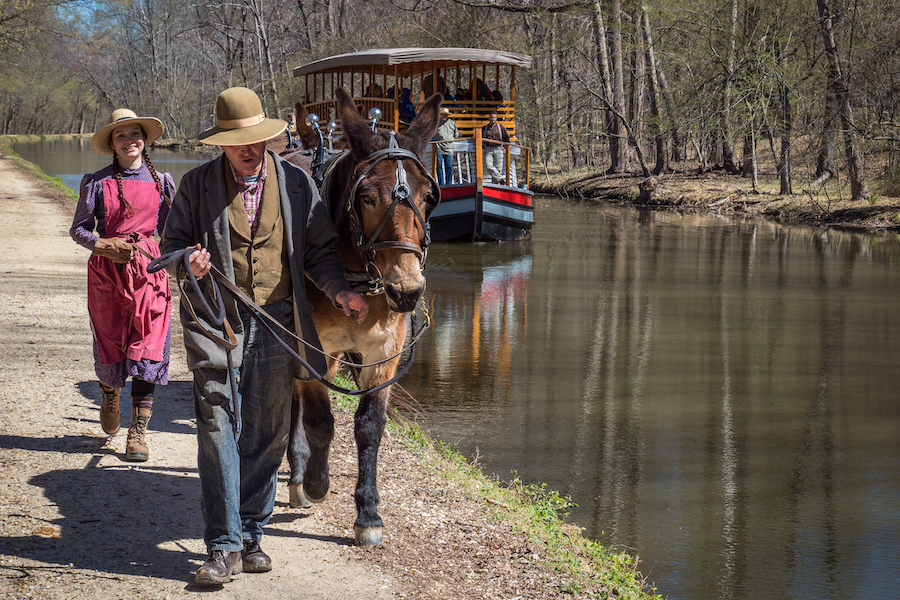
Better known as the C&O Canal Towpath, this pathway parallels the Capital Crescent Trail coming out of D.C. Beginning a stone’s throw from the National Mall and the White House, the 184.5-mile trail that runs along the Potomac River to Cumberland, Maryland, brims with rich history (read about more historical connections along the Great American Rail-Trail here). George Washington used his Revolutionary War cred to successfully lobby for the creation of the precursor “Potowmack Canal Company,” which was ceded to the Chesapeake and Ohio Canal Company in the early 1820s. Their C&O Canal would become an important transportation line for a century, and hundreds of relics [and canal structures] still line the trail today. The trail offers a peaceful ride to Cumberland, Maryland, with hundreds of original features to see along the way, including canal locks, lock houses, aqueducts and their canal structures. Now, the towpath is a well-used trail that sees more than 5 million visitors annually (compared to 1 million in 1996). View trail map on TrailLink.
Listen To Oral History:
Route Reveal Celebration
Live from Washington, D.C., on the Capital Crescent Trail
Great American Rail-Trail Preferred Route