TrADE Report | About | States | Program Search | Webinars
TrADE FY 2024
Transportation Alternatives is the largest dedicated source of funding for walking and bicycling infrastructure in the United States. Since 1991, this program (called Transportation Enhancements until 2012) has provided nearly $25 billion in funding to create the infrastructure necessary to make it safer and easier for Americans to walk and bike. This critical investment has established a foundation for the nation’s active transportation system, contributing to 42,000+ miles of multiuse trails, thousands of projects to improve streets for walking and biking, and hundreds of developing active transportation networks reaching every state.
Transportation Alternatives Spend Report FY 2024
In this report, we provide a look at the history of TA programs and examine how recent changes are supporting state and local decision-makers and advocates in getting eligible projects funded.
- Approximately $1.5 billion of TE/TA/TASA funds was reimbursed in FY 2024, marking the completion of projects and the return of up-front funds to local communities.
- A total of $1.36 billion was apportioned to the states for the TA program in fiscal year (FY) 2024, in contrast to $1.33 billion in FY 2023.
- A total of $1.09 billion was obligated to TA projects in FY 2024, in contrast to $4.9 billion in TA application requests in FY 2023.
- The FY 2024 inter-program transfer rate (TASA funds being moved away from the TASA program and into other projects) was 18.4% compared to 6.4% in FY 2023.
- Obligation rates were 80% of apportioned funds, up from 62% in FY 2023. This increase represents a substantial leap in program delivery now that states have hit their stride in implementing IIJA reforms.
RTC’s analysis of Fiscal Year 2024 (FY24) program implementation, the third year under the Infrastructure Investment and Jobs Act (IIJA), shows that while progress is being made, there is far more work to be done to meet the nation’s needs for safe routes to walk and bike, including bolstering investment, transparency and accountability and addressing the unique needs of states with limited resources.
About Transportation Alternatives Data Exchange
Communities across America have access to Transportation Alternatives (TA) funds from the federal government to expand travel choice, strengthen the local economy, improve the quality of life, and protect the environment. Since the inception of Transportation Enhancements in 1991, renamed Transportation Alternatives in 2012, Rails-to-Trails Conservancy (RTC) has monitored how these dedicated funds have been invested in order to help stakeholders at the federal, state, and local level better understand and implement this program. From 1996 to 2013, TrADE operated as the National Transportation Enhancements Clearinghouse, as a partnership between RTC and the Federal Highway Administration.
TrADE Reports
View annual reports dating back to Fiscal Year 2000.
The Transportation Alternatives Set-Aside (TASA) was established by Congress in the Fixing America’s Surface Transportation (FAST) Act of 2015, replacing MAP-21’s Transportation Alternative Program (TAP). TAP was preceded by Transportation Enhancements under ISTEA (funded 1992 – 2004) and SAFETEA-LU (2005 – 2012).
Eligible activities include most activities historically funded as “Transportation Enhancements,” the Recreational Trails Program, and the Safe Routes to School program.
Federal information related to TA is accessible through the Federal Highway Administration (FHWA) TA website.
Detailed tracking of the Recreational Trails Program can be found at the Recreational Trails Program Database.
RTC’s Reauthorization Agenda
As we work to shape federal transportation priorities, RTC has put forth a policy framework for the next reauthorization of the federal surface transportation bill focused on ensuring a robust ecosystem of policies and programs that prioritize connected walking and biking routes, making it safer and easier for Americans to move around the regions where they live, work and play. Priorities include:
- Growing and strengthening all three pillars of dedicated federal programs that support active transportation: Transportation Alternatives, the Recreational Trails Program, and the Active Transportation Infrastructure Investment Program
- Ensuring that multimodal federal discretionary grants catalyze innovation and address limitations of formula programs to support critical projects
- Calling for accountability in how states deploy formula funds to maximize impact
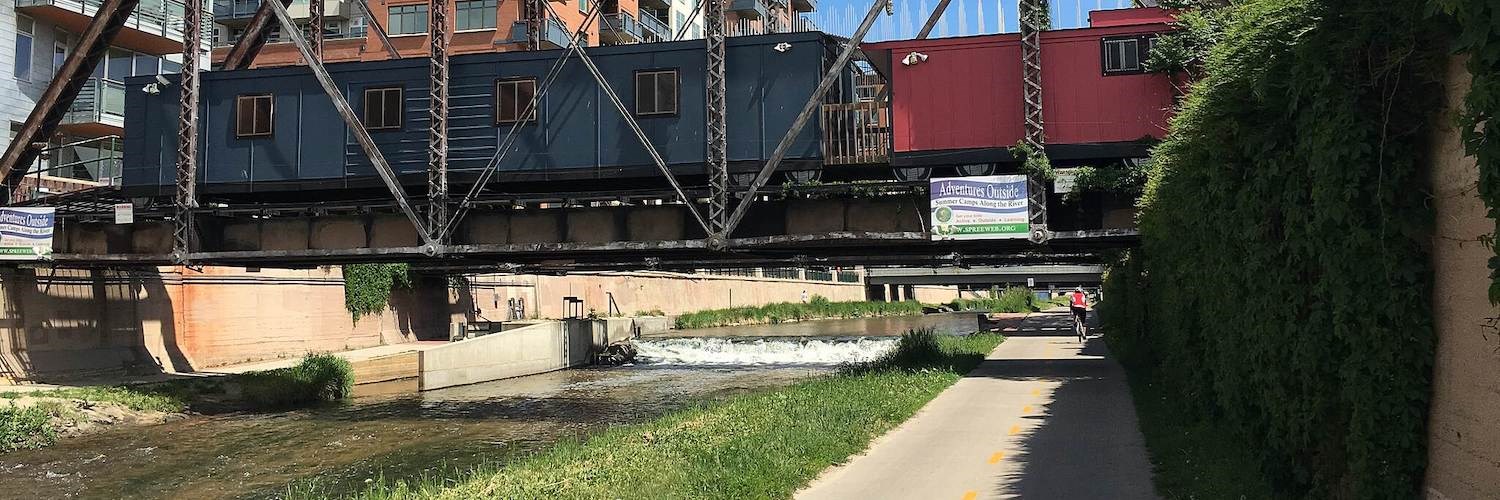
Transportation Alternatives Stories
View More Blogs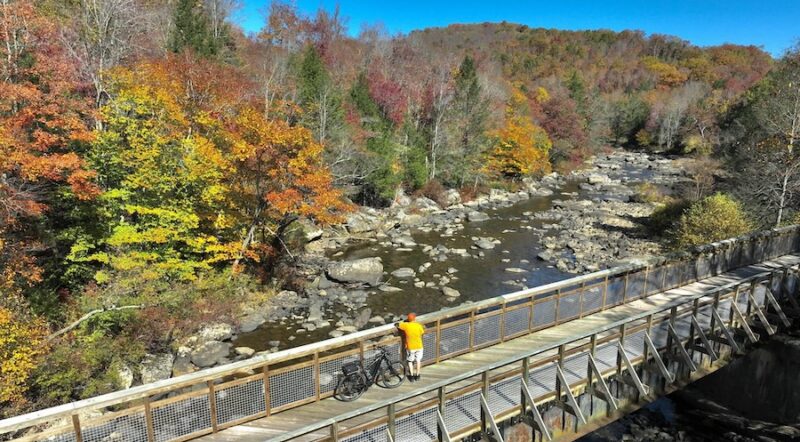
West Virginia’s Meadow River Rail Trail March 2026 Trail of the Month
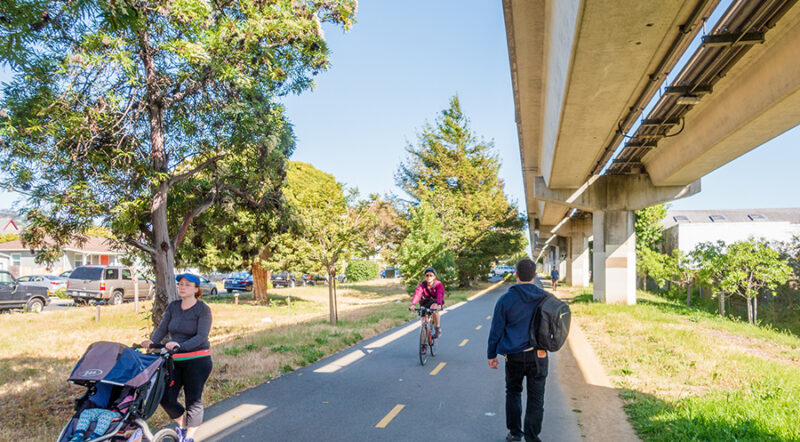
Over 1,000 Organizations Come Together With a Clear Message for Congress: Walking and Biking Infrastructure Is Essential
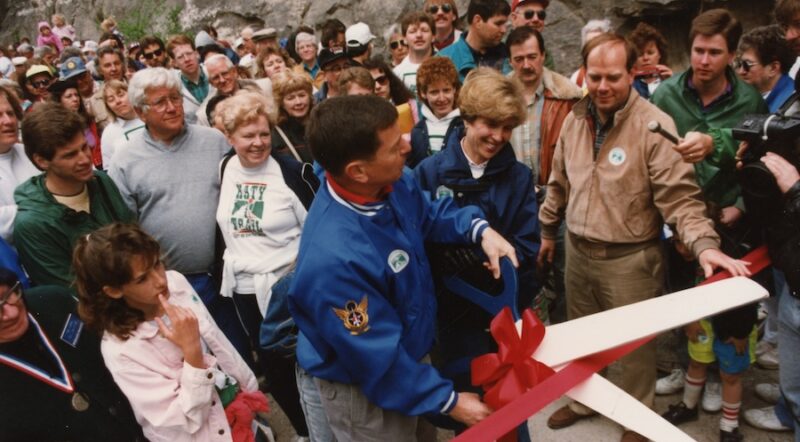
Reflections at 40: Moments That Moved the Dial for America’s Rail-Trails
State Programs

The Transportation Alternatives program was created and funded through federal transportation legislation. It is administered by the Federal Highway Administration, but implemented by the states.
States have flexibility in how the Transportation Alternatives program is administered. In particular, the Transportation Alternatives program combines three previously separate sources of transportation funding: Transportation Enhancements, the Recreational Trails Program, and Safe Routes to School. As states move forward with implementing the new Transportation Alternatives program, policies will vary from state to state regarding the arrangement of previous state policies concerning these antecedents.
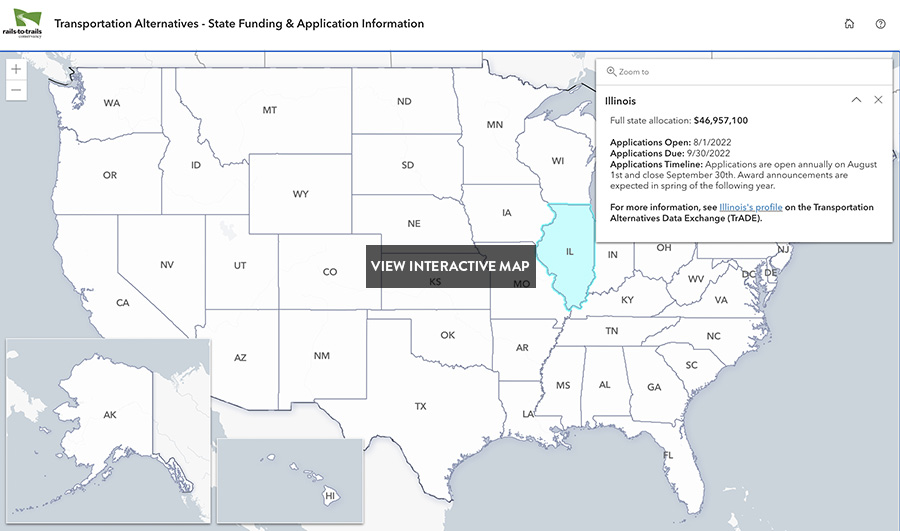
State Program Search
State program funding history and past projects