Trail Moments: Healing Through Nature Along Rail-Trails

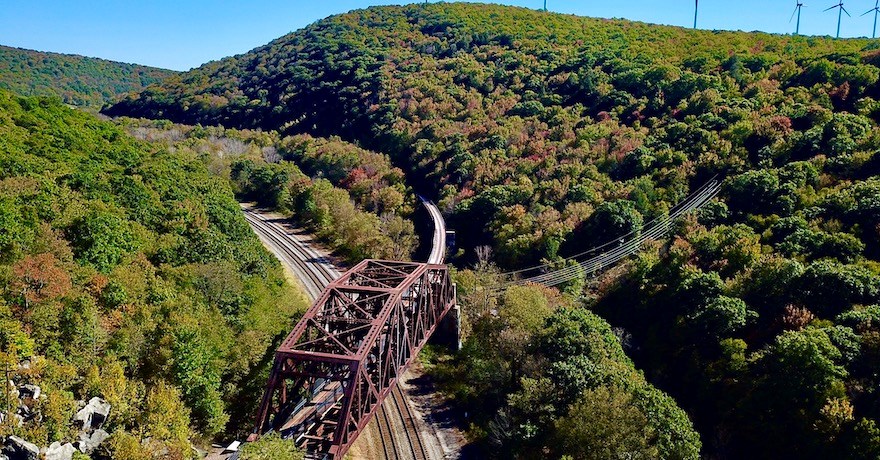
The tunnel yawns before us, exhaling cold breath. We stand with our bicycles and trikes poised at the entrance, the air thickened with fog, sunbeams stabbing the mist. Above the gaping mouth, it bears the name “Big Savage Tunnel.” The 3,300-foot-long tunnel is one of numerous highlights along the Great Allegheny Passage (GAP), which traverses 150 miles between Cumberland, Maryland, and Pittsburgh, Pennsylvania. Our group is cycling the entire GAP as part of a greater goal of cycling the country-spanning Great American Rail-Trail®, but we are not your typical cyclists.

We have two challenged cyclists along: Dan Stein, an Army Ranger veteran with a traumatic brain injury and multiple body traumas riding a manual trike, and Todd Gladfelter, my husband, a spinal-cord-injured quadriplegic who rides an adaptive e-assist trike. We are aiming to raise awareness for the need for accessible trails for people with disabilities, and America’s rail-trails—with their relatively level grades and generally straight routes—are ideal for connecting those of all abilities with nature. A handful of helpers follow our cyclists into the tunnel, single file, with me leading.
Hope and Resiliency
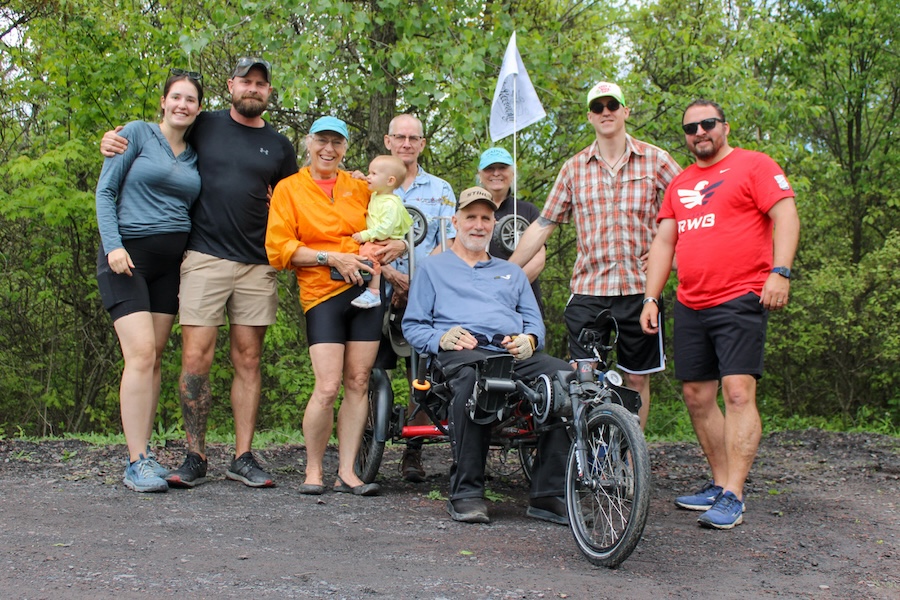
Todd and I have led veterans on outdoor adventures for the past 13 years under my nonprofit, River House PA, which aims to heal veterans through nature. We support veterans who have experienced war trauma and have led them on hikes, backpacking and cycling trips, and paddling excursions. But then, four years ago, Todd fell off a roof and broke his neck. He was told he would never walk again, nor do much of anything else. With tremendous rehab, he can now walk half a mile—even managing some distance without a walker or cane—and can ride his adaptive trike hundreds of miles. Serendipitously, the veterans helped us arrive here.
It was through getting to know these veterans and hearing their stories of struggle and resiliency that ultimately gave us hope and encouraged us to defy any doctor’s grim prognosis. They taught Todd and I about trauma, resiliency, hard work and fortitude. Our work with them prepared us for this new life. As the president of River House, it was a challenge at first, to find activities with our veteran friends that worked for both them and Todd in his compromised, paralyzed body, but cycling America’s rail-trails is our happy place.
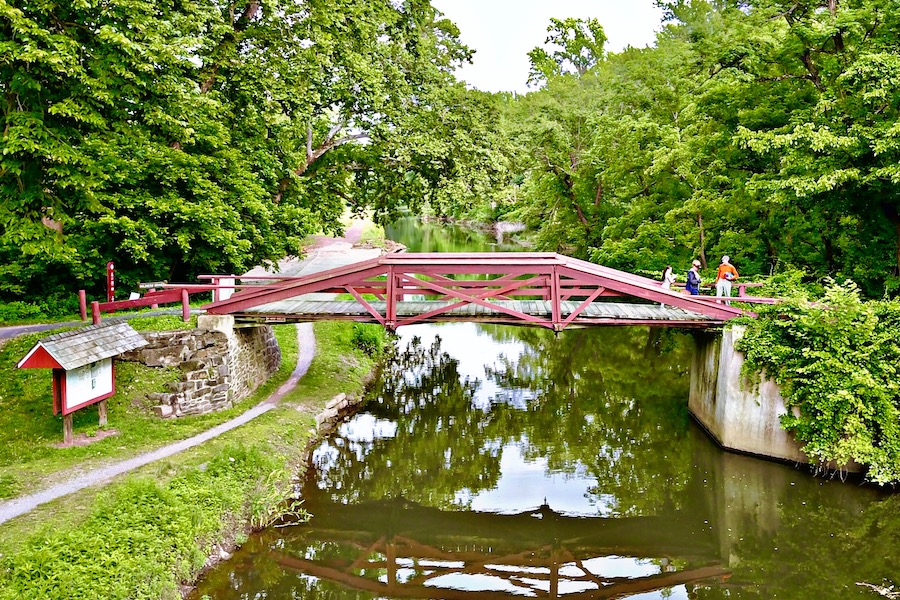
Before tackling the GAP and the Great American route, Todd and I first organized a ride down eastern Pennsylvania’s D&L Trail, a 140-mile rail-trail and canal trail following the Lehigh and Delaware Rivers. We invited our veteran friends and even brought in Army Ranger veteran Travis Johnston all the way from Savannah, Georgia, to participate, along with his very pregnant wife, Kaya, and their one-year old, Ava. We also invited veteran Dan Stein to come along, who had not been on a bike since he was a child.
Both Todd and Dan performed well physically, despite the pain in Dan’s knees and the stiffness in Todd’s entire body. Dan was so happy to find he could ride and manage his body pain and discomfort, which decreased every day as he grew stronger. Todd’s extreme muscle tightness and tone resulting from his injured spinal cord finally lessened and relaxed after each day’s ride.
Our Great American Adventure

We rode the GAP in the springtime when the flowers were blooming, the air was heavy with fragrance, and the birds were singing. It was glorious. We really appreciated how well-developed the trail was, the accessible bathrooms that were available, the places to eat along the way, and its welcoming towns. After completing the GAP, our team went on to ride the Great American route all the way across Pennsylvania, Ohio and Indiana before calling it quits for the season.
One of the most amazing things about cycling rail-trails as a person with a disability is that you forget about your disability and just dissolve into the beauty and peace of the natural world. You don’t have to worry about vehicular traffic or be hyper-focused about radical turns and obstacles. Especially for one who is seriously paralyzed with a very compromised body, to be able to move fast through your world is a tremendous gift. Cycling rail-trails made Todd feel some normalcy return to his life for the first time since his tragic accident.

Donate
Everyone deserves access to safe ways to walk, bike, and be active outdoors.


