West Virginia’s North Bend Rail Trail
North Bend Rail Trail December 2015 Trail of the Month
There aren’t many rail-trail stories like this. The 69 mile North Bend Rail Trail is in the pantheon of stories about local trail advocacy.
In the late 1980s, the abandoned CSX rail corridor that would one day become the North Bend Rail Trail was little more than an overgrown afterthought—a dumping ground, a place for derelict “partying,” an informal pathway for hunters and landowners in a densely wooded part of rural West Virginia.
But that was about to change. A small group of locals recognized the potential of the 61-mile corridor between Walker and Wilsonburg, and had convinced then-West Virginia Governor Gaston Caperton to take a tour of the route in hopes of soliciting his support.
As their entourage of cargo vans crept along—the lead van with local trail visionary Dick Bias at the wheel, and the governor and future state Tourism Commissioner Betty Carver in tow—Bias regaled them with stories of Missouri’s Katy Trail—which was serving as a model for rail-trail efforts around the country. With the governor nodding intently, Bias thought, “The pitch is working!”
Unbeknown to Bias, however, mischief lurked in the woods nearby.
On a property bordering the corridor, one local fellow had gathered some friends for one of their regular hunting and hangout weekends. And they were in a particularly boisterous mood when the vans crept by.
With no idea of the vans’ occupants, the locals stood, turned their backs toward the trail corridor, and ceremoniously dropped their trousers to the forest floor.
Bias, who had seen the men out of the corner of his eye and suspected what was about to occur diverted the governor’s attention just in time by pointing out a suddenly vital feature out of the opposite window of the van. The vans moved on, and the dignitaries were none the wiser.
The wonderful conclusion to this story is that, many years later, the property owner and lead doer of mischief became not only one of the future rail-trail’s most passionate supporters, but also the elected leader of the rail-trail organization that Bias was in the process of creating that very day.
History and Evolution
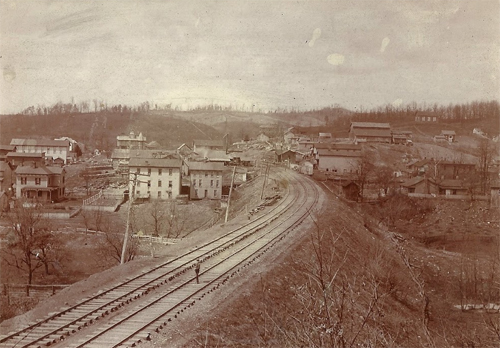
The last scheduled train to traverse the Parkersburg Branch of the Baltimore and Ohio Railroad left Grafton, West Virginia, bound for Parkersburg, one August evening in 1985. Its journey would mark the end of a rail service history whose origins predated the Civil War, when the Northwestern Virginia Railroad (NVRR) was chartered by the Virginia Legislature in 1851. (For a full history of this, and other lines in the region, Dan Robie’s excellent history website contains remarkably thorough accounts.)
The line played a crucial role in the Civil War, the legacy of which is one of its most popular drawing cards today.
With its western terminus on the Ohio River, the NVRR transported troops that had been shipped on paddle steamers into Parkersburg toward battlefronts in the east. The line became a target of Confederate forces, which sought frequently to disrupt the line and the supply of Union troops it facilitated.
The most famous of these efforts was the Jones-Imboden Raid in the spring of 1863, during which undersized forces under the command of Brig. Gens. William E. Jones and John D. Imboden managed to burn many bridges and capture a number of supply trains along the line. Despite the success of the Jones-Imboden raid, however, Union forces had the line up and running again in just three weeks—such was its strategic importance.
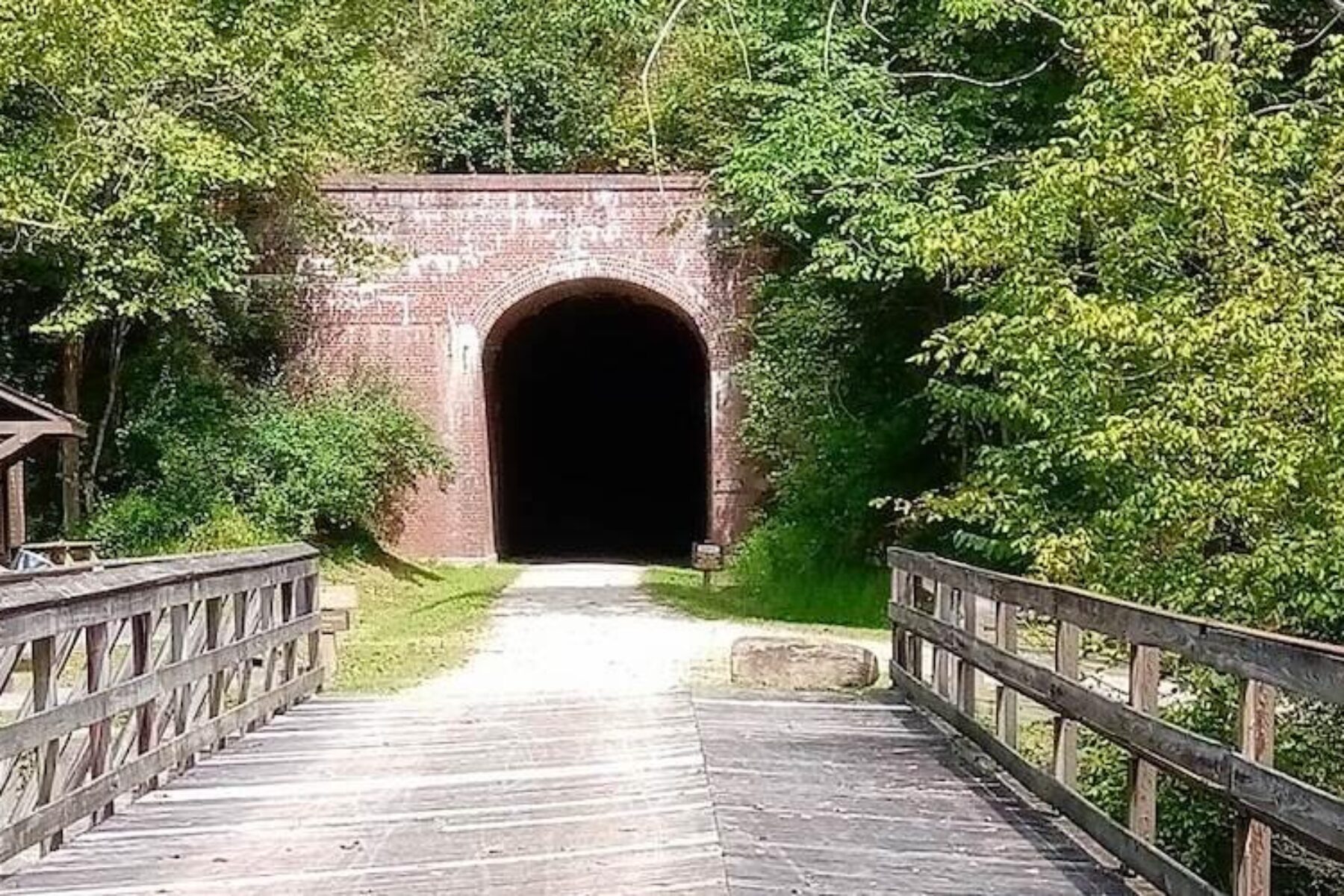
There were once 23 tunnels along the almost 72 miles of corridor between Happy Valley and Wolf Summit. Today, 10 of those tunnels are passable for rail-trail traffic; most of the remainder have been “daylighted.”
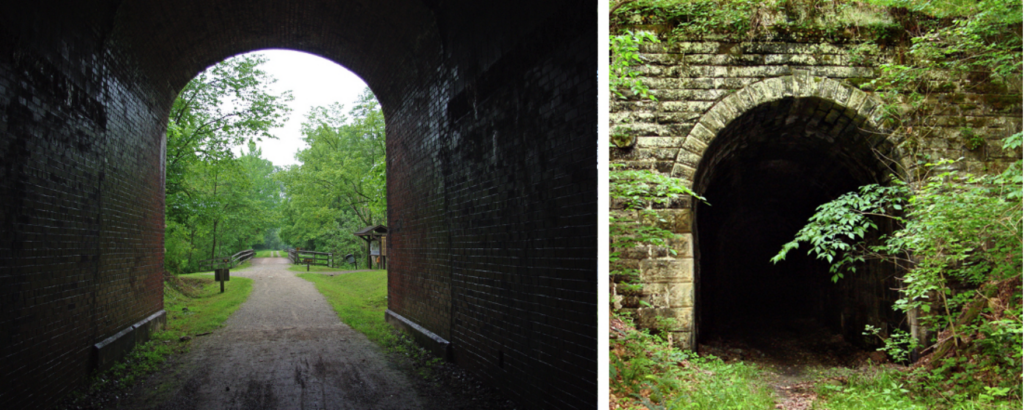
“Those tunnels … there are some stories about those tunnels,” says North Bend Rail Trail Superintendent Paul Elliott. “Every community has their own story about the haunted tunnels in their section.”
Probably the most famous is the Ghost of Silver Run, said to haunt tunnel number 19, located a few miles west of the small town of Cairo. More than one engineer on late-night runs during the 19th century reported seeing a girl with “pitch-black hair and bloodless skin” standing in front of the Silver Run Tunnel, oblivious to the oncoming train’s urgent horn or the scream of burning brakes. Just before the train was about to hit her, the specter would shoot up into the air, flailing and wailing like a banshee.
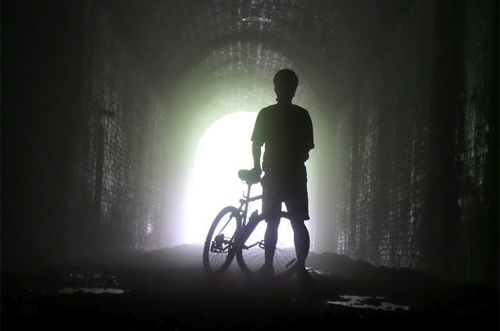
Having spent thousands of hours doing maintenance or surveillance work on the trail, including many hours in the middle of the night, alone, does Superintendent Elliott believe the stories?
“Well, I don’t believe in ghosts, but let’s just say I sure don’t stop to pick up trash in the tunnels on those nights.”
Elliott’s unique position as a West Virginia State Park employee dedicated solely to the management and maintenance of the rail-trail is a legacy of the effectiveness of the trail’s early advocates, who saw the corridor as a vital accompaniment to North Bend State Park, a few miles east of Cairo, through which the rail-trail passes.
Dick Bias was the spearhead of that early advocacy effort. A former vice and narcotics cop who worked the streets of Washington, D.C. in the 1970s and 1980s, he retired to his native West Virginia in the late 1980s on a large farm near Cairo.
It was at that time that the disused CSX line was degenerating into an increasing liability for the community.
“Dick was the kind of guy who could see opportunity and knew intuitively how to make things happen,” says Kent Spellman, who at that time ran a contracting business in nearby Harrisville, and who was one of a number of active community members that Bias recruited into an informal group of core supporters. Other members included local business owners and outdoor enthusiasts, but no elected officials.
One of the group’s early moves was to contact Rails-to-Trails Conservancy (RTC), which, at that time, was on the cusp of a boom in rail-trail development. Connecting with RTC was a key moment for Bias and his supporters, says Spellman, “to realize that there was this whole support system out there.”
But Bias’ grassroots organizing approach hit a wall when he first reached out to CSX, because, as Spellman affirms, the company’s corporate headquarters in Jacksonville wasn’t interested in the project at first.
Bias reached out to Gov. Caperton and Rep. Alan Mollohan, who became a strong champion of the project. Rep. Mollohan is credited with sparking the initial formal discussions between CSX and the rail-trail advocates that resulted in successful negotations.
CSX said the people of West Virginia could have the corridor for $1.5 million. The locals countered with an offer of $0. Two years later, CSX agreed to sell for $310,000, and an appropriation from powerful West Virginia Sen. Robert Byrd sealed the deal.
Over the next decade, the newly formed North Bend Rails to Trails Foundation used federal Transportation Enhancements and Recreational Trails Program grants to improve the sections of trail closest to the population centers—where the most people would be likely to use it. In 1995, the rail-trail expanded with the acquisition of an additional 11-mile section of corridor from Walker to Parkersburg.
Today and Tomorrow
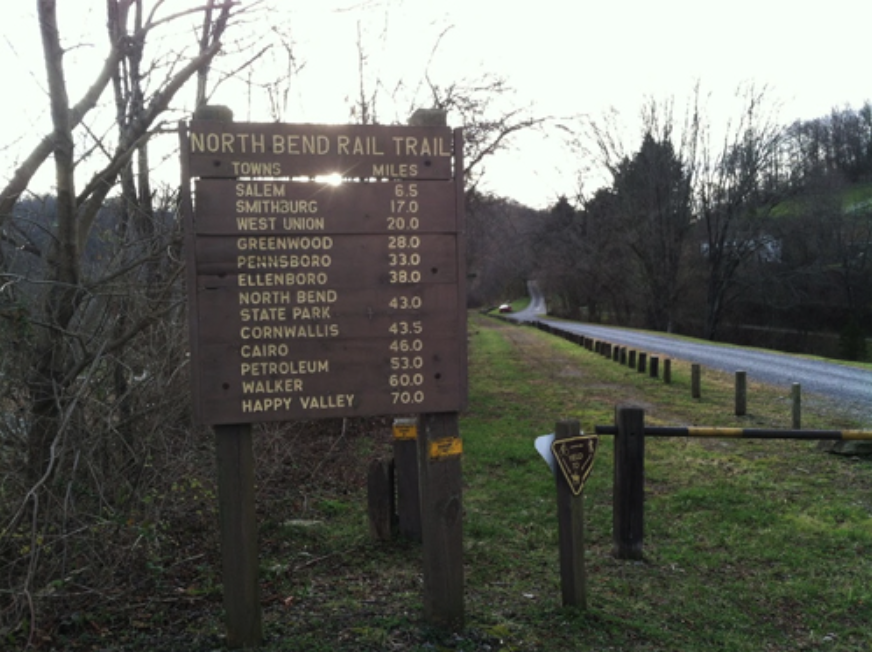
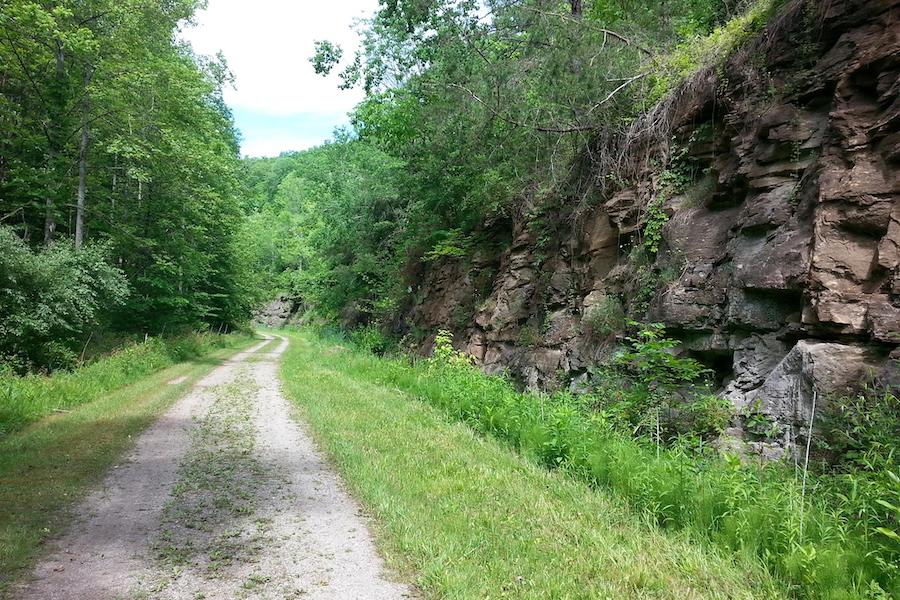
Given the trail’s length, its relative isolation and its limited funding, some sections, particularly out of North Bend State Park, are smooth and well graded; others—notably the western reaches of the trail—are not so good.
“If it’s really raining, you’ll be struggling in a truck,” Superintendent Elliott says. “On a 72-mile trail that passes through four counties, you’re always going to have maintenance issues. Money is limited, and equipment is limited. When funds are available, we try and hit some of the worst sections first. The whole trail is important, but we try and look for those small pockets where we can be effective.”
Elliott is full of praise for his team of state park employees as well as the small but very active group of volunteers behind the North Bend Rails to Trails Foundation.
“The amount of work they get through is amazing … I’m really lucky to have such a great group helping out.”
“The amount of work they get through is amazing, mowing, clearing branches, maintaining the toilets,” he says. “The foundation has also raised money to help us buy equipment. I’m really lucky to have such a great group helping out.”
Elliott also praises the many neighboring landowners, many of them once opponents of the trail, who will regularly mow the trail or clear downed trees and branches.
“The state can’t do it alone,” he says. “We don’t have enough money. We need people who feel like they have some ownership of the trail to lend a hand.”
One of the super volunteers making Elliott’s task a little easier is Ken Adams, an Ohio native who first starting visiting the trail in the late 1990s.
“Back then, there weren’t that many long trails, and so I would come down here whenever I had some vacation time, camp out and ride the trail,” Adams says. “And then one year I was down here, they were looking for volunteers to clear brush. That’s how I got involved. From then on, I started going to foundation meetings.”
When he retired, Adams bought a home along the trail, and today he is one of the key members in the foundation’s dwindling ranks. Although he is concerned about the lack of new, younger people getting involved with the rail-trail, with funding in place for continued improvements, he is optimistic about the future of the trail and the surrounding towns.
An engineering study of the corridor has been completed to design long-term fixes for some of the trail’s most problematic issues, notably drainage. A restoration of the historic Salem train depot, which was destroyed by fire in 2008, is in the works. And the town of West Union in Doddridge County has secured a Transportation Alternatives grant for streetscape improvements.
“We might be experiencing a little boom, once all those pieces fall into place,” Adams says.
Trail Facts
Name: North Bend Rail Trail
Trail website: North Bend Rail Trail State Park
Up-to-date trail conditions: North Bend Rails to Trails Foundation Conditions Report
Trailhead directions: North Bend Rails to Trails Foundation Trailhead Information
Length: 72 miles
Counties: Doddridge, Harrison, Ritchie, Wood
Start point/end point: The westernmost trailhead is at Happy Valley Road, about 5 miles southeast of Parkersburg. The trail comes to its eastern terminus at Wolf Summit, about 8 miles west of Clarksburg.
Surface type: Crushed gravel
Uses: Walking, bicycling and horseback riding
Difficulty: Various. Some sections of the trail, particularly in remote areas, have a very rough surface.
Getting there: The North Central West Virginia Airport is at Bridgeport, just 8 miles east of the Wolf Summit trailhead. Parkersburg and Clarksburg are easily accessible from I-77 and I-79 respectively.
Access and parking: All trailhead access points are accessible from US 50, which parallels the trail for its length. Parking (and some limited services) is available at (all mile markers are approximations):
- Wolf Summit (eastern terminus)
- East Salem – mile 6.5
- Pennsboro – mile 33
- Ellenboro – mile 38
- Cairo – mile 46
- Petroleum – mile 53
- Happy Valley (western terminus)
To navigate the area with an interactive GIS map, and to see more photos, user reviews and ratings, plus loads of other trip-planning information, visit TrailLink.com, RTC’s free trail-finder website.
Rentals: Bike (and kid trailer) rentals are available at North Bend State Park. In Cairo, Country Trails Bikes at the Cairo Supply Co. also rents bikes and sells riding and camping supplies.
When to go: The North Bend Bluegrass Festival is in May. This two-day festival features music and craft vendors, and overnight packages are available. The Salem Apple Butter Festival is in October and includes live demonstrations of old-fashioned apple butter making, a 5k, an auto show and a beauty pageant.
Donate
Everyone deserves access to safe ways to walk, bike, and be active outdoors.
Related
View All
Illinois’ Bloomingdale Trail: October 2026 Trail of the Month

Children’s Book Inspired by Real Events Shines Light on Community Trail Stewardship