Regional Trail Network Creates New Recreation and Active Transportation Access for Millions of Bay Area Residents, With Potential Statewide Economic Impact of $6.6 Billion Annually
FOR IMMEDIATE RELEASE:
Jan. 12, 2022, at 5 a.m. Pacific
CONTACT:
Patricia Brooks, Patricia@matchmapmedia.com, 202.351.1757
Regional Trail Network Creates New Recreation and Active Transportation Access for Millions of Bay Area Residents, With Potential Statewide Economic Impact of $6.6 Billion Annually
Rails-to-Trails Conservancy calls for $2 billion investment in connected trails and active transportation infrastructure, advancing regional trail network and state’s climate goals
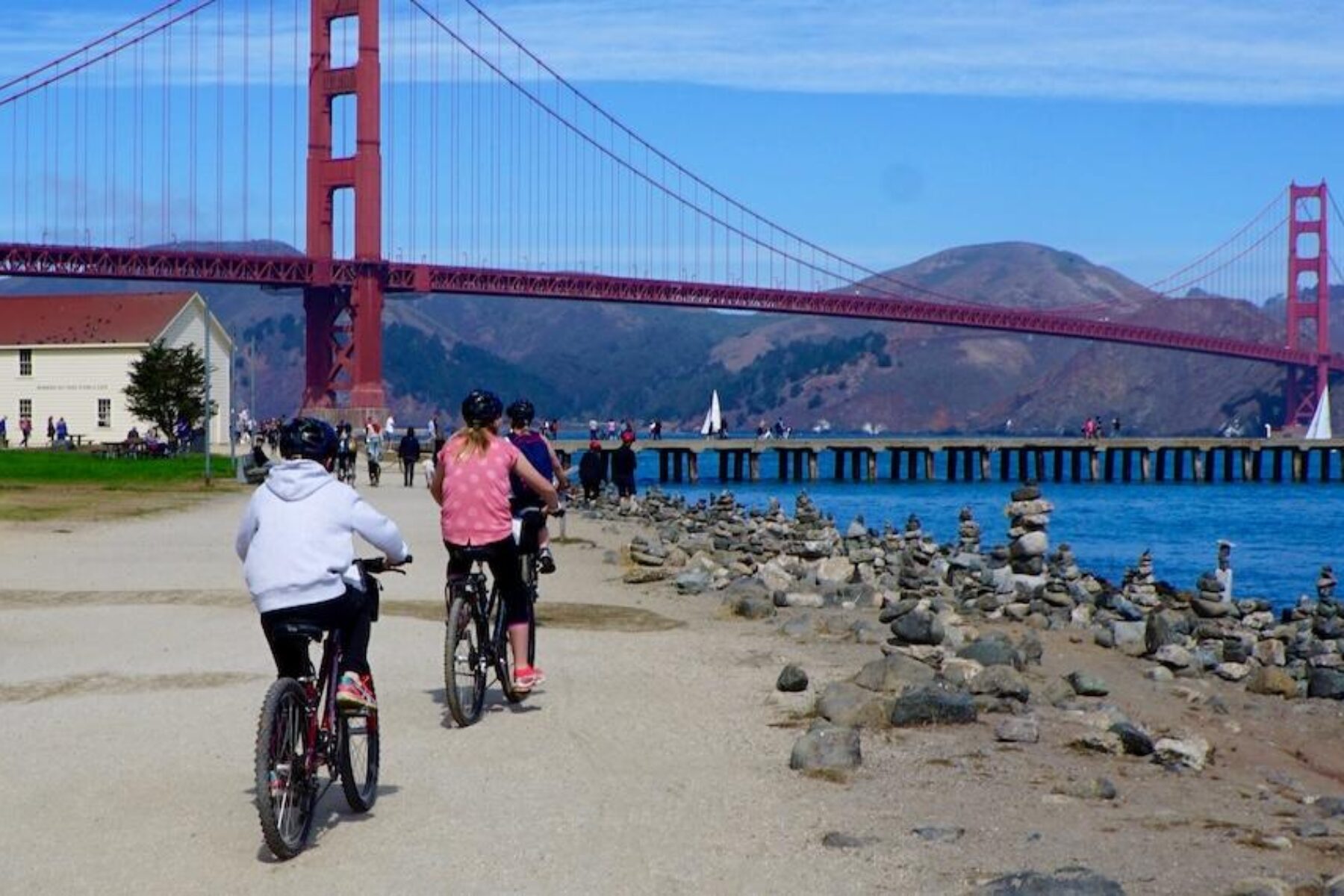
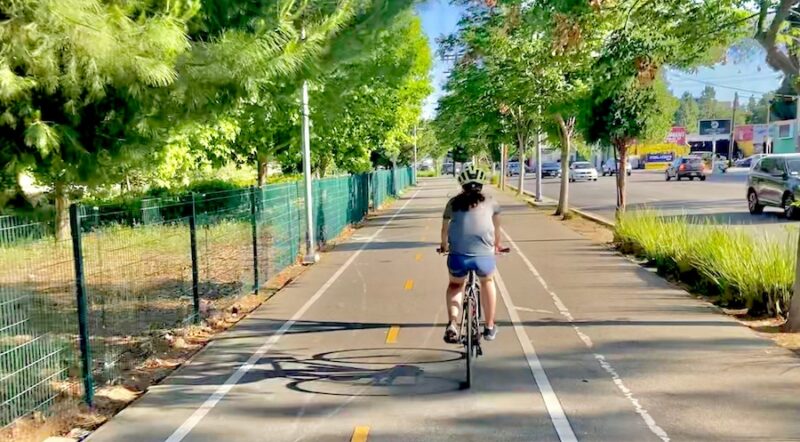
SAN FRANCISCO—Today, Rails-to-Trails Conservancy (RTC) and the Bay Area Trails Collaborative, a group of more than 50 businesses, agencies and organizations, released the first comprehensive map detailing a plan to connect 2,590 miles of regional trails. The trail and active transportation network is projected to increase safe walking, biking and trail access for millions of Bay Area residents.
New data from RTC shows that 88% (more than 6.8 million) of Bay Area residents, 4 million jobs and 1,525 schools are based within 2 miles of the proposed regional trail network. With half of the country’s car trips within a 20-minute bike ride and a quarter within a 20-minute walk, this trail system would provide an important way to reduce car emissions in the region.
“The expansive Bay Area regional trail network offers an eco-friendly route for short trips, whether you’re commuting, exploring the region’s natural scenery or running errands,” said Laura Cohen, RTC’s western region director. “Nearly 9 in 10 residents will live within a couple miles of the completed trail network, allowing them to safely travel via trails to get to work, school and other important destinations in their communities. As California aims to meet its ambitious climate goals, trail networks can serve as a critical solution to reducing carbon emissions, but substantially more funding for development and maintenance is the key to success.”
The Bay Area regional trail network, which consists of recreational and multiuse trails, is nearly 60% complete, but critical gaps need to be filled to harness its benefits as active transportation infrastructure and as an economic driver for the region. A recent RTC study attributes $34.1 billion annually in economic activity across the country to active transportation, with the potential to grow to $138.5 billion annually as the connectivity of trail and active transportation networks improves. Based on this study, it is estimated that trail networks like the Bay Area regional trail network could generate as much as $6.62 billion each year for California’s economy.
Current state funding for trails and active transportation provides a fraction of what is needed to create these transformative economic opportunities. Last year, California’s Active Transportation Program (ATP), one of the most innovative—yet drastically under-resourced—programs for trails, walking and biking, was only able to fund 11% of project applications received.
RTC is backing the California Transportation Commission’s recommendation for a $2 billion investment in the ATP from the state’s 2022–2023 general fund surplus, which is projected to be tens of billions of dollars. While advocates explore other funding sources to address long-term trail and active transportation needs in the state, the $2 billion investment would support more projects in the short term, including a pilot program that would fund low-stress active transportation networks like the Bay Area regional trail network.
Released on Jan. 10, the governor’s proposed budget included a quarter ($500 million) of the recommended $2 billion from the surplus for trails and active transportation infrastructure.
“Trail networks can deliver powerful returns on investments for states—generating billions of dollars in economic impact and providing the necessary infrastructure so that more people can walk and bike where they need to go, instead of driving,” said Cohen. “We applaud the governor for recognizing the need for increased active transportation funding, but substantially more is needed. We’re calling on the State Legislature to recognize trail networks as essential infrastructure and ask them to support the $2 billion surplus investment in the Active Transportation Program in the new state budget.”
The Bay Area Trails Collaborative is part of RTC’s TrailNation™ portfolio of trail network projects designed to demonstrate what is possible when trails are connected within and between communities. To explore the current and proposed trail segments in the network map and learn more about the Bay Area Trails Collaborative, visit: railstotrails.org/batc.
Methodology
RTC’s analysis of access to the Bay Area regional trail network was based on data provided by the 2020 U.S. Census and the Metropolitan Transportation Commission’s Plan Bay Area 2050 Equity Priority Communities.
To determine the net economic impact of trails and active transportation in California, RTC applied the methodology used to calculate the national figures for health cost savings and local spending impact reported in “Active Transportation Transforms America.” The net health cost savings was determined by applying the Centers for Disease Control and Prevention’s cost savings associated with increased physical activity ($630 to $1,437 in 2019 dollars) to 10% of California’s population (39.54 million according to the U.S. Census 2020 population estimates), based on findings from the National Household Travel Survey that indicates 10% of the U.S. population meets physical activity guidelines through walking and biking. Local trail spending was calculated using RTC’s 15-years-plus dataset of localized trail-spending studies, which finds average direct spending at trail-oriented and trail-adjacent businesses of $5 million to $7 million. These figures were then multiplied by the 132 open rail-trails in California that are accounted for in RTC’s database of rail-trails nationwide.
Rails-to-Trails Conservancy is the nation’s largest trails organization—with a grassroots community more than 1 million strong—dedicated to building a nation connected by trails, reimagining public spaces to create safe ways for everyone to walk, bike and be active outdoors. Connect with RTC at railstotrails.org and @railstotrails on Facebook, Twitter and Instagram.
Donate
Everyone deserves access to safe ways to walk, bike, and be active outdoors.
Related
View All
Rails to Trails Conservancy Grants Underscore an Urgent Truth: Demand for Safe Spaces to Walk and Bike Outpaces Available Funding Nationwide
Infrastructure Investment and Jobs Act Extension Opens Window for Congress to Make Walking and Biking Safer Nationwide