Florida’s Emerald Trail: June 2026 Trail of the Month
Although Miami, Orlando and Tampa seem to get most of the attention in Florida, it might come as a surprise that northeast Florida’s Jacksonville is the state’s largest city, with a population around a million. A burgeoning project, the Emerald Trail, is aiming to serve as a connector in the city—both in a transportation sense and as a way to build community—throughout 14 of Jacksonville’s core neighborhoods.
“At almost 1,000 square miles, connectivity in Duval County is extremely difficult,” said Katie Ensign, vice president of community impact at Baptist Health in Jacksonville, a supporter of the trail project. “We don’t have a lot of connectivity here because of our sheer size. You get siloed by that, so I think that’s one of the things that is really exciting for Jacksonville: to have this node of connectivity that people will use to see places they’ve never seen, be in places they’ve never been and be with people that they’ve never been with—that’s a real gamechanger.”
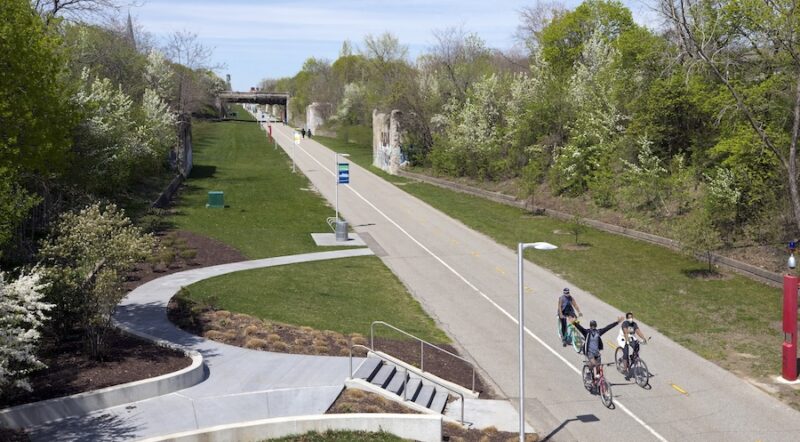
Across its planned 30 miles, the Emerald Trail will link residents to schools, hospitals, businesses, green spaces and other destinations throughout the city, incorporating the existing 3.3-mile S-Line Rail Trail and spurring the development of miles of new trail.
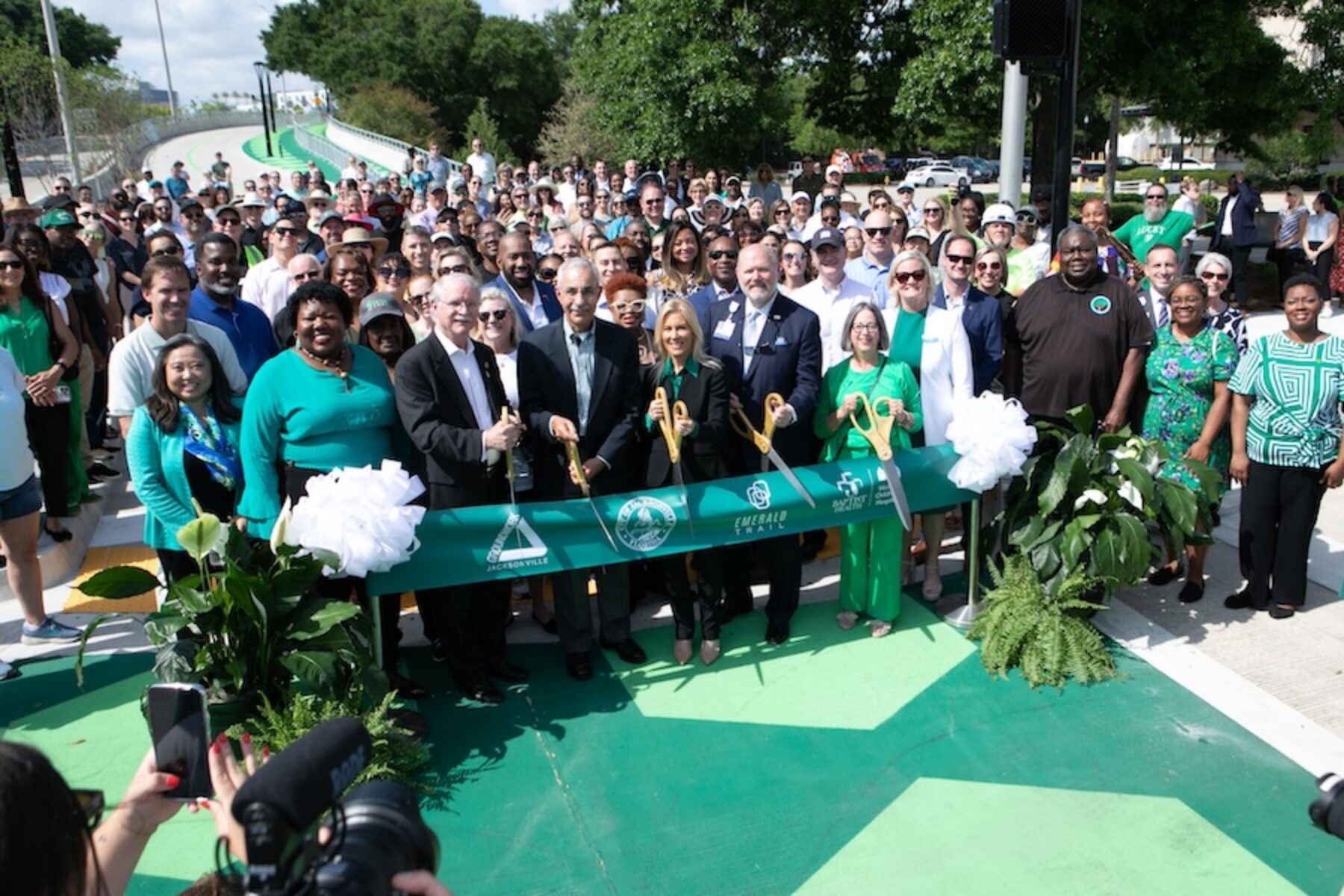
“Hundreds of people were there, and the excitement of having this kind of a resource was just palpable,” enthused Ensign of the project’s first new opening, the LaVilla Link section, in 2024. “You could just feel it—it was so exciting. Literally, people were walking and biking on the trail right behind us because it was open.”
A Greenway for Greenspace
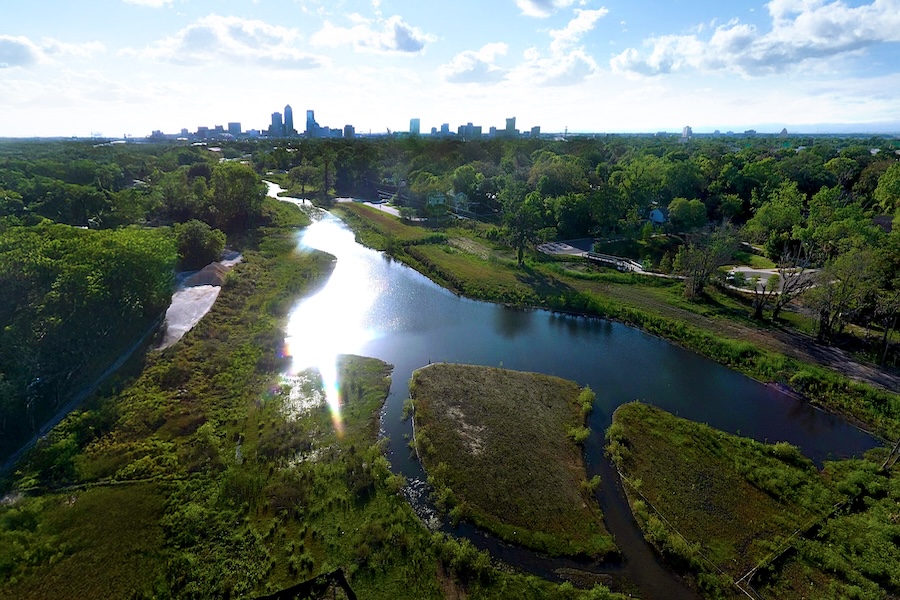
The Emerald Trail will bring to fruition a lush, green ring around the city originally envisioned by renowned architect Henry Klutho after a fire devastated Jacksonville in 1901, destroying over 2,000 buildings across 146 city blocks. The St. Johns River curls around Jacksonville like a backwards C with two tributaries—McCoys and Hogans creeks—heading into the city from its banks. In tandem with its literal greenways, the Emerald Trail project will encompass the restoration of these urban waterways.
“The creeks were straightened and hardened in the 1920s,” explained Kay Ehas, CEO of Groundwork Jacksonville, the city’s nonprofit partner spearheading the Emerald Trail project. “They’re both contaminated and have infrastructure that’s falling apart, and are flooding, so we’re turning them back to natural streams as much as we can, given the land constraints in an urban environment. And along the creeks, we’ll include 6 miles of trail.”
The work is a natural fit for the organization that has been helping to clean up and revitalize Jacksonville’s urban landscape for more than a decade. “Nature is very important for our well-being,” Ehas stated. “What I really love about the Emerald Trail project is that we’re adding so much access to nature. We added 6 acres of green space to the LaVilla Link, including planting 160 trees and 13,000 native plants.”
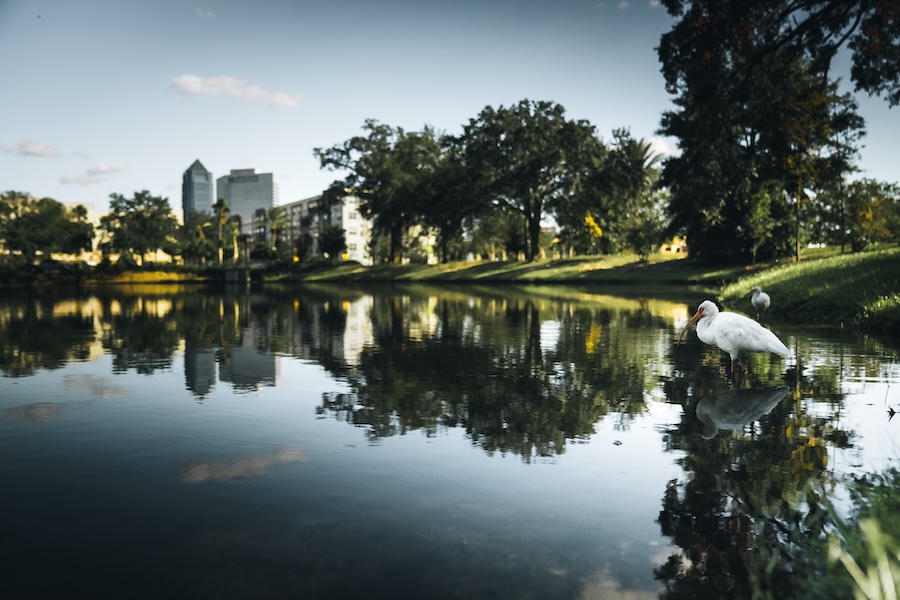
Ehas also pointed out a trailside butterfly garden sponsored by the Late Bloomers Garden Club, bee houses along the S-Line Rail Trail and wetland habitat added to the shoreline of LaVilla Pond. Groundwork Jacksonville also hopes to add bat houses to the trail.
“We now have a nature ranger program with over 100 kids in a handful of schools that provide both classroom and hands-on experiences with the goal of getting kids off their devices and into nature,” said Ehas. “They’re doing community gardening, they go on field trips, they go out to parks, and we send kits home so their families can get involved, too.”
For the Community, By the Community
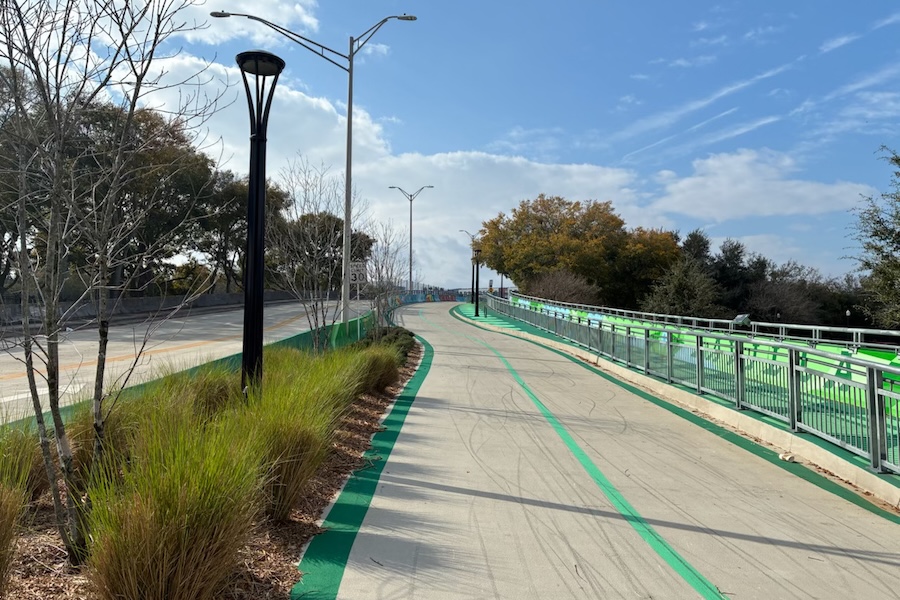
This community-first ethos has been central to Groundwork Jacksonville’s approach to the Emerald Trail project, which will connect some neighborhoods that have been historically underserved for decades.
“When we pulled together a steering committee to develop the trail master plan, we had residents from the neighborhoods on that steering committee so that from the get-go, they were involved in the planning process [along with] city folks and other agencies and businesses,” said Ehas in an interview with Rails to Trails magazine in 2025.
Keenly important to Groundwork Jacksonville is ensuring that residents not be pushed out of their communities through gentrification as the trail continues to grow and become successful. “We’re partnering with United Way, and we’re doing home repair so we can keep people in their homes,” said Ehas. “The goal is to have a home repair program in every one of the Emerald Trail neighborhoods. There are two so far, and we’re starting two more. To build a 244-apartment complex, it’s $55 million, but to repair 350 homes, it’s $10 million, so it’s a really great return on investment.”
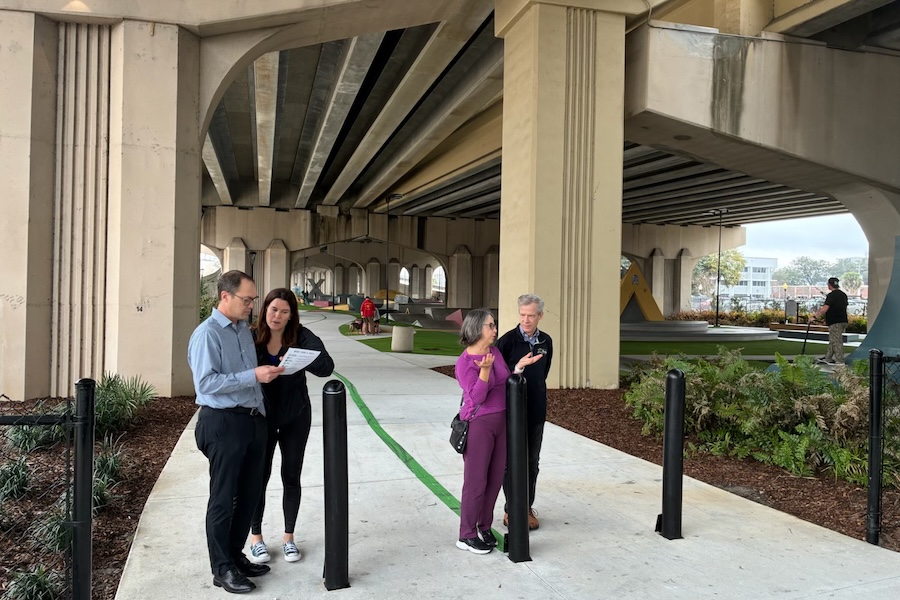
The project has garnered grassroots support from a network of Rotary Clubs throughout northeast Florida. Eleven of them stepped up to fundraise for the Emerald Trail, raising more than $250,000 for the Riverside Link, an upcoming segment of the trail that will span 2.3 miles, connect to McCoys Creek and cross the St. Johns River into Jacksonville’s historic San Marco neighborhood.
“We think this is a community-wide asset, and we want to be part of it because our job is to do good in the world and our community,” said Tommy Grimes, who has been a Rotary member for 55 years, following in the footsteps of his father and grandfather who were also involved in the club. “It was a chance to make a major generational improvement in Duval County and Jacksonville.”
Grimes pointed out that it’s a full-circle moment for the group. The Riverside Link section will start at Memorial Park, one of the first projects of the local Rotary, who commissioned the Olmsted Brothers—famed for their work on New York’s Central Park—to design it. The park was dedicated to veterans of World War I and opened in 1924.
“We hit our fundraising goal 30 days before we were supposed to finish,” said Grimes. “And the money kept coming in, so it’s in a separate account for enhancement of the trail.”
Celebrating Culture and History
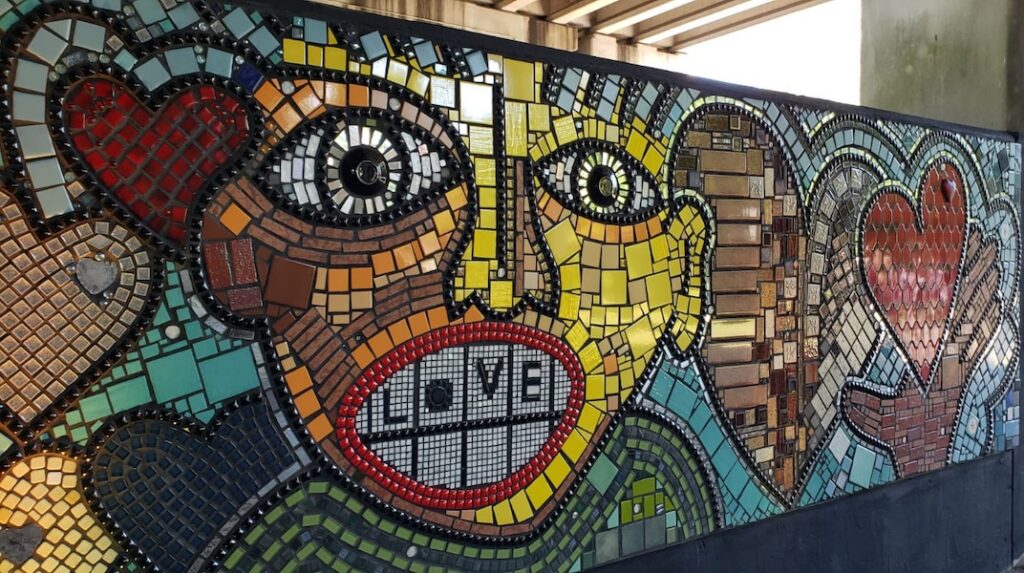
Jacksonville is home to the CSX Corporation’s headquarters, and one of its former rail lines was the genesis of the city’s S-Line Rail Trail. As part of the Emerald Trail project, plans are in the works to gather community feedback on new amenities to upgrade this nearly two-decades-old route. Not far from the north end of Hogans Creek, a splash of color greets trail goers along the top of the trail’s S curve in the form of the 96-foot-long Sugar Hill Mosaic, with tiles placed by hundreds of volunteers. Commissioned by Groundwork Jacksonville, it is the first of many planned public art projects to be installed along the Emerald Trail.
“Our goal is that the trail is also a 30-mile art gallery,” explained Ehas. “Our approach to the art is that we want the communities to tell us how they want to highlight their culture and history through art and then hire local artists to create it.”
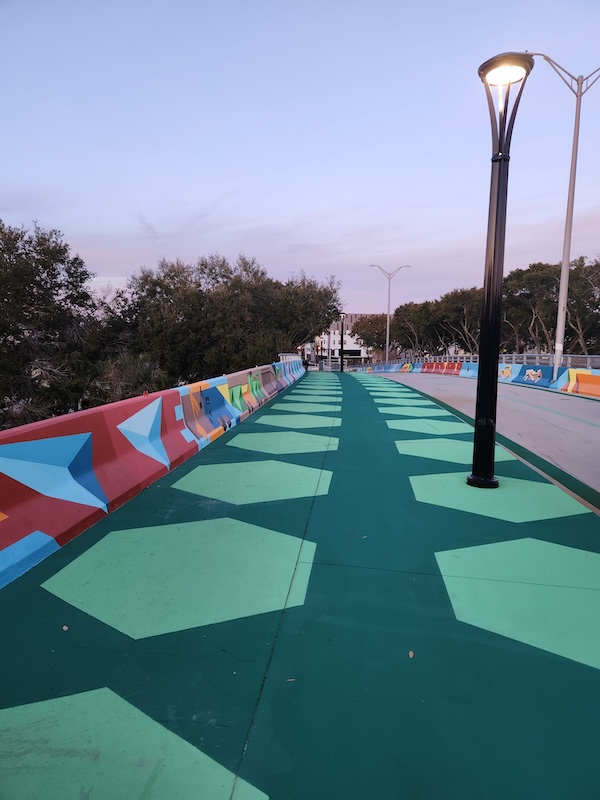
On the opposite end of the S-Line trail, the LaVilla Link begins in one of Jacksonville’s oldest neighborhoods, founded in 1866. Popularly known as the “Harlem of the South,” a colorful art piece here depicts historical landmarks and key figures (including a Union soldier, Negro League baseball players and Stanton High School, Florida’s first Black public school, which opened in 1869).
“The mural on the LaVilla Link that goes across the Park Street Bridge was created through community engagement—and what they wanted was for it to tell the past, present and future of the two neighborhoods that the bridge connects, which are Brooklyn and LaVilla,” explained Ehas.
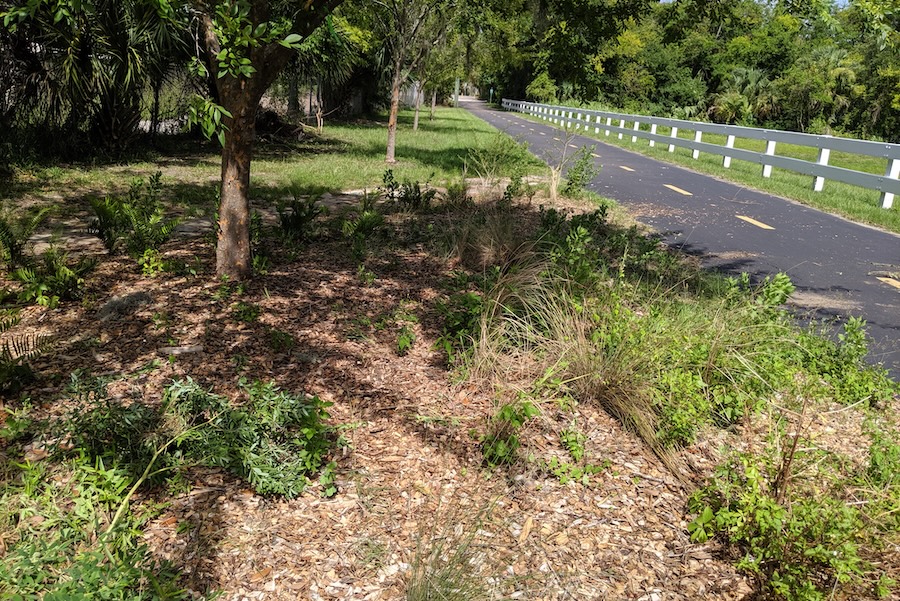
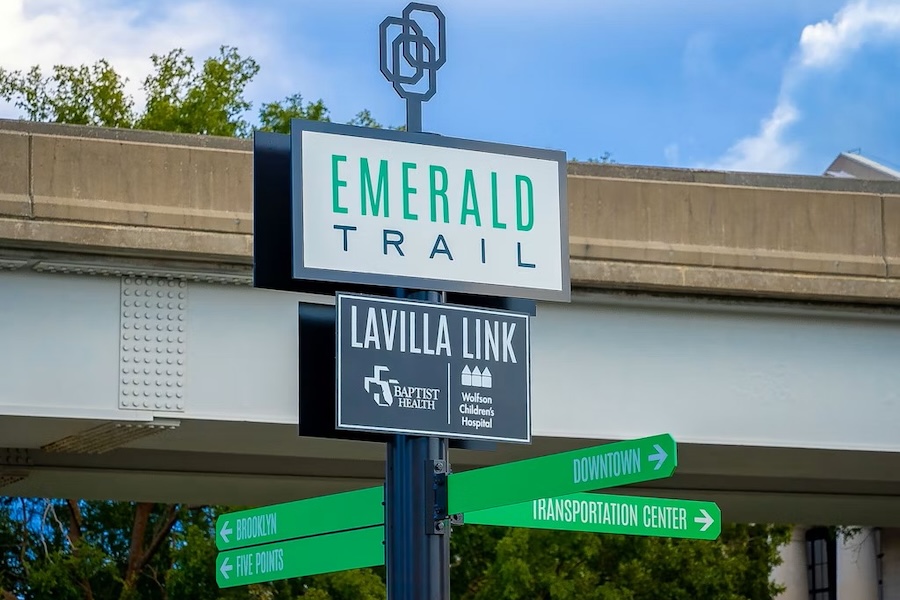
At 1.3 miles, the LaVilla Link provides residents with a direct link to downtown and “whets the appetite for what [the Emerald Trail] will eventually become,” said Ensign. Baptist Health, where she works, also added a StoryWalk to enhance the LaVilla Link in 2024 in collaboration with the Library Foundation of Jacksonville and Groundwork Jacksonville. The rotating installation features 20 mounted displays depicting pages from a children’s picture book.
“We thought it was a great idea to get families out there together with something to do,” said Ensign. “[The trail] provides an educational opportunity and a connectivity opportunity, and people of all ages can do it.”
For Baptist Health, encouraging people to use the trail made sense in an area where a high percentage of residents are low income and at risk for chronic illness. “We’re a mission-based nonprofit founded on the principles of health and well-being for the entire community, whether or not you ever walk inside our walls,” said Ensign. “Decreasing isolation, increasing exercise, just being able to understand the natural assets that we have around us—it was just a great opportunity, and we wanted to be part that.”
Pathway to Progress
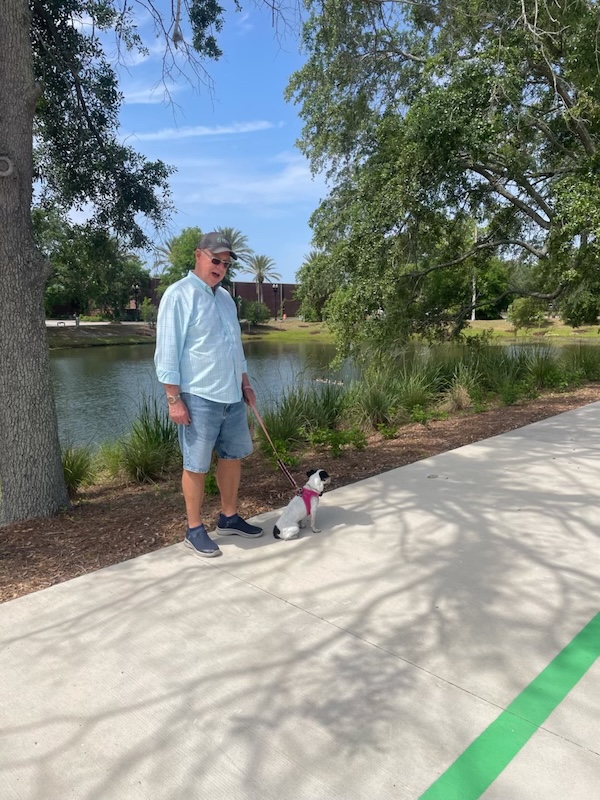
Groundwork Jacksonville has taken a “big tent” approach to securing funding from local, state and federal agencies, as well as private organizations, to continue progress on the project. One of the project’s key partners, the Jacksonville Transportation Authority, is providing support through local-option gas tax dollars that pay out over 30 years. As of 2026, roughly 50% of the Emerald Trail is either open, under construction or in design.
In spite of some setbacks, such as having a $147 million federal grant rescinded by the One Big Beautiful Bill last year, Ehas said the group will “continue to celebrate milestones.” Last fall, a groundbreaking took place for the next section of the trail, the Hogan Street Link, with construction continuing throughout this year.
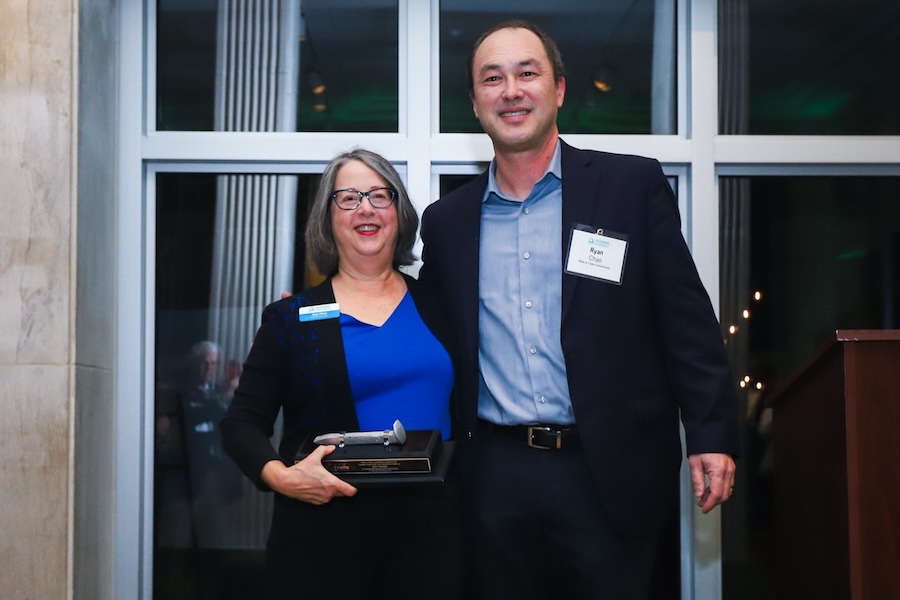
In 2025, Rails to Trails Conservancy honored Ehas as the Doppelt Family Rail-Trail Champion for her leadership on the groundbreaking project in partnership with the city, highlighting her effective community-driven approach to develop and build momentum for the Emerald Trail.
“Kay [Ehas] is not one that gives up—and that’s an understatement,” said Grimes. “She’s found ways to keep the project moving.”

Related Links
Trail Facts
Name: Emerald Trail
Used railroad corridor: A segment of the Emerald Trail network, the S-Line Rail Trail, follows a former CSX railroad route.
Trail website: Groundwork Jacksonville
Length: Currently, 4.6 miles of the Emerald Trail system is complete, including the S-Line Rail Trail (3.3 miles) and the LaVilla Link (1.3 miles). When complete, the Emerald Trail will span 30 miles.
County: Duval
Start point/end point: Currently, the S-Line Rail Trails forms an S-shaped route from the Norwood Plaza to Myrtle Avenue and Union Street. Near its southern end, the S-Line Rail Trail and the LaVilla Link intersect at State Street and Wilcox Street; the LaVilla Link then continues south to Park Street and Stonewall Street.
Surface type: Asphalt, concrete
Grade: The trail is fully paved, wide and level.
Uses: Walking, bicycling and inline skating; wheelchair accessible
Difficulty: The Emerald Trail offers a paved, flat route, making it an easy experience for most abilities.
Getting there: For those flying in, the Jacksonville International Airport (2400 Yankee Clipper Drive, Jacksonville) is located about 12 miles from Norwood Plaza, the northern end of the S-Line Rail Trail (part of the Emerald Trail). For those arriving by train or bus, the Jacksonville Amtrak Station (3570 Clifford Lane, Jacksonville) is located about 5 miles from Norwood Plaza and the start of the S-Line Rail Trail.
Access and parking: For the S Line Trail: Parking is available at the Emmett Reed Park and Community Center (1093 W. Sixth St., Jacksonville); additionally, parallel parking can be found along State Street near the trail’s southern end.
For the LaVilla Link: Parking is available at the Florida C. Dwight Memorial Playground (1199 Church St. W., Jacksonville) and at the large parking lot at N. Lee Street and W. Forsyth Street.
To navigate the area with an interactive GIS map, and to see more photos, user reviews and ratings, plus loads of other trip-planning information, visit TrailLink™, Rails to Trails Conservancy’s comprehensive trail guide.
Rentals: Open Road Bicycles (4460 Hendricks Ave., Jacksonville), located about 5 miles south of the S-Line Rail Trail and LaVilla Link, offers both road and mountain bikes for rent. Art Bikes (3544 St Johns Ave, Jacksonville), about 4 miles from both trails, offers e-bike rentals and guided tours. E-scooters are also available throughout downtown Jacksonville via a Dockless Mobility Program.
Donate
Everyone deserves access to safe ways to walk, bike, and be active outdoors.
Related
View All
Best Of: Trailside Sites That Encapsulate America’s History
Headwaters Trail System Honors Sacajawea’s Critical Navigation of the Lewis and Clark Expedition