How to Prepare for Your First Long-Distance Trail Ride
Este contenido también está disponible en español.
What better way to experience America’s beauty, diversity and history than through rail-trails?
As Rails-to-Trails Conservancy (RTC) prepares for our 2018 Pennsylvania Sojourn on the D&L Trail this June, we thought it was a great time to present five simple tips for long-distance trail rides! These are specifically geared toward individuals who aren’t hard bike riders but who are interested in their first longer (over the course of several days or a week) off-road trip.
You’ll need a well-maintained bike (we’ll cover that in our next blog in this series on equipment), some general knowledge of trail etiquette, a little elbow grease and yes—some preparation beforehand. And don’t forget that sense of adventure!
1. Challenge yourself in a variety of conditions—not just on flat, paved trails.
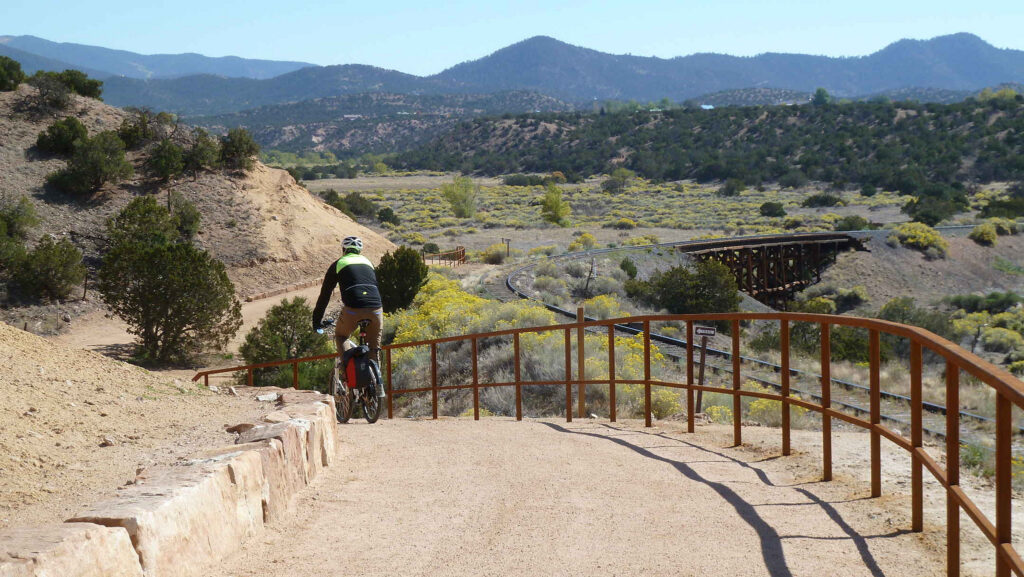
For many people training for longer rides, their first instinct is to go out on their favorite local rail-trail—and that makes sense, of course, as rail-trails provide safe off-road, relatively flat routes on which to get one’s biking bearings. But it’s good to try different grades and surfaces to build up confidence and skill. Also, you never know what you will come across along a route; trails can be under repair, or you may have to leave the trail for planned or unforeseen reasons.
For example, the route for RTC’s 2018 Pennsylvania Sojourn includes mostly packed dirt with a few gentle hills and paved asphalt sections. For a ride like this, I’d definitely recommend visiting a packed-dirt trail—which will slow you down by a little bit.
And for any trip, it’s good to find some hills during your practice runs (but save them for after you’ve warmed up for a few minutes). Hills are very efficient training mechanisms, and while many local rail-trails don’t have hills, you might encounter a few when leaving the trail and traveling a short distance to a campsite or to a restaurant or attraction.
2. Go the distance—and then some.
Using RTC’s sojourns as an example: The daily mileage will involve between 35 to 48 miles of riding. Regardless of your goal distance—if you don’t want to end each day’s ride with your head down and your body spent, it’s a good idea to: 1) work up to your goal distance slowly; and 2) go out and ride that distance, and then some, for multiple days in a row.
Why? First, if you push yourself within reason—slightly beyond your comfort level—you’ll reasonably get to know what your body can handle and whether or not you may need a little more preparation before you tackle, say, a 45-mile day. Second, if you’re like me, you’re not just out there to bike, but also to enjoy the beautiful landscapes and interesting cultural sites and interactions that rail-trails have to offer. Chin up!
RELATED: How to Get Back on a Bike—Years Later (8 Simple Tips)
3. Do some solo test runs.
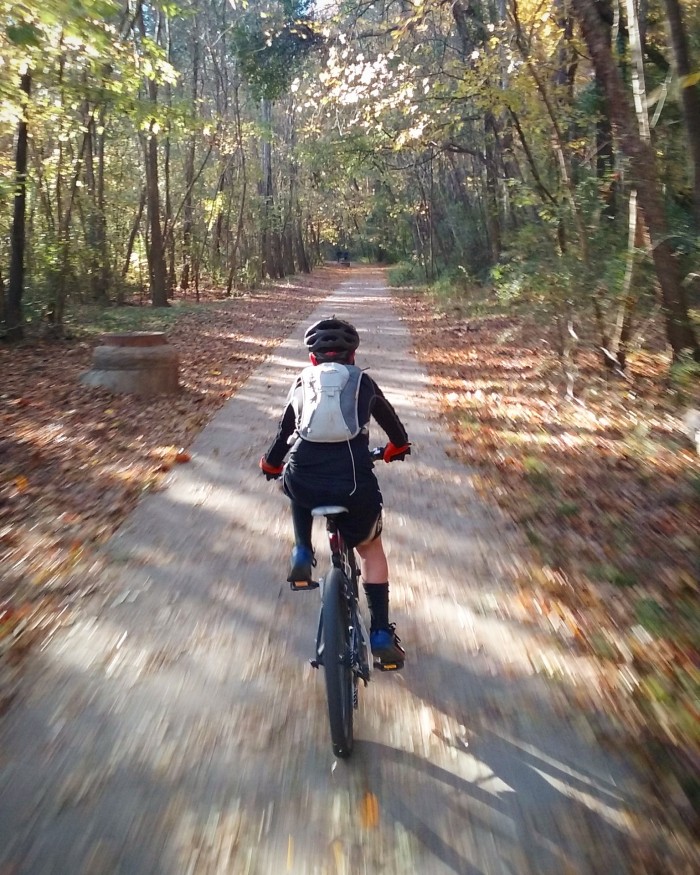
Of course, safety is always first. When going it alone, be sure to tell someone your training route and establish a plan in case you need assistance. That being said, going for a few long rides alone isn’t a bad idea to make sure you are comfortable by yourself. It’s also harder to maintain a pace when solo, so this will provide another challenge for the new rider. Many rail-trail trips are designed as group rides, but some—like RTC’s Sojourn Series—encourage people to go at their own pace and comfort level. Also, you might choose to stop for a variety of reasons (water break or restroom break, awesome photo op, etc.).
If you’re on a group ride and get separated, you will at least know that you are still ready to take on the trail solo! (And some—once they get going—prefer it!)
4. Water first—sports drinks later. (Snacks are a great idea too.)
Water is your best friend. In addition to watering up after a training ride, drink water before and during your training rides—even when you don’t feel thirsty—to ensure proper hydration. And when it comes to sports drinks, those are best saved for after you’ve been going hard for a while (an hour of high-level exertion, for example) for your body to make proper use of the electrolytes contained therein.
Also—healthy carbs and healthy proteins will help your body maintain a high level of energy. Consider carrying things like granola/nut bars, fruit, etc., as you train.
5. Don’t forget to say hello!
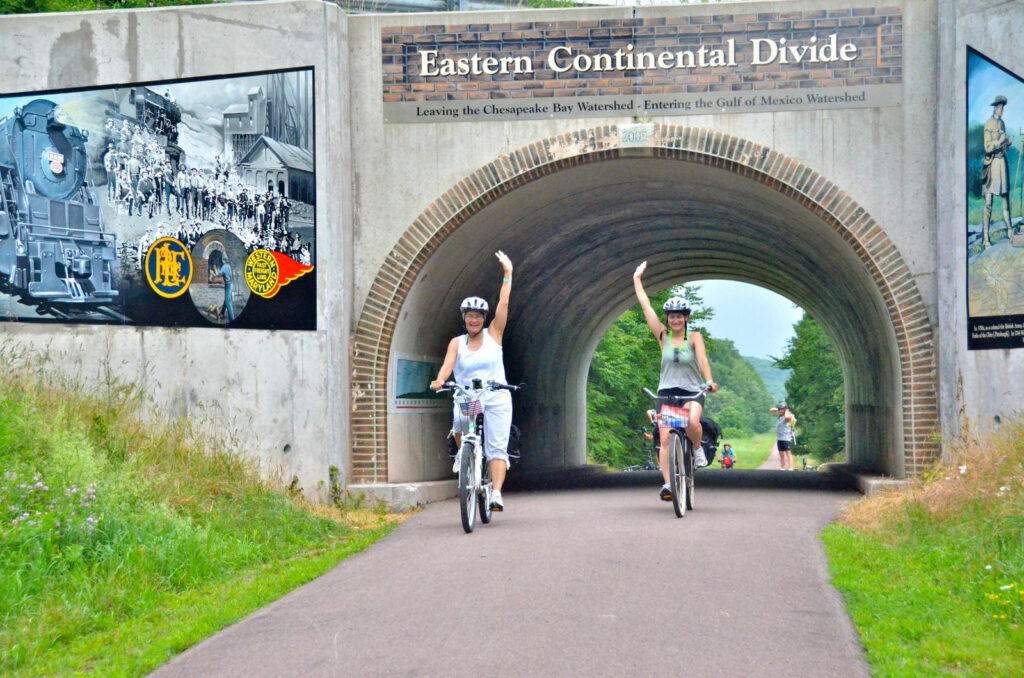
This may not be a preparation tip—but even so, it’s a great “heads up” for any trail adventure: Don’t forget to say hello to your fellow riders and the locals who run the amazing trailside businesses!
If you’re on a group ride such as the RTC Rail-Trail Sojourn, you’ll be with many people from other cities and states. It’s the perfect opportunity to learn about other great rail-trails for your bucket list (whether your preferred trail use is walking, biking, rolling or horseback riding) or acquire a few trail-use tips to help make your next excursion even better. After all, the people you meet are so often what makes a trip truly great.
If you’re on a solo biking excursion, or you’re with a few family members or friends, you can still be a great trail ambassador by striking up conversations with the owners of the restaurants, snack stands, bike shops, tourist sites and other businesses along the route. Tell them who you are and that you appreciate their town and their warm welcome! Pass on the spirit of community and appreciation that makes trails such an awesome experience for everyone.
This blog was updated on 02/01/18.
Donate
Everyone deserves access to safe ways to walk, bike, and be active outdoors.
Related
View All
Illinois’ Bloomingdale Trail: October 2026 Trail of the Month
Trail Moments | A Place of Healing: The Mary Hofer Walking Trail