Montour Trail Honors Its Presidential Trailside History With George Washington Marker
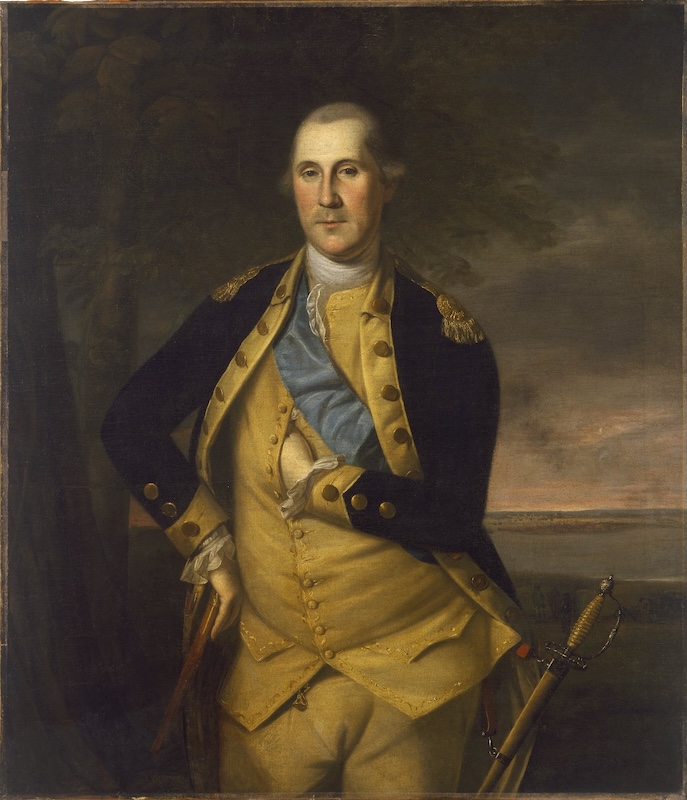
With the American Revolutionary War formally ended, George Washington was a celebrated war hero, the commander-in-chief who had successfully led the Continental Army in the fight for independence from Great Britain. His role as the fledgling nation’s first president, however, was still six years off. “So, there’s this kind of footnote in between those two very massive events,” said Bradley Cowden of the Historic Fort Cherry Association. “And some of those details in that footnote kind of make him look like a bad guy. But nobody wants to think of Washington as the bad guy—he’s the hero of America.” It all came down to a property dispute.
In 1768, the Treaty of Fort Stanwix between the British Crown and the Haudenosaunee Confederacy—known as the Iroquois—had resulted in vast tracts of land west of the Allegheny
Mountains being ceded to the crown, and there was talk of this region becoming a 14th colony. With the area now open to legal settlement by British subjects, “it seemed that [Washington] wanted to establish a Mount Vernon of the West.” In 1774, he accepted a 2,813-acre tract (which a later land survey increased slightly in size) in what is now southwest Pennsylvania, near Pittsburgh, as payment for a debt he was owed by a neighbor.
Continued Cowden: “He knew that the future was to the West. He was pretty insightful, always trying to plan for the future.” What the esteemed general hadn’t planned for was the 13 families who had taken up residence on his property during his long absence from it. The families had transformed it into productive farms, but to Washington, they were illegitimate squatters warranting removal.
Like this story? Learn more about George Washington’s infamous land dispute and its aftermath on the Historic Fort Cherry website.
It was in 1784, a year after winning the colonies’ independence from Britain, that Washington visited his land for what may well have been the first time since acquiring it. Having met with the squatters personally, he understood they had no intention of simply decamping, so Washington launched a battle against them, this one to be waged in the courts.
Relying largely on the fact that Washington had paid a caretaker to build cabins on the land before the squatters arrived—thereby improving the land and buttressing his legal claim to it—the lawsuit was ultimately successful, though perhaps Pyrrhic: By 1789, all the families were ejected, and “there’s basically a vacant tract of 3,000 acres with 13 farms in there and nobody to farm them or live there,” said Cowden. After fruitless attempts to rent the land to other farmers (who may have acted in solidarity with the ousted squatters, Cowden conjectures), Washington sold the land—though like a bad penny, it soon ended up back in his possession when the purchaser, Matthew Ritchie, died before he was able to fully pay off the mortgage Washington had financed.
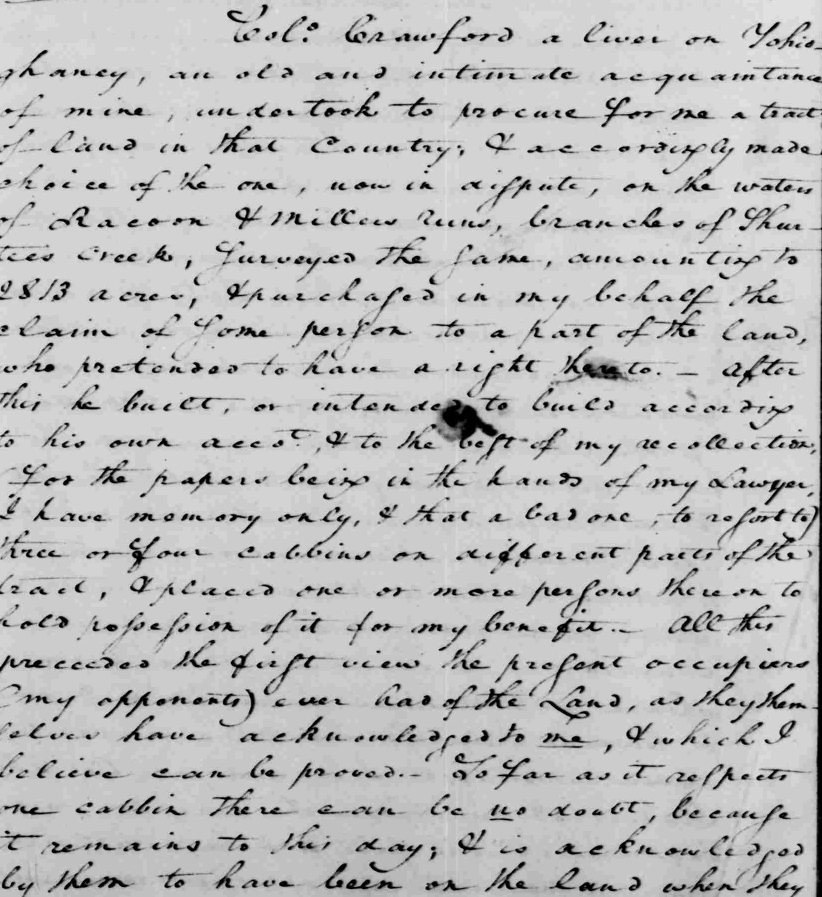
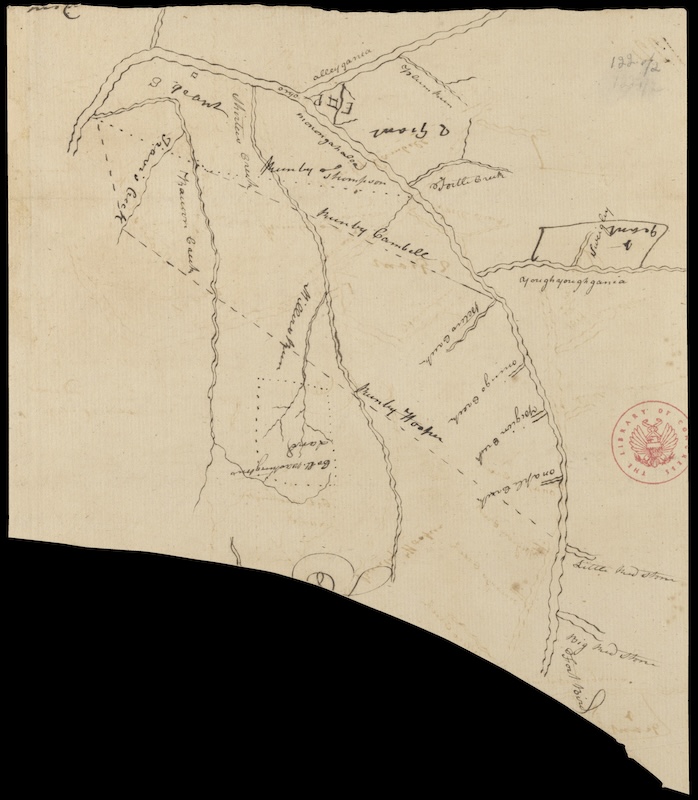
It’s here that the story becomes personal for Cowden. After Washington’s death, the land was sold and divvied up, and “my fifth great-grandfather bought 140 acres in 1802,” he said. “I grew up on the land.” Driven by an interest in the area’s history, he co-founded and co-directs the Historic Fort Cherry Association with Vinny Curtis, who also grew up on part of Washington’s land tract. “We founded it in 2024 to commemorate some of the local landmarks and local stories here.” In a life as storied as Washington’s, even the footnotes can be a fascinating tale.
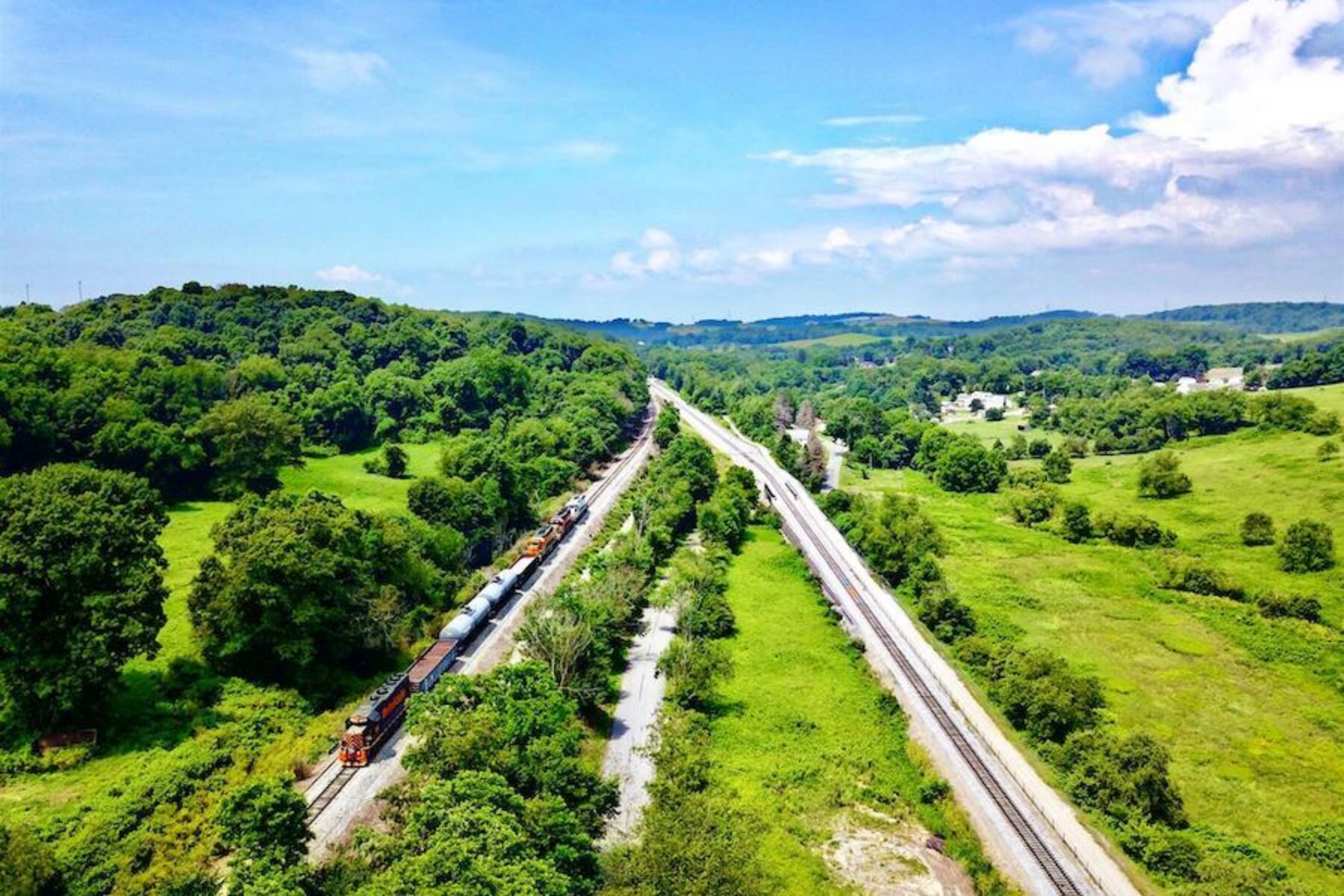
Today, the 63-mile Montour Trail passes through Washington’s former land parcel in the McDonald/Southview area. Built on the remains of a Montour Railroad line once used primarily to haul coal, it’s one of the longer suburban rail-trails in the country.

This article was developed as part of Rails to Trails Conservancy’s Trails Across America historical marker program—launched in partnership with the William G. Pomeroy Foundation to lift up unique places, people and history along greenways, canal towpaths and rail-trails—linking communities while honoring their pasts.
A trailside marker, created through a collaboration with the Montour Trail Council, now commemorates the George Washington land tract history.
Marker Location: 4 Kler St., Southview, PA 15361 (40.32829, -80.25591)
GEORGE WASHINGTON
HE WAS GRANTED 2,813 ACRES IN 1774 SURROUNDING THIS SPOT NEAR MILLERS RUN.
HE VISITED HERE IN 1784 AND SOLD THE LAND IN 1796.
MONTOUR TRAIL
WILLIAM G. POMEROY FOUNDATION 2026
Acknowledgments:

Donate
Everyone deserves access to safe ways to walk, bike, and be active outdoors.
Related
View All
Trail Moments | A Place of Healing: The Mary Hofer Walking Trail
A View From … 2026 Hall of Fame Inductee: Virginia’s Mount Vernon Trail