Trail Geek Terminology (A Cheat-Sheet to Satisfy Your Inner Wonk)

As the debate continues on how funding for trails, walking and biking will fare in the next federal infrastructure bill, RTC will be calling on policy makers to ensure trails, walking and biking are included in a big way—and we hope that trail lovers everywhere will join the conversation.
That said, we’ve put together this little trail-geek cheat-sheet so that we can all bone up on our trail and active-transportation policy speak! Some of you may not need it—but for those that choose to peruse, we hope you’ll find these definitions informative (and in some cases entertaining)!
General Active Transportation Terms
Speaking of active transportation … how about we start there, as trails are vital components of community transportation systems across the country.
Active Transportation:
In simple terms—any self-propelled, human-powered mode of transportation.
Most often walking and biking come to mind—including with the aid of canes, crutches and motorized wheelchairs—but not always, as is demonstrated by the ice skaters who get to work and other destinations via Ottawa’s Rideau Canal. This is not to be confused with nonmotorized transportation—which includes travel by horses, donkeys, etc.
Balanced Transportation:
In short, when the supply of each mode (walking, biking, mass transit, driving, etc.) is equal to the demand.
BANANA:
Translates to “Build Absolutely Nothing Anywhere Near Anyone (or Anywhere)” and in the context of this list applies to the attitude of those who oppose developing active transportation projects near where people live. Similar to NIMBY (see below).
First Mile/Last Mile (FM/LM):
Most often referring to transit systems but also applying to trails and greenways, essentially referring to the complexities involved with ensuring this infrastructure is within a comfortable non-driving distance, which in the U.S. is generally considered 1 mile for walking, and 3 miles for biking.
Low-Stress/High-Stress Routes:
Without getting into nuance—think of low-stress as bicycle routes built on streets with lower speeds (25 mph or less) and less traffic volume, or that are completely separated from traffic—hence, the rider isn’t totally “stressed out.” For high-stress, think of the opposite.
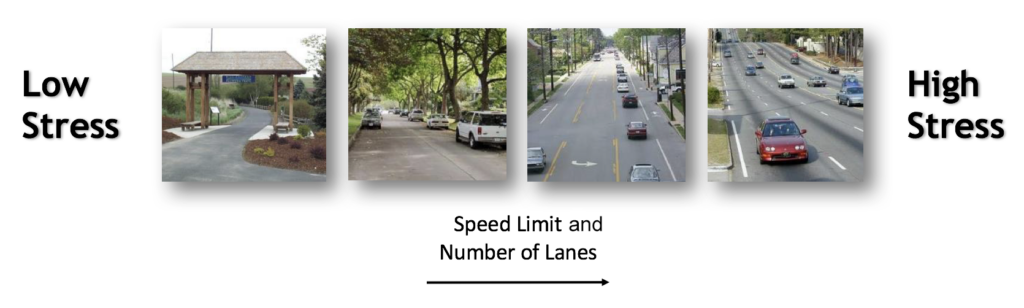
RTC believes that trails and other low-stress walking and biking infrastructure are not just “nice to have”—but are vital to the health and livability of America’s communities.
MAMIL:
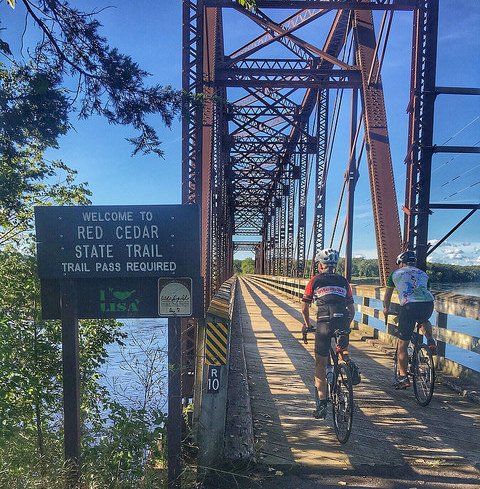
Reported to have been coined by British company Mintel in 2010, it translates to Middle-Aged Man in Lycra (see photo to right.)
Mode Shift:
When the default mode of transportation changes (can be before or after the supply changes).
It’s estimated that San Diego’s Regional Bike Plan, by 2030, will increase regional bicycling mode share from 2.7 percent to 7 percent—replacing 189,035 car trips per weekday. That’s mode shift.
Multimodal:
Just means using more than one mode of getting around. For example, biking to a subway stop and then taking the subway the rest of the way to wherever you’re going.
It can also mean using multiple modes each week to get where you’re going, for example—one day you take your bike, the next you take a horse.
Driving is the dominant mode in many cities, although this is slowly changing on a global level.
NIMBY:
We’ve all heard this one before somewhere … equates to “Not In My Back Yard”—a preferred mindset of those who oppose the development of trails and other active transportation projects. Similar to BANANA (see above).
Trail and Active Transportation Policy Terms
So now that we’ve covered some of the industry’s more interesting and popular active transportation terms, let’s kick it up a notch to trail and active transportation policy.
WARNING: There WILL be acronyms, so—you know, take cover.
Bills, Acts and Programs
Here’s a deep-dive on the bills, acts and federal programs that you need to know.
FAST (Fixing America’s Surface Transportation) Act:
The federal government’s federal transportation bill, signed into law in December 2015; resulted in marginal gains (in the $ millions) for Transportation Alternatives (TA) (see below)—the United States’ largest federal program for trails, walking and biking—it also promised multiple reforms to TIFIA (see below), an interesting source of low-interest loan financing for trails, walking and biking projects.
National Environmental Policy Act (NEPA):
Enacted on Jan. 1, 1970, NEPA promotes the enhancement of the environment (serving as a regulatory program for transportation projects of all types) and established the President’s Council on Environmental Quality (CEQ).
National Trails System Act:
Passed in 1968, authorizing a national trail system, including four categories: scenic, historic, recreation and connecting/side. Its huge relevance to the rail-trail industry would be realized in 1983 with the passage of railbanking (see below).
Railbanking:
Enacted by Congress in 1983 as an amendment to the National Trails System Act (see above), it allowed for disused rail corridors to be preserved for future transportation use through interim conversion to trails, literally paving the way for thousands of miles of future rail-trails.
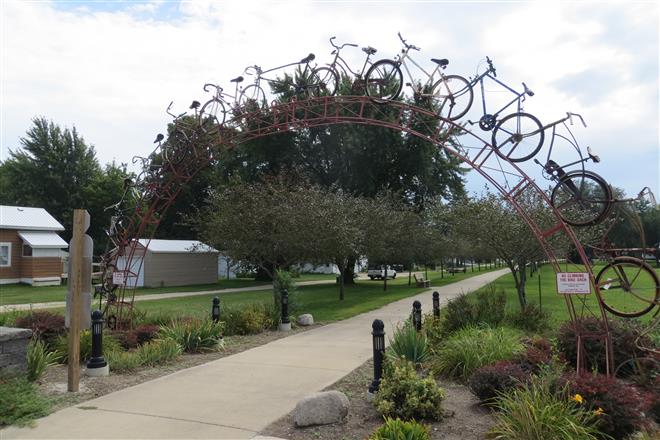
A little piece of trivia: The first railbanking application was for the Sauk Rail Trail in Iowa!
Recreational Trails Program (RTP):
A federal program that funds recreational trails using a portion of the motor fuel tax collected from off-road fuel use.
Safe Routes to School (SRTS):
Pretty much exactly what the name says … funding programs and infrastructure (including sidewalks and trails) meant to encourage children and families to safely walk or bike to school.
TIFIA (Transportation Infrastructure Financing and Investment Act):
A low-interest loan program communities can use to build trails and walking and biking infrastructure. Reforms to TIFIA in the FAST Act (see above) make it easier for small and rural communities to fund projects—and for communities to fund smaller projects like active transportation.
Did that sound confusing? It did to me. This December 2015 blog lays it all out.
Transportation Alternatives (TA):
It’s the nation’s largest source of federal funding for trails, walkways, bikeways, etc.—you know, active transportation projects.
Transportation Alternatives Program (TAP):
The 2012 FAST Act combined three programs—Transportation Enhancements (TE), the Recreational Trails Program (RTP) and the Safe Routes to School (SRTS) Program—into one big umbrella program called TAP.
Transportation Enhancements (TE):
Glad this one came second because it’s basically—all nuances aside—the old name for Transportation Alternatives (TA) (see above), which was ditched via another federal transportation bill, called MAP-21 (please don’t ask us to write out its very long name in full), in 2012.
TIGER (Transportation Investment Generating Economic Recovery):
Competing alongside MAMIL (see above) for the funniest furry active transportation policy term—RTC has come up with some doozies for articles we’ve posted on this grant program run by the U.S. Department of Transportation (USDOT), including “Enter the Tiger,” and my personal favorite: “TIGER Roars in Omnibus.”
This program has already impacted communities across the United Sates. Check out this article that talks about five trail projects funded by TIGER.
Rail Line Terminology
And short but still warranting its own little section is rail line terminology—as it relates to policy speak. By the way, if you just can’t get enough and want to know more—check out RTC’s Trail-Building Toolbox.
Active Corridor:
In real terms—an active corridor can be one that is running and profitable, running and not profitable, or railbanked (or in the process of being).
Abandoned:
In legalese speak, a railroad is only “abandoned” after taking a few very official steps with the Surface Transportation Board, a regulatory body under the U.S. Department of Transportation charged with oversight of “surface transportation”—railroads, roads, highways, etc. Here’s the complex federal explanation for STB.
Disused:
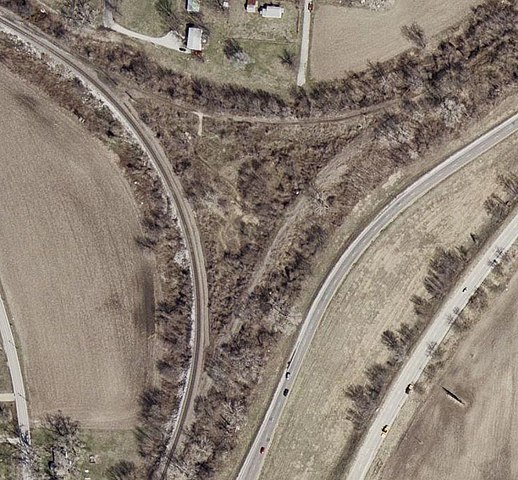
In this case, the railroad corridor may not have any formal operations taking place by the railroad that owns it, but it hasn’t been formally “abandoned” either. So it’s literally just sitting there, you know, not being used.
Wye:
(We just had to put this one in for fun.) A triangular junction (that looks more like a Y) or joining of three railroad lines where each line adjoins the others.
Why it’s spelled “wye” and not “Y”? We have no idea wye—um, that is, why.
Test your active transportation vocabulary—and help show your support for trails by watching our coverage on Twitter @railstotrails and #TrailsTransformUS.
Donate
Everyone deserves access to safe ways to walk, bike, and be active outdoors.
Related
View All
Illinois’ Bloomingdale Trail: October 2026 Trail of the Month
Trail Moments | A Place of Healing: The Mary Hofer Walking Trail