Diving In: How to Use the Toolkit
Maryland’s Lockhouse 28 | Photo by Turner Photography Studio, courtesy C&O Canal Trust
Explore Other Toolkit Sections
- Diving In: How To Use the Toolkit
- Advocacy for Trail Tourism
- Building a Trail Tourism Ecosystem
- Demonstrating Impact
- Funding Trail Tourism
- Developing a Regional Trail Tourism Identity
- Maintenance and User Experience
- Trail Tourism Marketing
- Organizational Capacity and Collaboration
- Fostering Stewardship and Belonging
Readiness Assessment | Definitions | Defining Audiences | Tourism Success
This toolkit is designed for local leaders, trail professionals and advocates to gather insight, access tools and chart a path forward for leveraging trail-oriented tourism to achieve community goals. Communities using the toolkit will be encouraged to pursue strategies for economic development and diversification by promoting trail tourism. The toolkit will provide users with access to language and strategies to demonstrate the value of trail tourism to local stakeholders—including those who may be unfamiliar or skeptical.
While the toolkit is designed to be universally applicable, it’s important to recognize that trail tourism needs vary greatly based on a range of factors—like where communities are in their trail development, the maturity of their existing tourism ecosystem and how established they are as an outdoor recreation destination. That is why this toolkit is anchored in a “Trail Tourism Readiness Assessment” that helps users identify strengths, opportunities, resources and activities along a continuum of progress for promoting and marketing trails (and their communities) to visitors.
We recommend you begin your toolkit exploration at the “Trail Tourism Readiness Assessment,” as the strategies and resources available throughout are aligned with the phases of trail tourism readiness and will guide you to the most relevant information for your community.
As you get started, it is important to take note of how the audiences you need to engage may affect your trail tourism strategy. As you consider the needs of different audiences, you may adjust your responses to the readiness assessment to customize approaches to best meet their needs. You may also need to tailor messaging to more accurately reflect the stage your community finds itself in. The toolkit offers guidance on these issues at a macro level and in more specific examples tied to the specific characteristics of successful trail tourism.
Throughout, the toolkit focuses its strategies on engaging and attracting visitors from more than 50 miles away, as this audience is more likely to spend money in a way that contributes substantively to the tourism economy. Residents, in turn, realize benefits from improvements that come to the trail and the community through tourist engagement.
Trail Tourism Readiness Assessment
The concept of tapping into trail tourism as a powerful economic development strategy is widespread across communities. Communities vary greatly, however, regarding the status of infrastructure development, maturity of tourism approaches and availability of visitor infrastructure. By identifying phases of trail tourism readiness, communities can better understand where they are today and what steps will move them closer to fully tapping into their trail tourism potential.
The “Trail Tourism Readiness Assessment” is the first step in your exploration of this toolkit. Use it to identify your community’s progress toward a trail tourism strategy. Print it out, answer the questions and bring copies with you to explore with colleagues, stakeholders and neighboring communities.
The assessment is designed to be self-guided. We recognize that in some aspects of the trail tourism process, your community may be advanced, while you may just be getting started in others. Use the phases of trail tourism readiness to identify the most appropriate toolkit resources to help your community move forward.
(The assessment is formatted to print on 11×17” paper.)
Understanding the Phases of Trail Tourism Readiness
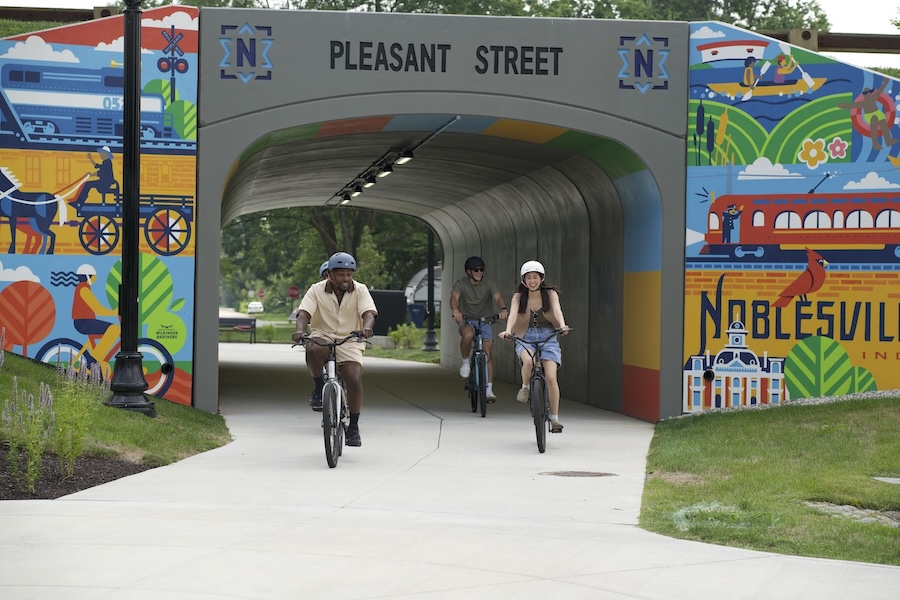
The following definitions are designed to help you further understand where your community falls along the continuum of readiness for trail tourism. Consider the phases a practical road map to realistically guide communities based on conditions on the ground. As you complete the self-assessment, refer back to these definitions.
Phase: In Development
Communities may have a trail that is physically established and open for use, but caters mostly to nearby residents. The community has assets it promotes, though not heavily. Visitor amenities are minimal or uneven. The experience may lack a clear identity, cohesive branding or other features that would attract a wider audience. The trail adds to local quality of life, but is not yet positioned to attract or be promoted to a wider market. Many Great American Rail-Trail communities will find themselves at this stage. They have strong community support and local use while they work to convert that momentum into visitor readiness.
Common Characteristics
- Trail infrastructure is incomplete, newly developed or minimally used
- Trail and/or region not yet well known
- Limited coordinated tourism messaging
- Few visitor amenities (e.g., limited wayfinding or basic services)
Examples from the Field
In Manhattan, Montana, a local cattle-brand inspector is organizing a citizen-led effort to connect an existing 2-mile section of trail eastward to the Headwaters Trail System. A federal grant is supporting early work to develop the corridor, which will contribute to trail tourism opportunities in this part of Montana along the Great American Rail-Trail.
Phase: Local Favorite
Communities in this phase may not yet have a completed trail, or may have trails that are still under development or only partially open. These places have strong potential for trail discovery, but the infrastructure, visibility and visitor services needed to support tourism are limited, fragmented or not yet in place. Community assets and experiences are minimally marketed and often have low visibility—even locally. Visitor use is primarily informal or incidental, and tourism is not yet a focus. Communities at this stage can start planning for future amenities, marketing efforts and partnerships that will eventually support tourism at the local or regional scale.
Common Characteristics
- Trail is open and functional
- Trail is used frequently by residents
- Trail and/or outdoor recreation is not yet viewed as an economic driver
- Promotion of trail and/or region relies primarily on word‑of‑mouth marketing
- Insufficient visitor amenities
Examples from the Field
An existing 3-mile section of the White River Trail in Crawford, Nebraska, is part of a developing 30+ mile trail connection west into Wyoming. The completed trail is a local favorite, popular with families and providing a nonmotorized connection between downtown Crawford and nearby Fort Robinson State Park. As trail mileage is completed and tourism amenities developed, it has the potential to deliver significant economic benefit to the region.
Phase: Regional Destination
Communities in this stage have developed a tourism approach. Visitation has moved beyond local use and toward regional visits, offering a more complete visitor experience. The community supports its trail tourism assets with recognizable branding, established amenities and a hospitality culture. The existing trails and trail network are integrated into the community and are part of a connected regional brand, though the scale of community assets may not yet be ready to accommodate a national audience. Communities in this phase are fully participating in the emerging regional travel patterns of the Great American Rail-Trail. Communities at this stage benefit from increased visibility, stronger partnerships and a clearer sense of identity.
Common Characteristics
- Consistent trailheads with amenities and wayfinding
- Strong trail identity with recognizable branding
- Local trail promotion
- Trail is activated with programming, events and other activities led organically by organizations and businesses
- Used by visitors from within the region who spend money locally
Examples from the Field
Wallace, Idaho, sits along the Trail of the Coeur d’Alenes, an 80-mile paved rail-trail in the Idaho panhandle. Its smooth surface and high-quality amenities attract visitors from across the region. Wallace leverages the trail to build economic opportunity, for example, this town of fewer than 1,000 residents offers multiple hotels and restaurants easily accessible from the trail.
Phase: National Destination
This is the most advanced stage. The community and its regional neighbors have established a fully developed trail tourism strategy and cross-sector partnerships to attract a national audience. Trails and related assets are widely recognized as high-quality outdoor experiences and are supported by robust infrastructure, visitor services and programming. Communities in this phase offer compelling, well-marketed, trail-based experiences capable of supporting multiday trips and attracting national and international visitors. The community has fully integrated trail promotion into its tourism ecosystem, supported by trained staff and strong marketing. The community’s active visitor management practices protect both community character and the quality of the trail experience. These communities exemplify what is possible along the Great American Rail-Trail: a fully realized trail destination that supports multiday travel, generates significant economic impact and tells a compelling local story.
Common Characteristics
- Leading piece of the regional tourism strategy and a main reason why people visit
- Well-documented economic benefits that are used to justify continued investment in the trail and trail tourism
- Abundance of trail-specific amenities throughout the community
Examples from the Field
The Great Allegheny Passage (gaptrail.org) in Pennsylvania and Maryland is a premier national destination for long-distance trail tourism. The region brands itself as an outdoor recreation hub, rooted in the power of the trail system, and people using the trail benefit from highly coordinated signage and wayfinding directing them to businesses and commercial amenities easily accessible to the trail. Well-documented evidence of the trail’s strong economic development benefits reinforce the impact and make the case for future investment.
Audiences and Messaging
As you define an approach for advancing trail tourism in your community, taking the time to understand the interests and perspectives of the stakeholders involved is essential. A range of stakeholder groups will have an interest in the outcomes of your efforts—whether they’re supportive or skeptical of trail tourism. How you engage each group is key. All will have varying levels of exposure to and experience with trail tourism. They may hold diverging opinions about the benefits and drawbacks of leveraging trails to promote the community. Each stakeholder group will require outreach that aligns with their motivations and goals.
An important early step in executing a trail tourism strategy is defining those audiences with the most influence over the outcome—followed by intentional outreach rooted in relevant messaging. While audiences will vary in each community, following are summaries of the motivations driving common stakeholder groups and sample messaging from real case studies that may resonate with them. Throughout the toolkit, you also will find samples of messaging to bolster trail tourism advocacy and make the case to support trail tourism in your community.
Audience: Public sector
Including:
- Government officials and policymakers
- Regional planning agencies
- Transportation agencies and metropolitan planning organizations (MPOs)
- Tourism agencies (including state, regional or municipal)
Motivators and Priorities
- Public safety and well-being
- Connectivity and mobility
- Funding and budget constraints
- Community reputation
Sample Messaging
- Thanks to the ripple effects created through visitor spending, the Virginia Creeper Trail supports about 582 full-time equivalent jobs annually in the region, and it generates $2.1 million in local tax revenue.
- New York Governor Kathy Hochul promoted the completion of the Adirondack Rail-Trail by framing it as “year-round tourism” in the Adirondacks region.
- In his tenure as a councilmember and county executive in King County, Washington, Ron Sims helped develop a trail system among the best in the nation that continues to attract residents and big business.
Audience: Public sector
Including:
- Real estate and development community
- Local businesses
- Chambers of commerce/economic development organizations
- Non-profit destination marketing organizations (DMOs), may be quasi-public and funded by public sources
Motivators and Priorities
- Economic development
- Revenue diversification
- Increased foot traffic
- Community exposure, visibility and marketing
Sample Messaging
- Data from the C&O Canal Towpath and Great Allegheny Passage shows that when trail use grows, public spaces are upgraded and local taxes are bolstered by visitor spending, not just by residents’ wallets.
- Among visitors to the Virginia Creeper Trail, 61% said their sole reason for being in the region was the trail; 24% said the trail was a significant factor in their trip to the region.
Audience: Neighbor and community members
Including:
- Residents and visitors
- Schools, colleges and youth organizations
- Skeptics/opponents
- Volunteers, friends groups, trail stewards
Motivators and Priorities
- Quality of life
- Recreation and relaxation
- Environmental appreciation and education
- Health and safety
- Creation of welcoming and accessible experiences
Sample Messaging
- The U.S. Forest Service learned that adjacent landowners find rail-trails to be better neighbors than they initially expected. Such trails turn out to cause fewer problems than landowners initially fear they might.
- According to the National Park Service and Penn State University, residents and visitors alike enjoy the benefits of trail use, including aesthetic beauty, protected open space and, in some instances, higher property resale values. Local communities enjoy bolstered economies and increased community pride.
Audience: Trail supporters
Including:
- Residents who use trails for recreation and active transportation
- Environmental and conservation groups
- Foundations and funders
- Parks and recreation departments
- Public health officials/health care systems
Motivators and Priorities
- Physical activity and exercise
- Recreation
- Environmental education and stewardship
- Philanthropy
- Community health and well-being
Sample Messaging
- Trail tourism helps keep trails open, maintained, and protected. Trail user fees along the Raccoon River Valley Trail fund the ongoing maintenance of the trail. All proceeds from the user fees go directly toward trail improvements and regular maintenance.
- Trails can act as entry points for public participation in conservation, such as citizen science initiatives on the Appalachian Trail through the Appalachian Trail Conservancy. Trail tourism doesn’t just bring visitors. It builds champions for conservation.
Building for Trail Tourism Success
In every community, successful trail tourism requires a balanced approach, rooted in a series of actions, resources and activities, including:
- Advocacy to generate public and political support
- Amenities to support destination trail experiences and build a trail tourism ecosystem
- Insights and data to make the case for investment in trail tourism
- A plan for generating investment
- An intentional approach to building a place-based brand rooted in the trail
- Proactive maintenance planning that supports a positive user experience
- Marketing to maximize the trail tourism potential
- Capacity to collaboratively pursue trail tourism strategies
- Stewardship and a culture of welcome
The toolkit explores each of the elements necessary for trail tourism success in detail, offering guiding principles, approaches and real-world examples for you to bring the full scope of trail tourism to your community. Note that each element of trail tourism success is broken down in depth in a dedicated chapter that addresses the fundamentals, actionable strategies, case studies and next steps for communities at each stage of readiness.
Elements of Trail Tourism Success
(Click on any of the elements of tourism success below to more deeply explore that toolkit chapter.)
| Advocacy for Trail Tourism | The ability to influence decisions within political, economic and social institutions, including state tourism boards and destination marketing organizations (DMOs), to affect public policy, laws or budgets that support trail tourism. |
| Building a Trail Tourism Ecosystem | Prioritizing the development of amenities—desirable or useful features—that enhance the quality and usability of the trail experience, and encourage the economic participation of residents and visitors. These include functional infrastructure (e.g., restrooms, bike repair stations, information kiosks, etc.) as well as enhancements to user experience, such as public art, interpretive signage and other features that position the trail as a destination. |
| Demonstrating the Impact of Trail Tourism | Gathering the data and insight necessary to educate and build support among key stakeholders and decisionmakers, developing a shared understanding of the benefits of trail tourism, pursuing evaluation strategies to demonstrate impact, and communicating outcomes to local businesses and community members. |
| Funding Trail Tourism | Developing a strategy to secure financial resources to support efforts to bolster trail tourism, including trail-specific needs, programs, projects or activities like marketing, outreach, events and programming. |
| Developing a Regional Trail Identity | The effort to organize a place-based brand that orients a region’s identity—the unique personality, visual style and overarching theme of a location, organization or brand as expressed through the environment—to the trail as a tool to generate tourism and visitation. |
| Maintenance and User Experience | Trail system upkeep that allows users to clearly understand the trail route, plan a trip using the trail, navigate the trail safely and have an enjoyable trail experience. |
| Marketing for Trail Tourism | Specific communication strategies intended to leverage the trail to encourage new visitation and solidify the trail-oriented regional identity among residents and visitors alike. |
| Developing Organizational Capacity and Collaboration | The extent to which the trail and regional partners have staff or volunteers that can facilitate a range of tasks oriented to each of the elements of successful tourism, including in collaboration with other organizations to pursue shared goals. |
| Fostering Stewardship and Belonging | Creating a welcoming and inclusive experience on the trail and within the community for a broad range of residents and visitors that can be demonstrated by educational signage, culturally appropriate and diverse trail activations, support for the trail from surrounding landowners and businesses, and a holistic integration of the trail into the community. |